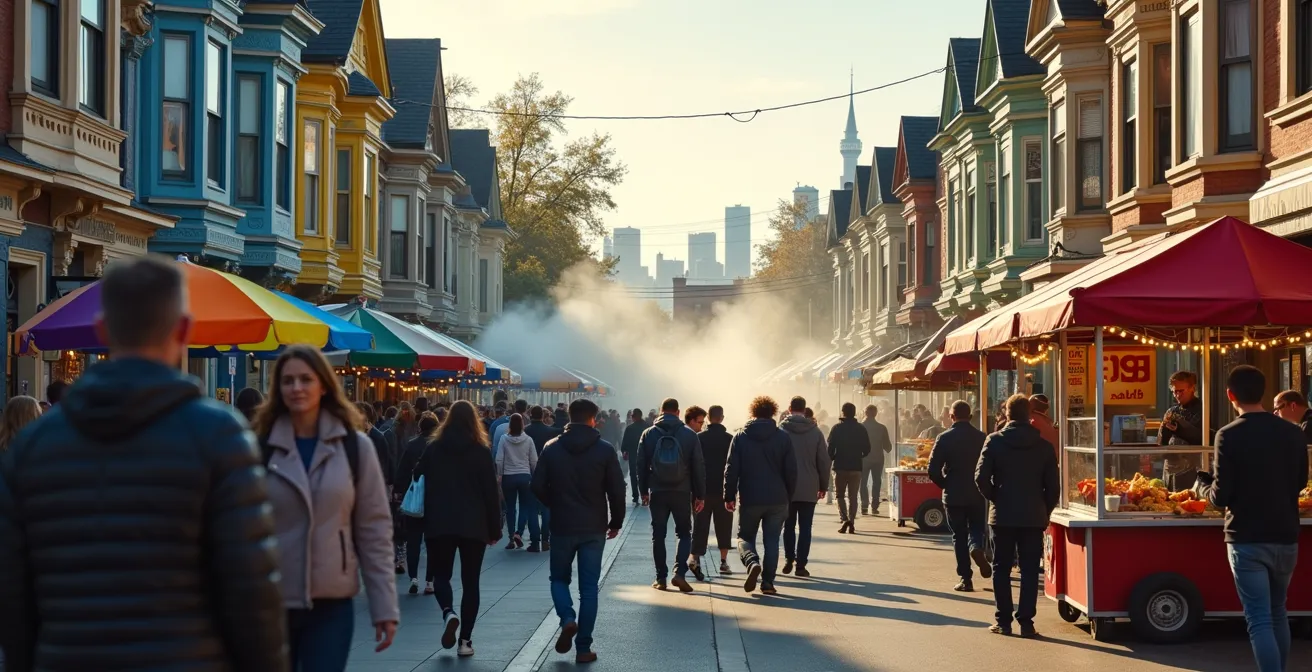
The secret to conquering Kensington Market isn’t just knowing *what* to eat, but understanding *how* and *why* the neighborhood’s fiercely independent soul shapes every bite.
- Focus on timing: Visit during Pedestrian Sundays for the full experience, but use a strategy to avoid the crowds.
- Look for the story: The market’s best food is often part of a cultural debate (like the empanada showdown) or a symbol of its anti-corporate spirit.
Recommendation: Instead of a simple food checklist, use this guide to navigate the market’s cultural fabric, from its thrifting tiers to its hidden quiet spots, for a smarter and more delicious visit.
Any traveler with an appetite and a map of Toronto will inevitably be pointed toward Kensington Market. And for good reason. It’s a riot of color, sound, and scent; a global pantry crammed into a few city blocks. But most guides make a critical mistake: they present it as a simple checklist. “Try the tacos here, the pastry there.” This approach leaves you overwhelmed by choice and misses the point entirely. You’ll leave full, but unenlightened.
The real Kensington Market isn’t a museum of food; it’s a living, breathing organism with its own rhythms, rivalries, and a fiercely protected independent spirit. Eating here is a cultural act. Understanding why you won’t find a Starbucks is just as important as knowing where to get the best coffee. Knowing the difference between a real vintage find and overpriced used clothing is the key to a successful treasure hunt between snacks. This isn’t just a food crawl; it’s an immersion.
This guide abandons the tired checklist. Instead, we’ll decode the market’s soul. We’ll start by pinpointing the absolute best time to visit and how to navigate its joyful chaos. We will arbitrate the legendary empanada debate, teach you to thrift like a local, explain the market’s rebellious heart, and finally, show you where to retreat when the sensory overload hits. Prepare to eat not just well, but smart.
This article breaks down the strategy for a perfect foodie’s day in the market, before expanding the journey to other iconic Toronto culinary experiences. Follow this roadmap to eat and explore like a true insider.
Summary: A Food Critic’s Guide to Kensington and Beyond
- Why the Last Sunday of the Month is the Best Time to Visit Kensington
- The Great Empanada Debate: Seven Lives vs. Jumbo Empanadas
- Thrifting in Kensington: How to Spot Real Vintage vs. Overpriced Used
- Why You Won’t Find a Starbucks in Kensington Market
- Finding the Blue Banana and Hidden Patios for a Quiet Coffee
- Does Eating at the 360 Restaurant Actually Save You Money on Tickets?
- More Than a Party: The History of Toronto’s Church-Wellesley Village
- The Sweet Tooth Trail: Hunting for Canada’s Best Sugar Fixes
Why the Last Sunday of the Month is the Best Time to Visit Kensington
Ask any local when to experience Kensington’s true spirit, and they’ll tell you: Pedestrian Sundays. From May to October, on the last Sunday of the month, the streets are closed to cars and transform into a massive, sprawling street festival. This is the market at its most concentrated—a vibrant, chaotic, and utterly magical spectacle of street performers, artisan stalls, and tantalizing food vendors. But plunging in without a plan is a rookie mistake that leads to long lines and sensory burnout.
The key isn’t to avoid the crowds, but to outsmart them. The energy of Pedestrian Sunday is the main attraction, fueled by the sounds of steel drums and the collective joy of a car-free Augusta Avenue. This is the market’s heart beating out in the open. However, this popular event has also created challenges. To manage the influx, the local Business Improvement Area (BIA) has had to get strategic, even implementing paid security at entry points to manage traffic and unlicensed vendors, according to a 2024 community survey on safety concerns.
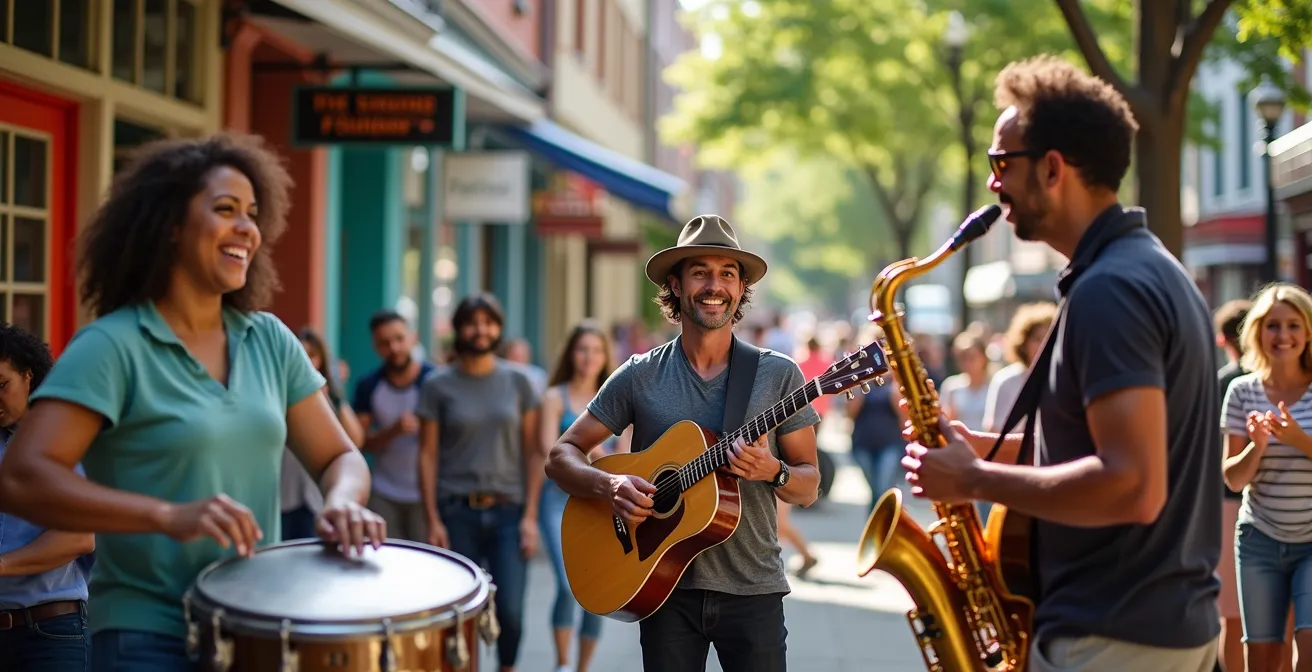
As the image above captures, the raw, creative energy is what makes it all worthwhile. Your goal is to be part of this scene, not a victim of it. Success requires a simple but effective strategy: think like a local who needs to run errands, not a tourist checking boxes. This means timing your moves and knowing the escape routes.
Your Pedestrian Sunday Navigation Strategy
- Arrive before 11:30 AM: This is the golden window. You get the best selection from food vendors with the shortest lines, allowing you to fuel up before the peak rush.
- Use Bellevue Avenue as your escape route: When the main artery of Augusta gets too packed to move, duck onto the quieter parallel street, Bellevue, to catch your breath and bypass the bottleneck.
- Visit brick-and-mortar shops during peak hours: Between 2 PM and 4 PM, when the streets are most congested, retreat into the permanent stores like Seven Lives or Rasta Pasta.
- Target the 10 PM extended closure: For a different vibe, experience the evening atmosphere on Augusta. The daytime crowds have thinned, but the energy remains.
- Check for seasonal variations: Be aware that October events are often smaller and feel more local, while the peak of summer in July brings the biggest crowds.
The Great Empanada Debate: Seven Lives vs. Jumbo Empanadas
In Kensington, some choices define you. Tea or coffee? Vintage or new? But no question is more fundamental, more divisive, than the great empanada debate. In one corner, you have the new-school cool of Seven Lives Tacos Y Mariscos, known for its Baja-style fish tacos but also serving a mean lineup of smaller, pan-Latin empanadas. In the other, the undisputed OG, Jumbo Empanadas, a Chilean institution that has been serving jaw-unhinging, perfectly fried parcels since 1991. This isn’t just about lunch; it’s a battle for the soul of Kensington’s Latin flavour.
Seven Lives is the trendy taqueria, always buzzing, where the empanadas are part of a broader, modern menu. Jumbo Empanadas, run by the iconic Irene Morales, is a testament to tradition. It’s a no-frills spot where the empanada is the hero, pure and simple. As one Chilean patron perfectly put it, the secret is the crust, and at Jumbo, they are “just perfect,” even when compared to those back in Chile. Choosing a side is a rite of passage for any Toronto foodie. There is no wrong answer, but your preference says a lot about what you seek in the market: modern fusion or timeless perfection.
To help you arbitrate this delicious conflict, we’ve broken down the key differences. This isn’t just about flavour, but about style, price, and overall experience. The following comparison, based on a deep dive into Toronto’s best empanadas, lays it all out.
| Feature | Seven Lives | Jumbo Empanadas |
|---|---|---|
| Style | Pan-Latin American influence | Chilean-style, truly jumbo sized |
| Specialty | Fish tacos & smaller empanadas | Cheese empanadas & corn pie (Pastel de Choclo) |
| Unique Elements | Modern taqueria atmosphere | Traditional pebre sauce with tomatoes, parsley and peppers |
| Price Range | Higher-end ($12-15 for a meal) | Budget-friendly ($6.50 for a jumbo) |
| Best For | A full sit-down or quick-bite meal experience | A substantial grab-and-go meal or take-home frozen empanadas to bake later |
I just love the empanadas Jumbo makes. They are among the best if not the best even in comparison with the ones you get in Chile. The big secret is the crust and Irene’s are just perfect.
– A Chilean customer on TripAdvisor
My verdict? For a quick, flawless, and authentic bite that represents the heart of Kensington’s immigrant-led food scene, Jumbo is unbeatable. But for a livelier atmosphere and a full meal, Seven Lives delivers. The only real solution is to try both.
Thrifting in Kensington: How to Spot Real Vintage vs. Overpriced Used
Kensington Market is a labyrinth of pre-loved treasures. It’s Toronto’s undisputed epicentre for vintage and thrift shopping. But for the uninitiated, it’s also a minefield of overpriced polyester and “Y2K” pieces that are really just last decade’s fast fashion. To thrift here successfully, you need a system. The key is to understand that Kensington’s stores fall into three distinct tiers: the high-end archive, the curated trend-setter, and the classic dig-for-it thrift.
First is the Archive/Designer Tier, exemplified by shops like Bungalow. These are less like thrift stores and more like museums where you can touch the art. Think mid-century modern furniture, rare ’70s designer pieces, and unique remade clothing. You come here for inspiration and investment pieces, not for bargains. Next is the Curated Vintage Tier, the market’s sweet spot. Stores like Vintage Outlaw are masters of this, doing the hard work for you. They specialize in specific eras—like the 80s, 90s, and Y2K—and present a carefully selected collection of on-trend items. Finally, there’s the True Thrift Tier. Places like Shoney’s are the heart and soul of old-school thrifting. Here, you must be prepared to hunt. It’s a chaotic, sometimes overwhelming experience where diamonds in the rough are hidden among piles of duds, waiting for a patient treasure hunter.

Knowing which type of store you’re entering is half the battle. Are you looking for a perfectly preserved piece of history, a trendy band t-shirt, or the thrill of the hunt? Answering that question will save you time and money. Of course, no shopping trip is complete without fuel. A successful thrifting journey requires strategic snack breaks.
Your Thrift & Snack Walking Route
- Start at Courage My Love (14 Kensington Ave): Kick off your hunt with a Kensington classic. Look for the iconic displays of vintage cowboy boots and Mexican purses out front.
- Walk 2 minutes to Golden Patty: Grab a spicy beef or veggie Jamaican patty. This is essential fuel for the journey ahead.
- Continue to Exile (37 Kensington Ave): Explore two floors of vintage, from 50’s dresses to wild costume pieces. It’s a spectacle in itself.
- Stop at Wanda’s Pie in the Sky: Time for a well-deserved break. Their carrot cake and a hot chocolate are the perfect mid-afternoon pick-me-up.
- End at Vintage Depot: Your final destination for a massive selection of concert t-shirts, sports memorabilia, and denim. Pro tip: if driving, the public lot on St. Andrew St. has a very reasonable $8 maximum daily rate.
Why You Won’t Find a Starbucks in Kensington Market
Wander through Kensington’s streets, and you’ll notice something missing. There are no golden arches, no mermaid logos, no familiar corporate signage. This is not an accident; it’s a declaration of independence. Kensington Market is a fiercely protected bastion of local enterprise, a place where the community has actively and successfully resisted the creep of corporate chains. The absence of a Starbucks is the most potent symbol of the market’s core identity.
This commitment to independence is absolute. According to neighborhood surveys, Kensington Market proudly maintains an ecosystem of 100% independent businesses. This isn’t just about boutique coffee shops; it permeates every facet of the market, from the family-run cheese shops and fishmongers to the tailors and bakeries. It’s a living experiment in a local-first economy, creating a diversity of storefronts and experiences that has become achingly rare in modern cities. When you spend money here, you are directly supporting a family, an artist, or an entrepreneur, not a distant boardroom.
The spirit of resistance is embodied by institutions like Tom’s Place. This family business has been selling designer menswear at a discount since the 1980s and is now in its third generation. Their success is built on a foundation of exemplary customer service and in-house tailoring—a level of personal touch and expertise that a global chain simply cannot replicate. Tom’s Place isn’t just a store; it’s proof that independent businesses can thrive for decades by fostering genuine relationships with their community. It’s the “why” behind the “no Starbucks” rule. In Kensington, character is currency, and community is the ultimate competitive advantage.
Finding the Blue Banana and Hidden Patios for a Quiet Coffee
A full day in Kensington Market can be a glorious assault on the senses. The crowds, the music, the competing smells of spices, grilled meats, and incense—it’s exhilarating, but it can also be exhausting. The final piece of the insider’s puzzle is knowing where to find sanctuary. Every local has their go-to spots for a quiet moment, a hidden corner to escape the sensory overload and recharge before diving back in. This is where the market reveals its softer, more intimate side.
Your first landmark in this quest is the Blue Banana Market. It’s impossible to miss and a common meeting point, but it’s important to understand what it is. While not a traditional thrift store, it functions as a sprawling marketplace for local artisans, mixed with a curated selection of vintage items and quirky gifts. It’s less of a store and more of an experience, a labyrinth of creativity that perfectly captures the “shop local” ethos of the neighborhood. It’s a great place to browse, but for true quiet, you need to look elsewhere.
The real secrets are the small, unassuming pockets of calm scattered throughout the neighborhood. This could be a specific sun-drenched bench in Bellevue Square Park, a second-floor window seat in a café overlooking the bustle of Augusta, or the surreal tranquility of the Garden Car—a local art piece that has become Toronto’s unofficial smallest public park. These are the places you retreat to with a coffee from a local favorite like Fika or Moonbeam, savoring a moment of peace amid the chaos.
Your Sensory Overload Escape Plan
- Start your morning at local cafes: Grab a coffee from Fika, Moonbeam, or Jimmy’s Coffee before the main crowds arrive to enjoy the calm.
- Find the sun-drenched benches: In Bellevue Square Park, certain benches get the best afternoon sun. They’re perfect for people-watching from a distance.
- Look for second-floor window seats: Many cafes have upstairs seating. A window seat overlooking Augusta Avenue offers a fascinating, but muffled, view of the action.
- Discover The Garden Car: Seek out this mural-covered vehicle, now a mature garden. According to Destination Toronto’s local guide, it’s considered the city’s tiniest public park.
- Escape to St. Stephen-in-the-Fields: For absolute silence, the courtyard of this nearby historic church offers a true sanctuary just steps from the market’s hustle.
Key Takeaways
- Kensington is more than a food list; it’s a cultural experience defined by its independent spirit and hidden rhythms.
- Plan your visit around Pedestrian Sundays for peak energy, but use a strategy (arrive early, know escape routes) to avoid burnout.
- Engage with the market’s stories—from the “empanada debate” to its anti-corporate stance—to deepen your appreciation of the food.
Does Eating at the 360 Restaurant Actually Save You Money on Tickets?
Now that you’ve mastered the grassroots, hyper-local experience of Kensington, let’s pivot to its polar opposite: the glossy, high-altitude dining of the CN Tower’s 360 Restaurant. This is a classic Toronto tourist dilemma. The restaurant promises fine dining with an unparalleled revolving view, but the prices are steep. The persistent question is: does the cost of a meal offset the price of an admission ticket to the tower, making it a “good deal”?
Let’s break down the math and the philosophy. A standard admission ticket to the CN Tower’s main observation levels has a significant cost. The 360 Restaurant’s prix-fixe menus are certainly a splurge, but your reservation includes the ride up the elevator and access to the observation decks. If you were already planning to pay for tower admission and have a fine-dining meal during your trip, combining the two at 360 can indeed represent a relative saving. You’re essentially upgrading your ticket to include a gourmet meal for a fractional extra cost.
However, the value proposition is about more than just money. You’re trading the chaotic, ground-level authenticity of Kensington Market for a curated, polished, and somewhat sterile tourist experience. The food at 360 is accomplished, often featuring Canadian ingredients, but it lacks the soul and story of a Jumbo empanada or a perfectly seasoned Rasta Pasta dish. The choice is clear: if the view is your primary goal and you want a special occasion meal, 360 can be a smart play. If your priority is authentic culinary discovery and cultural immersion, your money is far better spent back on the streets of Kensington.
More Than a Party: The History of Toronto’s Church-Wellesley Village
If Kensington Market is Toronto’s multicultural heart, then the Church-Wellesley Village is its soul of resilience and celebration. Another of the city’s most iconic neighborhoods, The Village is known globally as a vibrant hub for the LGBTQ+ community. While it’s famous for its nightlife and the massive annual Pride Parade, to see it only as a party is to miss its deep and important history. The Village is, above all, a community built from a legacy of activism and a fight for safety and recognition.
The neighborhood’s identity was forged in the 1970s and 80s as a safe haven, a place where people could live and socialize openly at a time when that was dangerous. The bars, cafes, and bookstores that line Church Street are more than just businesses; they are the descendants of the first community centres and safe spaces. The food scene here reflects this history. It’s less about the sprawling global pantry of Kensington and more about creating welcoming spaces for connection. You’ll find cozy pubs, bustling patios, and restaurants that have been community mainstays for decades—places designed for conversation and camaraderie.
Exploring The Village offers a different kind of cultural immersion. It’s a lesson in how a community can shape a neighborhood’s geography and economy. The rainbow crosswalks and flags are not just decoration; they are symbols of a hard-won presence. While Kensington’s independence is about resisting corporate influence, The Village’s identity is about creating a visible and thriving sanctuary. A walk through its streets is a powerful reminder that sometimes, the most important thing a neighborhood can offer is a place to belong.
The Sweet Tooth Trail: Hunting for Canada’s Best Sugar Fixes
After exploring the savory depths of Kensington and the community hubs of other neighborhoods, it’s time for the grand finale: a hunt for Canada’s signature sweet treats. Unlike Italy’s gelato or France’s macarons, Canadian desserts are often humble, comforting, and deeply rooted in home baking. Embarking on a “sweet tooth trail” is the perfect way to cap off a Toronto food adventure, connecting the dots between different neighborhoods through their best sugar fixes.
Your first stop must be for the quintessential butter tart. This uniquely Canadian pastry—a flaky crust filled with a gooey mixture of butter, sugar, syrup, and egg—is a subject of national debate: with or without raisins? You’ll find excellent versions at bakeries across the city, each claiming to have the perfect ratio of flaky to gooey. From there, the trail leads to the Nanaimo bar, a no-bake wonder from British Columbia. This three-layer confection of a crumb-and-coconut base, custard-flavoured buttercream, and a chocolate ganache top is pure, unadulterated decadence.
The journey doesn’t end there. Keep an eye out for Timbits from Tim Hortons for a quick, iconic dose of Canadiana, or seek out a classic BeaverTail pastry, a slab of fried dough often found at festivals and skating rinks. This trail is less about a single location and more about a mindset: seeking out the simple, unpretentious flavours that define Canadian comfort food. It’s a delicious contrast to the complex, global spices of Kensington Market, proving that Toronto’s culinary identity has many different, equally satisfying, layers.
Now that you have the insider’s map to Kensington Market and beyond, the only thing left to do is build your appetite and start exploring. Your unforgettable Toronto food adventure starts with that first, perfectly chosen bite.