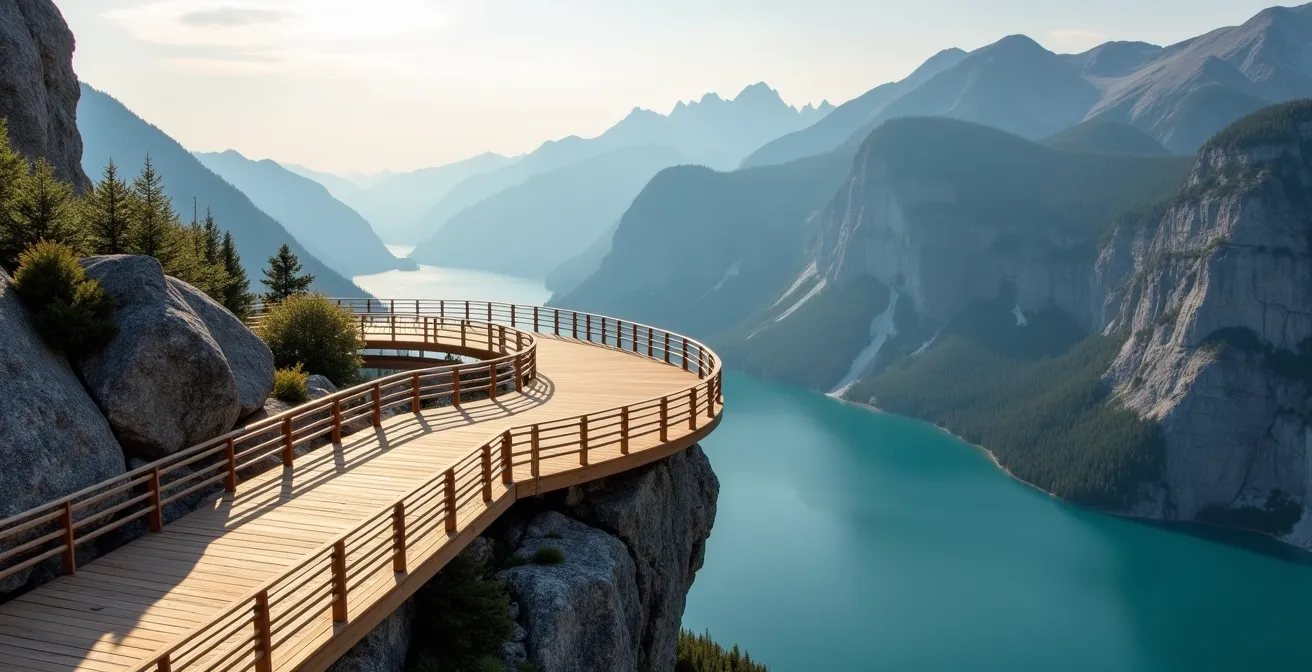
Finding a spectacular Canadian viewpoint doesn’t have to mean a grueling hike; the best spots are often the ones that offer the highest reward for the lowest effort.
- Many iconic views, from the Rocky Mountains to major city skylines, are fully accessible by car, cable car, or paved pathway.
- Comparing the cost, crowd levels, and “true accessibility” (wheelchair/stroller friendly) is key to choosing the right experience for you.
Recommendation: Prioritize viewpoints that transparently outline their accessibility features, and don’t overlook urban observation decks, which often provide stunning, easy-to-reach panoramas.
The quest for a breathtaking panoramic view is a core part of the Canadian travel experience. We see the stunning photos of turquoise lakes and glittering cityscapes and feel the pull to witness them ourselves. But so much travel advice assumes everyone is ready and able to tackle a challenging trail. The narrative often suggests that the best views are reserved for those who put in the most physical effort, leaving casual sightseers, families with strollers, or those with mobility challenges wondering where they fit in.
You might have seen lists of “easy hikes” that turn out to be a series of steep switchbacks, or heard a location is “accessible” only to find it involves a gravel path and a flight of stairs. This guide is different. We’re not just listing beautiful places; we’re applying a practical filter. We’re focused on the effort-to-reward ratio, evaluating Canada’s most famous lookouts based on what it really takes to get there. This is about finding those high-reward views that require low physical effort.
Forget the vague advice. We will dive into the specifics of cost, “true accessibility,” and the unique value of each viewpoint. From deciding between a pricey revolving restaurant and a free park to knowing which side of a waterfall is stroller-friendly, this is your practical playbook for chasing Canada’s best panoramas, no hiking boots required.
This article breaks down some of Canada’s most debated viewpoint decisions, providing the clear, practical information you need to choose the perfect accessible outlook for your next adventure. Explore the options below to find your ideal vantage point.
Summary: Seeking the Best Views: Accessible Lookouts Across Canada
- CN Tower vs. Calgary Tower: Are the Revolving Restaurants Worth the Price?
- Top 3 Mountain Viewpoints You Can Drive To in the Rockies
- Where to Go for the Iconic Skyline Shot of Toronto at Sunset?
- Capilano vs. Lynn Canyon: Paying $60 CAD or Going for Free?
- Top or Bottom: Where is the Best Vantage Point for Montmorency Falls?
- SkyPod vs. Glass Floor: Which View is Worth the Extra Ticket?
- Peyto Lake vs. Bow Lake: Where to Stop for the Best Photo?
- Conquering the EdgeWalk: Is Toronto’s Scariest Attraction Worth It?
CN Tower vs. Calgary Tower: Are the Revolving Restaurants Worth the Price?
Dining in the sky while a city unfolds beneath you is a classic tourist experience. In Canada, the two most famous options are Toronto’s 360 Restaurant in the CN Tower and Calgary’s SKY 360. While both offer a similar promise, the value proposition differs significantly, especially when viewed through the lens of accessibility and cost. The choice isn’t just about the food; it’s about the entire experience from ground to table.
The CN Tower has made accessibility a major priority. In 2022, it was recognized for its efforts to accommodate the one in five Canadians living with a disability by achieving a Gold-level accessibility certification. This commitment is evident in its fully accessible restaurant and washrooms on every level. The Calgary Tower is also accessible, but the CN Tower’s formal certification provides an extra layer of assurance for visitors with specific needs. However, this premium experience comes at a premium price, with general admission tickets being more than double the cost of the Calgary Tower.
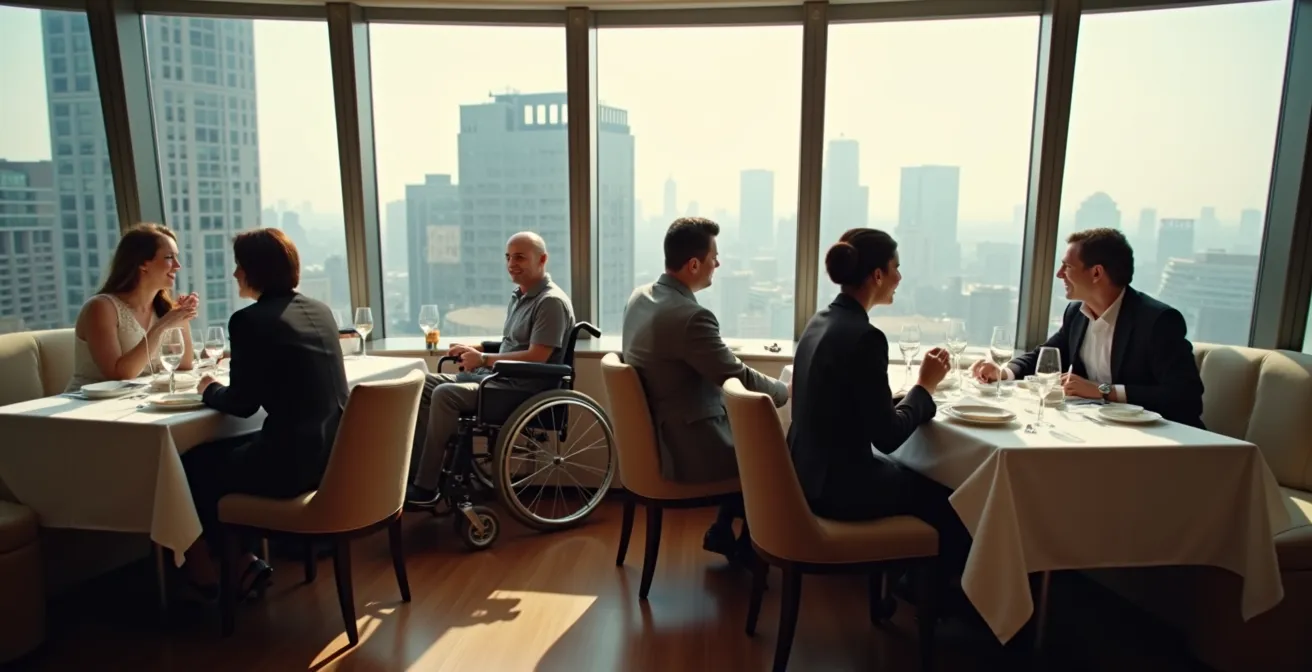
The decision ultimately comes down to your budget and priorities. If you are looking for a world-class, certified-accessible experience and are willing to pay for it, the CN Tower delivers. If you want the thrill of a revolving restaurant at a much more budget-friendly price point, the Calgary Tower offers fantastic value.
The table below breaks down the key differences to help you decide which high-altitude dining experience offers the right value for you.
| Feature | CN Tower | Calgary Tower |
|---|---|---|
| Rick Hansen Certification | Gold Level (2022) | Not specified |
| Wheelchair Access to Restaurant | 360 Restaurant fully accessible | SKY 360 fully accessible |
| Elevator Time | 58 seconds | 62 seconds |
| Accessible Washrooms | Every level | Main observation deck |
| Complimentary Wheelchair Entry | Yes, for wheelchair users | Standard pricing |
| Restaurant Rotation Time | 72 minutes | 45-60 minutes |
| Adult Ticket Price (CAD) | $43-53 | $18-22 |
Top 3 Mountain Viewpoints You Can Drive To in the Rockies
The Canadian Rockies are synonymous with majestic mountain vistas, but you don’t need to be a mountaineer to experience them. The concept of a “drive-up panorama” is a game-changer for families, casual tourists, and those with mobility limitations. The Icefields Parkway and surrounding areas are dotted with lookouts that deliver maximum scenic impact for minimal physical effort. These spots prove that the most stunning views can be just a short, easy walk from your car.
The first must-stop is the Peyto Lake Viewpoint. Following a major redesign in 2021, the upper trail and viewing platform are now fully wheelchair accessible, with a paved pathway leading directly from the parking lot. This upgrade has made one of Canada’s most iconic views available to everyone. Next is Bow Lake, a classic roadside stop. You can admire the stunning reflections of Crowfoot Mountain from a flat, gravel surface right beside the highway, requiring almost no walking.
Finally, while the main trail to the Moraine Lake Rockpile is a short but steep climb and not wheelchair accessible, the area still offers incredible views from the roadside and nearby paths. It’s a crucial reminder to always check for accessible alternatives. During peak season, remember that Parks Canada has implemented a mandatory shuttle system for Lake Louise and Moraine Lake, so be sure to book your reservations well in advance. Road closures are also common from October to May, so always check the official Parks Canada website before you go.
Action Plan: Preparing for Your Rockies Drive-Up Viewpoint Tour
- Check Conditions: Visit the Parks Canada website for road closures (especially Icefields Parkway) and trail status before you leave.
- Book Shuttles: If visiting Moraine Lake or Lake Louise in summer, secure your mandatory shuttle or bus tour reservation online weeks or months ahead.
- Plan Your Timing: For the best photos, aim for midday at Peyto Lake to capture its bright turquoise colour and sunrise at Bow Lake for mirror-like reflections.
- Pack for All Weather: Mountain weather changes quickly. Bring layers, water, and snacks, even for a short roadside stop.
- Confirm Accessibility: While these spots are known for being accessible, double-check the latest conditions on official websites if you have specific mobility needs.
Where to Go for the Iconic Skyline Shot of Toronto at Sunset?
Capturing that perfect, postcard-worthy shot of the Toronto skyline is a quintessential Canadian photo-op. But where do you go for the best vantage point, especially as the sun begins to set? The most common answer is the Toronto Islands, and for good reason. A short, 13-minute ferry ride ($9.11 CAD round trip) transports you to a perspective that perfectly frames the city over the water. For the best shots with fewer crowds, head to Ward’s Island, where spots like the Sunfish Cut viewpoint or Freda’s Garden offer serene settings.
However, the ferry isn’t for everyone. If you’re short on time or prefer to stay on the mainland, there are excellent, free alternatives. Trillium Park, located at Ontario Place, offers a fantastic ground-level view of the skyline and is easily accessible. For a more elevated, classic view from the east, Riverdale Park East is the go-to spot. It’s a short 5-minute walk from the Broadview subway station, though be aware that reaching the best vantage point requires navigating a hill, which can be a challenge for those with strollers or wheelchairs. The ferry to the islands, by contrast, is fully wheelchair accessible.
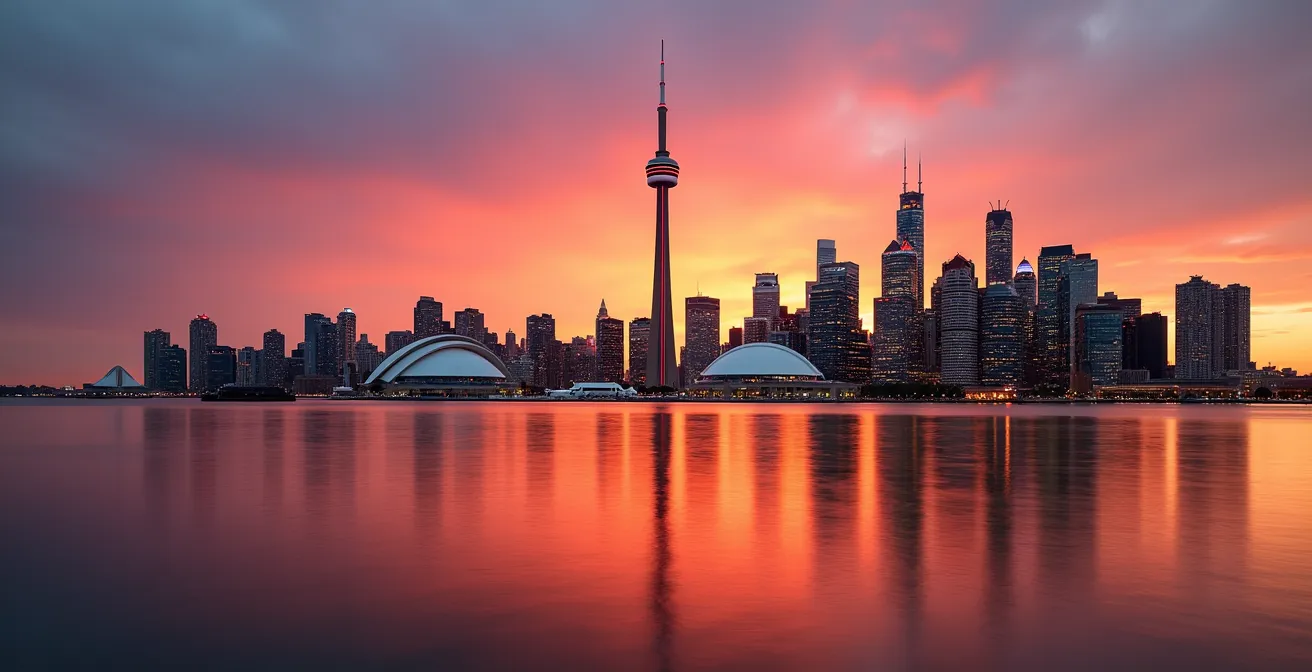
For photographers seeking a specific look, the location makes all the difference. As the Travel and Destinations guide to Toronto photography advises, your lens and desired composition should dictate your choice of location.
For a compressed skyline with a telephoto lens, Polson Pier is your spot. For a serene wide-angle shot that includes water and greenery, aim for the west side of Ward’s Island.
– Travel and Destinations Toronto Photography Guide, Best Views and Locations to Capture the Toronto Skyline
Ultimately, the “best” spot depends on your priorities: the classic, unobstructed view from the water via the islands, or the convenient, free perspectives from the mainland.
Capilano vs. Lynn Canyon: Paying $60 CAD or Going for Free?
In North Vancouver, two suspension bridges offer a thrilling walk through the temperate rainforest canopy, but they represent two vastly different approaches to tourism. The Capilano Suspension Bridge is a curated, theme-park-style attraction with a significant admission fee. In contrast, Lynn Canyon offers a more rugged, natural experience that is completely free. For many travellers, the choice comes down to a simple cost-benefit analysis.
However, when we apply the filter of “true accessibility,” the debate becomes more complex. The critical point that many guides overlook is that neither suspension bridge is wheelchair accessible due to their narrow, swaying nature and stairs. This makes the high cost of Capilano particularly questionable for groups with mixed mobility, as some members will not be able to experience the main attraction. While Capilano offers a free shuttle from downtown and impressive Indigenous cultural programming, Lynn Canyon is surrounded by multiple flat, accessible trails that allow everyone to enjoy the forest, even if they can’t cross the bridge itself.
The table below highlights the key trade-offs between the two experiences.
| Feature | Capilano Suspension Bridge | Lynn Canyon |
|---|---|---|
| Entry Cost | $66.95 CAD (Adult) | Free |
| Bridge Accessibility | Not wheelchair accessible (narrow, swaying) | Not wheelchair accessible |
| Alternative Accessible Trails | Limited accessible areas | Multiple flat trails nearby |
| Transportation | Free shuttle from downtown | Public transit required |
| Experience Type | Curated, theme-park style | Natural, rugged Pacific Northwest |
| Indigenous Programming | Kia’palano educational walk | Natural state, less curated |
For visitors seeking a truly accessible way to experience Vancouver’s iconic forest-and-mountain scenery, a third option emerges as the clear winner: Stanley Park. This 1,000-acre urban park offers an extensive network of paved, flat paths, including the famous Seawall. It provides stunning oceanfront views without the physical barriers of suspension bridges. The park even features accessible horse-drawn tours and a miniature train with wheelchair-accessible carriages, making it the superior choice for inclusive sightseeing.
Top or Bottom: Where is the Best Vantage Point for Montmorency Falls?
Just outside Quebec City lies Montmorency Falls, a natural wonder that is impressively powerful up close. Standing at 83 metres, it is a full 30 meters taller than Niagara Falls, a fact that surprises many visitors. When planning a visit, the main question is whether to view it from the top or the bottom. From an accessibility standpoint, the answer is unequivocally clear.
The top viewpoint is 100% wheelchair accessible. A cable car, which is heated in winter for comfort, whisks you to the summit where you are greeted with a sweeping panoramic vista of the falls, the St. Lawrence River, and the picturesque Île d’Orléans. The Manoir Montmorency, located at the top, offers a fully accessible restaurant and terrace, providing a comfortable place to sit, dine, and soak in the view. You can also cross a suspension bridge over the crest of the falls for a thrilling perspective.
In stark contrast, the bottom viewpoint is completely inaccessible for anyone using a wheelchair or with significant mobility issues. Reaching the base of the falls requires descending a staircase of 487 steps. While the view from the bottom is dramatic, offering a sense of the falls’ raw power and spray, it is simply not an option for everyone. For casual sightseers and families looking for the best reward with the least effort, the top vantage point is the obvious and superior choice, delivering spectacular views without barriers.
SkyPod vs. Glass Floor: Which View is Worth the Extra Ticket?
A trip up Toronto’s CN Tower presents you with a choice: stick to the main observation level with its famous Glass Floor, or pay extra to ascend even higher to the SkyPod? This decision is more than just a matter of height; it’s about choosing between two fundamentally different experiences. The right choice depends entirely on what kind of “viewpoint value” you’re seeking: a thrilling, interactive experience or a serene, panoramic one.
The Glass Floor is included in general admission and sits at 342 meters. It’s a pure thrill. The feeling of standing on a transparent panel with the city streets far below is a heart-pounding photo opportunity. However, this is the tower’s most popular feature, and the area is almost always bustling with high crowd levels. It’s an experience built for excitement and sharing on social media.
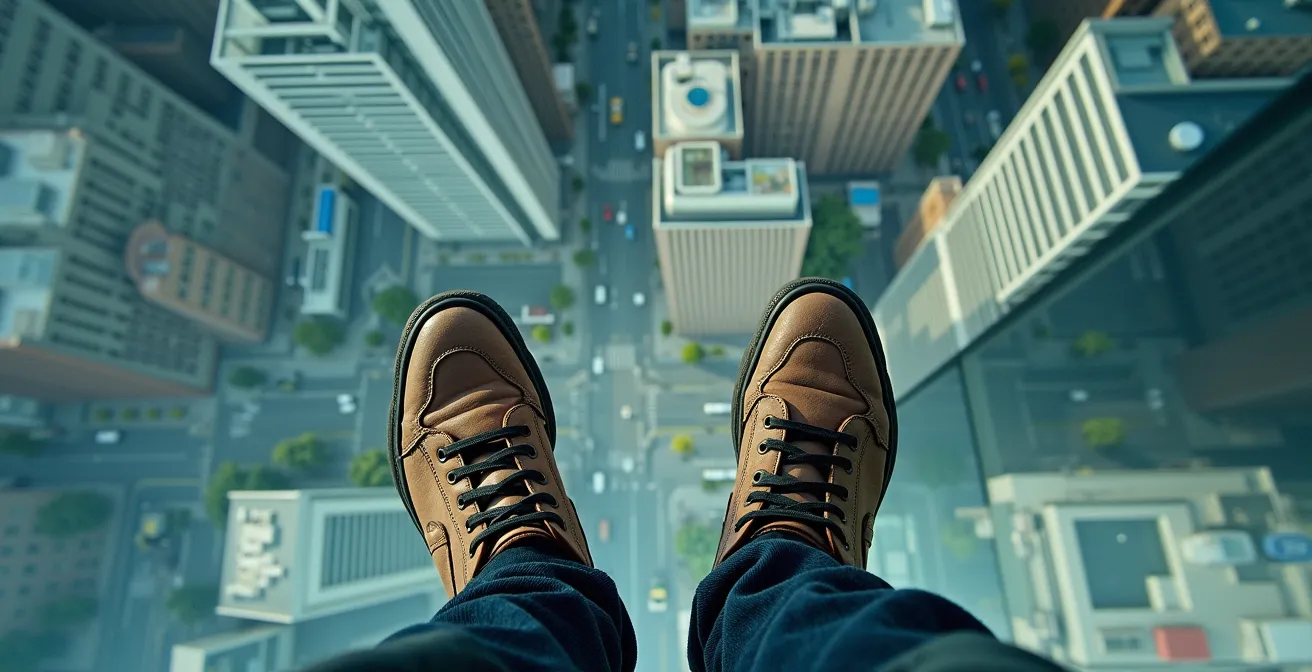
The SkyPod, at a staggering 447 meters, requires an additional ticket but offers a completely different atmosphere. The most significant advantage, aside from the extended visibility, is the dramatic reduction in crowds. As the official CN Tower Accessibility Guide notes, this is a crucial feature for many visitors.
The SkyPod is significantly less crowded than the main observation level. This is a critical selling point for visitors with sensory sensitivities, anxiety, or who simply prefer a more serene experience.
– CN Tower Accessibility Guide, CN Tower Official Accessibility Documentation
The table below summarizes the trade-offs, helping you decide if the extra cost is worth it for the type of view you want to have.
| Feature | Glass Floor (Main Level) | SkyPod |
|---|---|---|
| Height | 342 meters | 447 meters |
| Additional Cost | Included in general admission | Extra $15-20 CAD |
| Crowd Level | High – very crowded | Low – significantly less crowded |
| Experience Type | Thrill-seeking, photo opportunity | Serene, panoramic viewing |
| Visibility Range | Up to 120 km on clear days | Up to 160 km on clear days |
| Best For | Unique downward photos, excitement | Quiet contemplation, clearer views |
Peyto Lake vs. Bow Lake: Where to Stop for the Best Photo?
Along the iconic Icefields Parkway in Banff National Park, two stunningly blue lakes vie for the attention of passing motorists: Peyto Lake and Bow Lake. Both are essential stops, but photographers and sightseers often wonder which one offers the better photo opportunity. The answer depends on the time of day and the type of view you’re after, but recent developments have made one a clear winner for accessibility.
Peyto Lake is famous for its surreal turquoise water and distinct wolf-head shape, a view best captured from an elevated perspective. For years, reaching this viewpoint involved a moderately steep walk. However, a major 2021 overhaul changed everything. As confirmed by Parks Canada’s accessibility improvements, the new viewpoint at Bow Summit now provides fully wheelchair and stroller-accessible access to this iconic vista via a short, paved trail. For the best photo, visit between 11 am and 2 pm when the midday sun illuminates the glacial rock flour in the water, making its colour pop.
Bow Lake, on the other hand, offers immediate roadside access. Its strength lies in its potential for mirror-like reflections of Crowfoot Mountain on calm mornings, making it a favourite for sunrise photography. While it lacks the dramatic, elevated perspective of Peyto, its easy access and serene morning atmosphere give it a unique charm. For the casual tourist or family looking for the quintessential, high-impact Rockies photo with guaranteed easy access, the newly redesigned Peyto Lake viewpoint is the undisputed champion.
Key Takeaways
- “True accessibility” is paramount; look for paved paths, ramp access, and clear information beyond a simple “accessible” label.
- The best viewpoint often involves a trade-off between cost, crowds, and experience type (e.g., thrill vs. serenity).
- Don’t underestimate free, public alternatives like Stanley Park or mainland viewpoints, which can offer superior accessibility and value compared to ticketed attractions.
Conquering the EdgeWalk: Is Toronto’s Scariest Attraction Worth It?
For the ultimate thrill-seeker, the CN Tower’s EdgeWalk presents an unparalleled experience: a hands-free walk on a 1.5-meter-wide ledge 356 meters above Toronto. It holds the Guinness World Record for the highest external walk on a building. But with a price tag often exceeding $200 CAD, is this extreme attraction worth it for anyone but the most hardcore adrenaline junkies? For our target audience of casual sightseers, the answer is generally no, but the story behind its accessibility is surprisingly inspiring.
The EdgeWalk is not a sightseeing tour; it is an intense, 90-minute experience that is as much a mental challenge as a physical one. It is designed to be safe, with extensive safety briefings and harnesses, but it is fundamentally about conquering fear. This puts it in a completely different category from a standard observation deck. However, in a remarkable demonstration of Canadian inclusivity, the EdgeWalk has been made accessible.
This commitment was famously highlighted by one of Canada’s most prominent accessibility advocates, Rick Hansen. His experience underscores a powerful message about breaking barriers, both personal and physical.
In 2015, I was honoured to be one of the first people in a wheelchair to do an accessible EdgeWalk at the CN Tower.
– Rick Hansen, Rick Hansen Foundation Accessibility Certification Announcement
While the EdgeWalk may not be for the faint of heart or the family on a budget, it stands as a testament to the idea that even the most extreme adventures can be designed with accessibility in mind. It’s a niche attraction, but its inclusive approach makes it a uniquely Canadian point of pride.
Now that you’re equipped with a practical framework for evaluating viewpoints, you can confidently plan your journey to Canada’s most spectacular and accessible vistas. The next step is to start exploring with this new perspective.