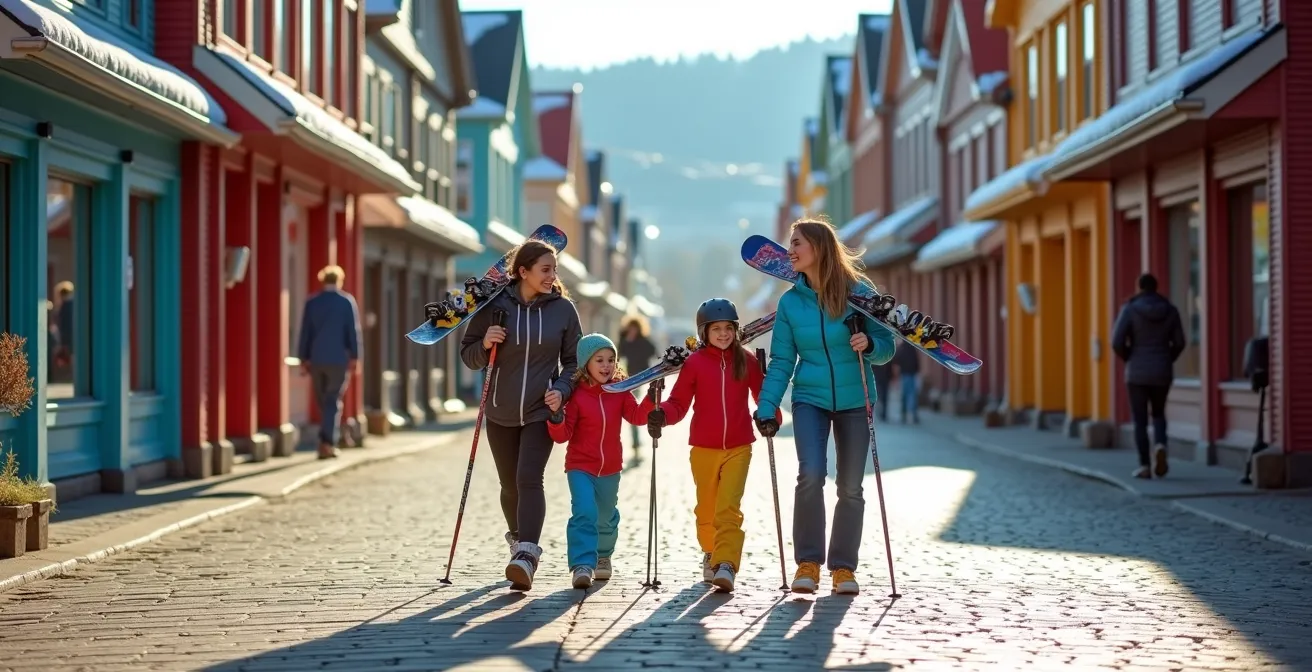
An affordable Mont-Tremblant family ski vacation is possible by mastering strategic “value trade-offs” rather than simply cutting every cost.
- Staying just outside the village can cut lodging costs in half, but requires factoring in shuttle or driving time.
- Packing lunches is a huge money-saver, especially by grocery shopping before you arrive at the resort.
- Timing is everything: avoiding Quebec, Ontario, and US school break weeks can save you hours in lift lines.
Recommendation: Instead of asking “what’s cheapest?”, ask “what’s the best value for my family?”. This guide helps you calculate the true cost and benefit of every decision.
The image of your family skiing down pristine slopes, surrounded by the European charm of Mont-Tremblant’s pedestrian village, is a powerful one. It’s a classic Canadian winter dream. But for many middle-class families, that dream quickly collides with the reality of sky-high prices for lift tickets, lodging, and even a simple lunch on the mountain. The fear is that a trip to this iconic Quebec resort is a luxury reserved for the wealthy, forcing you to consider less magical, more complicated alternatives.
The internet is full of generic advice: “stay off-site,” “pack snacks,” “go in the off-season.” While true, this advice barely scratches the surface. It fails to address the real, on-the-ground decisions you’ll face. It doesn’t quantify the trade-offs. Is saving $150 a night on a hotel worth an extra 45 minutes of corralling kids and gear every morning? Is renting cheaper skis across town a good deal if your child decides they hate them on day two?
This is where we shift the conversation. The key to an affordable Tremblant trip isn’t just about being frugal; it’s about becoming a savvy travel strategist. It’s about understanding the concept of the value trade-off. This guide will move beyond the obvious to give you the specific numbers, insider tips, and strategic frameworks you need. We will break down the real math behind where to stay, what to eat, and when to go, so you can consciously choose where to spend and where to save, crafting a dream trip that fits your family’s budget and style.
This article will provide a detailed roadmap for your planning. We will explore specific strategies for every major expense, helping you navigate the choices that make or break a family ski budget.
Summary: A Savvy Family’s Guide to Mont-Tremblant
- The “Brown Bag” Strategy: Where to Eat Lunch at Tremblant Without Spending $100
- Staying in Saint-Jovite vs. The Pedestrian Village: Is the Shuttle Worth the Savings?
- Seasonal Rentals vs. Daily Rentals: The Math for a 5-Day Trip
- Why You Should Avoid “Relâche” Week If You Hate Lift Lines
- Group Lessons vs. Private: What’s the Best Value for a 7-Year-Old?
- Epic Pass vs. Ikon Pass: Which Saves More Money on the Powder Highway?
- Are the “Xplorers” Programs for Kids Worth the Time?
- Surviving and Thriving in an Urban Canadian Winter
The “Brown Bag” Strategy: Where to Eat Lunch at Tremblant Without Spending $100
Food is one of the easiest places to hemorrhage money at a ski resort. A simple lunch for a family of four on the mountain can easily top $100. The “brown bag” strategy is the single most effective way to control this cost, but it requires planning. This isn’t just about throwing some sandwiches in a bag; it’s about a pre-trip grocery mission. The price difference between groceries in the village and in the towns on the way is staggering.
Your goal is to arrive at the resort with breakfast, lunch, and snack supplies for your entire stay. The small grocery stores in the pedestrian village, like the Magasin Général, are best used only for emergencies or a fresh daily baguette. For your main shop, target a larger supermarket like an IGA or MAXI along Highway 117 before you reach the resort area. For families coming from Montreal or Ottawa, a stop at a Costco is the ultimate power move for stocking up. Think beyond cold sandwiches: a good thermos filled with chili or mac and cheese can be a lifesaver on a cold day.
The resort actually makes this strategy quite manageable. You don’t have to eat a frozen granola bar on a chairlift. The Chalet des Voyageurs, located at the base of the pedestrian village, has microwaves available for public use, allowing you to reheat a proper meal. This simple piece of knowledge transforms your lunch from a sad, cold sandwich into a warm, satisfying, and nearly free meal. It’s a small detail that makes a huge difference in both budget and comfort.
Your Mont-Tremblant Grocery Game Plan
- Pre-Trip Big Shop: Before your trip, stop at a Costco in Montreal or Ottawa to stock up on breakfast items, snacks, and lunch supplies.
- Highway Stop: Plan a main grocery run at an IGA or MAXI along Highway 117 before you get to Tremblant, where prices can be up to 50% lower than on-mountain.
- Pack for Warmth: Utilize thermoses to pack warm lunches like soup, chili, or mac and cheese for a comforting midday meal on cold ski days.
- Village “Emergency” Shop: Use the on-site Magasin Général only for last-minute or specialty items like fresh bread, milk, or firewood to avoid premium pricing.
- Locate Reheating Stations: Identify the microwaves at the Chalet des Voyageurs at the base of the village to reheat your packed lunches for a warm and satisfying meal.
Staying in Saint-Jovite vs. The Pedestrian Village: Is the Shuttle Worth the Savings?
The biggest budget decision you’ll make is lodging. The allure of a ski-in/ski-out condo in the pedestrian village is undeniable, but it comes with a hefty “convenience tax.” Staying just a 10-15 minute drive away in the town of Saint-Jovite (part of Mont-Tremblant city) can literally cut your accommodation bill in half. This is the most significant value trade-off you need to evaluate: is the convenience of being on the mountain worth hundreds of dollars per night?
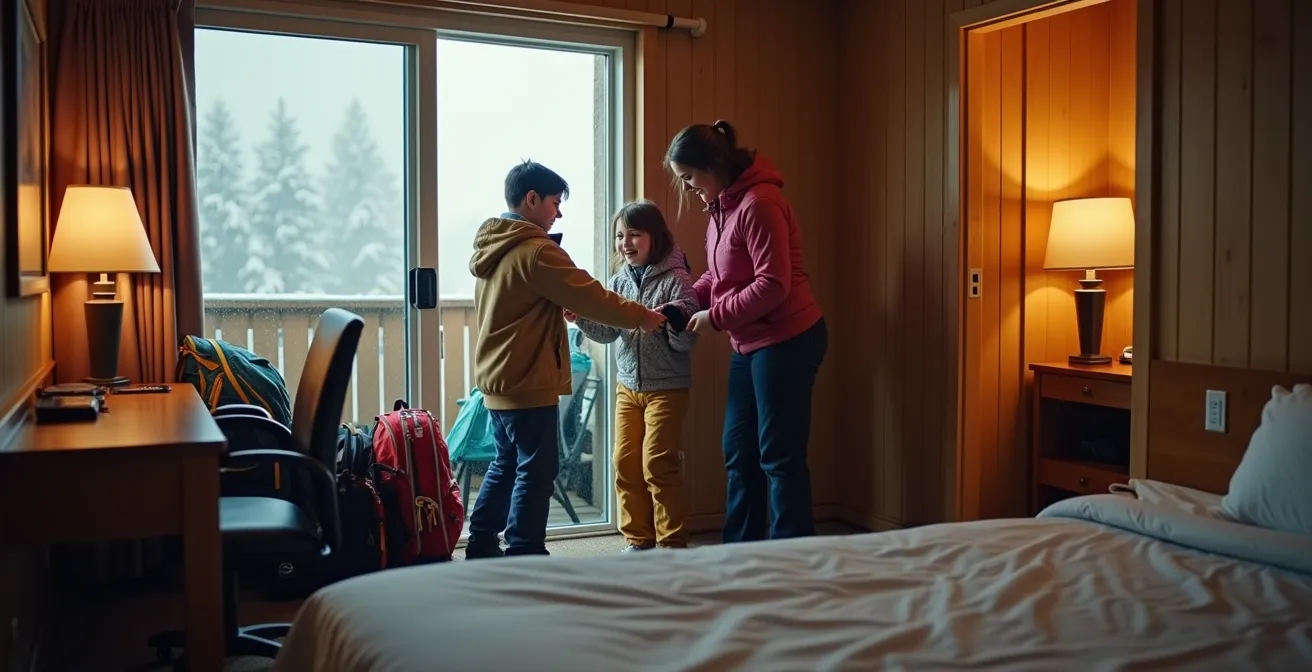
The math is compelling. A standard hotel in Saint-Jovite can be found for a fraction of the price of even a basic condo in the village. But this saving isn’t “free”—you pay for it with time and logistics. Your morning routine will involve an extra 30 to 45 minutes of getting everyone dressed, packing gear into the car or onto the municipal shuttle, and dealing with parking. This contrasts sharply with the 5-minute walk from a village condo to the gondola. For families with very young children, this added logistical challenge can be a major source of stress. However, you also gain access to Saint-Jovite’s local restaurants, which offer more authentic and affordable dining options for dinner.
Ultimately, the choice depends entirely on your family’s personality and priorities. A family that thrives on efficiency and is willing to trade a bit of morning hustle for massive savings will do great in Saint-Jovite. A family that values a seamless, stress-free experience above all else might find the premium for a village stay is worth every penny. The table below breaks down the trade-offs clearly.
| Factor | Saint-Jovite (10 min drive) | Pedestrian Village |
|---|---|---|
| Nightly Rate | Comfort Inn from $139 CAD | La Chouette from $278 CAD |
| Convenience | Shuttle or car required | Ski-in/ski-out access |
| Dining Options | Local restaurants, cheaper prices | 30+ restaurants, premium prices |
| Morning Routine | 45 min extra prep time | Walk to lifts in 5 minutes |
| Family Logistics | Requires gear transport | Leave gear at mountain lockers |
Seasonal Rentals vs. Daily Rentals: The Math for a 5-Day Trip
The conventional wisdom for saving money on ski gear is to rent off-mountain. While often true, this advice overlooks a critical factor for families: flexibility. Renting directly from the shops in the Tremblant village, while more expensive per day, offers a “flexibility premium” that can be invaluable. This is especially true for trips of 4-5 days with growing kids whose preferences and sizes can be unpredictable.
Imagine this scenario: you’ve rented skis for your 8-year-old from a shop in Saint-Jovite. After one frustrating day, they decide they desperately want to try snowboarding like the “cool kids.” If you rented off-site, you’re either stuck with the skis or facing a major hassle to drive back and attempt an exchange. If you rented on-mountain, you simply walk to the rental shop at the base of the hill and swap the entire package, usually at no extra charge. This convenience can save a vacation from devolving into a tear-filled standoff.
Case Study: The Flexibility Premium in Action
A family from New York visiting for four days chose to rent their equipment on-site despite the higher daily rate, which was about 30% more than off-site options. On the second day, their son decided he no longer wanted to ski and was determined to try snowboarding. The on-mountain rental shop exchanged his skis, boots, and poles for a full snowboard setup without any additional fees. For the parents, the ability to make this quick change and avoid a vacation-derailing argument was worth far more than the money saved by renting off-site.
So how do you get the best of both worlds? Look for deals. During specific promotional periods, like the “Kids Ski Free” weeks, Tremblant sometimes offers a 50% discount on equipment rentals for children. If your travel dates align with one of these promotions, you can get the flexibility of on-mountain rentals at a price competitive with off-mountain shops. For a typical 5-day trip, do the math: calculate the off-site rental cost versus the on-site cost and ask yourself, “How much am I willing to pay for the insurance of a hassle-free swap?”
Why You Should Avoid “Relâche” Week If You Hate Lift Lines
The single most impactful factor on your Tremblant experience, after weather, is timing. Choosing when you go can mean the difference between gliding onto a gondola and waiting in a 30-minute queue. The weeks to avoid at all costs are the school holidays, known as “Relâche” or March Break in Quebec and Ontario, and Presidents’ Week in the US. During these peak times, the resort operates at maximum capacity, and the crowds can be overwhelming.
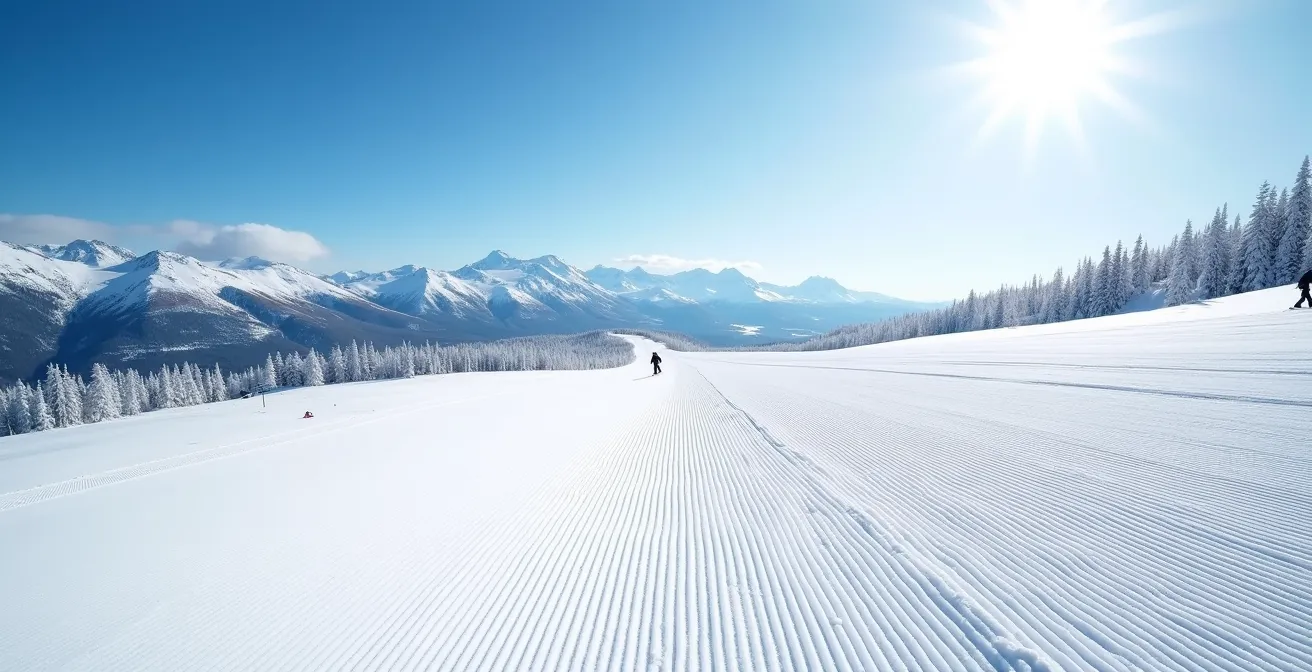
The impact on your ski time is significant. According to experienced skiers report during Quebec and Ontario school holidays, gondola lines can swell to over 30 minutes, compared to a normal 5-10 minute wait during quieter periods. When you’re paying hundreds for lift tickets, spending a large chunk of your day standing in line feels like burning money. The entire atmosphere of the resort changes, from a relaxed alpine village to a bustling, crowded theme park.
The savvy strategy is to aim for the “golden weeks”—the periods right before or after these major breaks. Late January often offers the best combination of excellent snow conditions and minimal crowds. The first or second week of March, after Quebec kids have returned to school but before Ontario’s break begins, is another prime window. By strategically timing your trip, you not only save your sanity but you maximize the value of your expensive lift tickets by spending more time actually skiing.
- Avoid: US Presidents’ Week (approx. February 14-21, 2025)
- Avoid: Quebec School Break (approx. February 28 – March 7, 2025)
- Avoid: Ontario Spring Break (approx. March 14-21, 2025)
- Target: Late January for cold weather and great snow with few crowds.
- Target: The “shoulder” week between the Quebec and Ontario breaks (approx. March 7-13, 2025).
Group Lessons vs. Private: What’s the Best Value for a 7-Year-Old?
For any parent teaching a child to ski, lessons are non-negotiable. But the choice between group and private lessons presents a classic budget dilemma. Private lessons offer personalized attention but come at a premium price, while group lessons are more affordable but risk your child getting lost in a crowd of 10 other kids. However, there’s a savvy way to get the best of both worlds: leveraging off-peak timing.
The value of a group lesson changes dramatically depending on when you travel. If you book a group lesson during the chaos of March Break, you can expect the class to be full. But if you book that same group lesson during a quiet week in late January, the class sizes are often tiny. Your child might end up in a group with only one or two other kids, effectively receiving a semi-private lesson for the price of a group session. This is one of the biggest “hidden value” hacks for a family trip to Tremblant.
Parents who have tried this strategy rave about the results, getting premium instruction at a bargain price.
During a non-holiday week, my 4-year-old ended up having a private or semi-private lesson most of the time, and my 7-year-old was with no more than 5 kids. The small group sizes during off-peak times essentially turned our group lesson purchase into semi-private instruction at a fraction of the cost.
– A parent’s report, via Momtrends
For a 7-year-old who needs a good foundation, this can be a game-changer. Also, keep an eye out for special promotions. For instance, Tremblant sometimes offers a 50% discount on group ski school lessons during its “Kids Ski Free” week in early December. Combining a promotional discount with off-peak timing is the ultimate strategy for maximizing your ski school dollars and ensuring your child has a fantastic learning experience.
Epic Pass vs. Ikon Pass: Which Saves More Money on the Powder Highway?
When planning a major ski trip, many families consider multi-resort season passes like the Epic Pass and the Ikon Pass. However, this particular H2 title, “Epic Pass vs. Ikon Pass: Which Saves More Money on the Powder Highway?”, is a bit of a red herring for a Mont-Tremblant trip. The Powder Highway is in British Columbia, and Mont-Tremblant is not on the Epic Pass at all. For a trip focused solely on Tremblant, the relevant pass comparison is between the Ikon Pass and Tremblant’s own regional passes.
The Ikon Pass is the global pass that grants access to Tremblant and over 50 other resorts worldwide. It’s a fantastic product if you plan to ski at multiple destinations in a single season. But if your family’s main or only ski trip will be to Tremblant, the Ikon Pass is often overkill. You’d be paying a premium for access to resorts you’ll never visit.
The smarter financial choice for most Ontario and Quebec families is often the Tonik Pass. As detailed in Tremblant’s own pass guide, the Tonik Pass is exclusive to Canadian residents and is designed specifically for those who ski primarily at Tremblant. It offers a generous number of days, including weekends and some holidays, at roughly half the price of an Ikon Pass. The break-even point is compelling: the pass often pays for itself after just 5 or 6 days of skiing. For a family planning a week-long trip, the Tonik Pass delivers far superior value.
If you’re only skiing for a few days and a pass doesn’t make sense, don’t just buy window-rate tickets. The Nordik Card is another excellent option for occasional skiers, offering a flexible way to ski 2-4 days with significant savings over the single-day price. The key is to analyze your specific ski plans honestly and buy the product that matches, rather than being lured by the appeal of a global pass you won’t fully use.
Are the “Xplorers” Programs for Kids Worth the Time?
For parents who are advanced skiers, a day of kid-friendly green runs can feel limiting. This is where programs like Tremblant’s “Xplorers” come in. These are full-day ski-and-play programs for kids, separate from traditional ski school. They offer parents a precious commodity: 6-8 hours of uninterrupted time to tackle the black diamonds on the North Side or enjoy a quiet lunch. But is this freedom worth the cost?
Let’s do the math from a value trade-off perspective. A full-day program runs approximately $150 per child. This grants parents about six hours of freedom. That breaks down to $25 per hour for adult-only ski time. For a parent craving the challenge of advanced terrain, that might be the best money they spend all trip. The value of these programs also skyrockets on brutally cold or rainy days. When the weather turns, having a supervised indoor/outdoor program that keeps your kids warm, engaged, and happy is priceless, allowing you to ski in peace or opt for a cozy afternoon by the fire without guilt.
However, it’s crucial to consider the alternative. For the same $150, what else could your family do together? That budget could cover a session at the Brind’O Aquaclub indoor waterpark, an afternoon of snow tubing, BeaverTails treats for the whole family, and still leave you with money for hot chocolate. There is no right or wrong answer. The “worth” of the Xplorers program depends entirely on what your family values most: shared family time doing various activities, or dedicated, high-quality ski time for the parents. It’s a conscious choice between investing in parental freedom and investing in a different kind of family fun.
Key Takeaways
- The Convenience Tax: Ski-in/ski-out is a luxury. Calculate if the money saved by staying off-site is worth the extra time and logistics for your family.
- The Flexibility Premium: For kids, the slightly higher cost of on-mountain rentals can be a worthwhile investment for the ability to easily swap ill-fitting or unwanted gear.
- The Timing Advantage: The biggest non-monetary saving is time. Avoiding school break weeks is the number one rule for maximizing your time on the slopes and minimizing stress.
Surviving and Thriving in an Urban Canadian Winter
While the official title of this section mentions an “urban” winter, the real secret to thriving on a budget at Mont-Tremblant is realizing that the resort itself offers a wealth of experiences that don’t require an expensive lift ticket. A successful family trip isn’t just about maximizing vertical feet skied; it’s about soaking in the magical village atmosphere. Building “free fun” into your itinerary is a great way to rest tired legs and your wallet.
The pedestrian village is a destination in its own right, and much of its charm is free to enjoy. You can spend an entire day enjoying the resort without ever clicking into skis. This is a perfect strategy for an arrival or departure day, or for a designated “rest day” mid-trip to let everyone recover. It ensures you’re still getting the full Tremblant experience, even when you’re not paying to be on the slopes.
Embracing these activities transforms your vacation from an expensive ski-only trip into a more varied and affordable winter festival. Here are some of the best free or low-cost activities to enjoy:
- Mountain Views for Free: Take the open-air Cabriolet lift from the base parking lots to the upper village, and then ride the free panoramic gondola for stunning mountain views without a ski pass.
- Village Entertainment: Wander through the pedestrian village and enjoy the street performers, festive lights, and vibrant atmosphere.
- Complimentary Sliding: Near the base of the village, there’s a small, complimentary sliding hill that’s perfect for an hour of simple, classic winter fun for little ones.
- Window Shopping & Poutine: Spend an evening exploring the 35+ unique boutiques and cap it off by sharing an affordable and iconic Quebec poutine from a stand like “La Diable” or “Smoke’s Poutinerie.”
Now that you’re armed with these specific strategies, you can start planning a trip that balances cost and magic. The next logical step is to map out your potential dates, compare accommodation options, and build a realistic family budget using these value trade-off principles.