In summary:
- Spectating the race is free, but a Parks Canada Discovery Pass is mandatory for your vehicle to enter Banff National Park.
- Dressing in strategic layers is non-negotiable; insulated, waterproof boots are your single most critical piece of gear to avoid the “Spectator Freeze.”
- You don’t need skis. The main fan viewing zones and festival area are located at the base of the mountain and are fully accessible on foot.
- Create a travel plan. Leave early, especially from Calgary, as highway conditions can vary and parking lots at the resort fill up by 10:00 AM on race days.
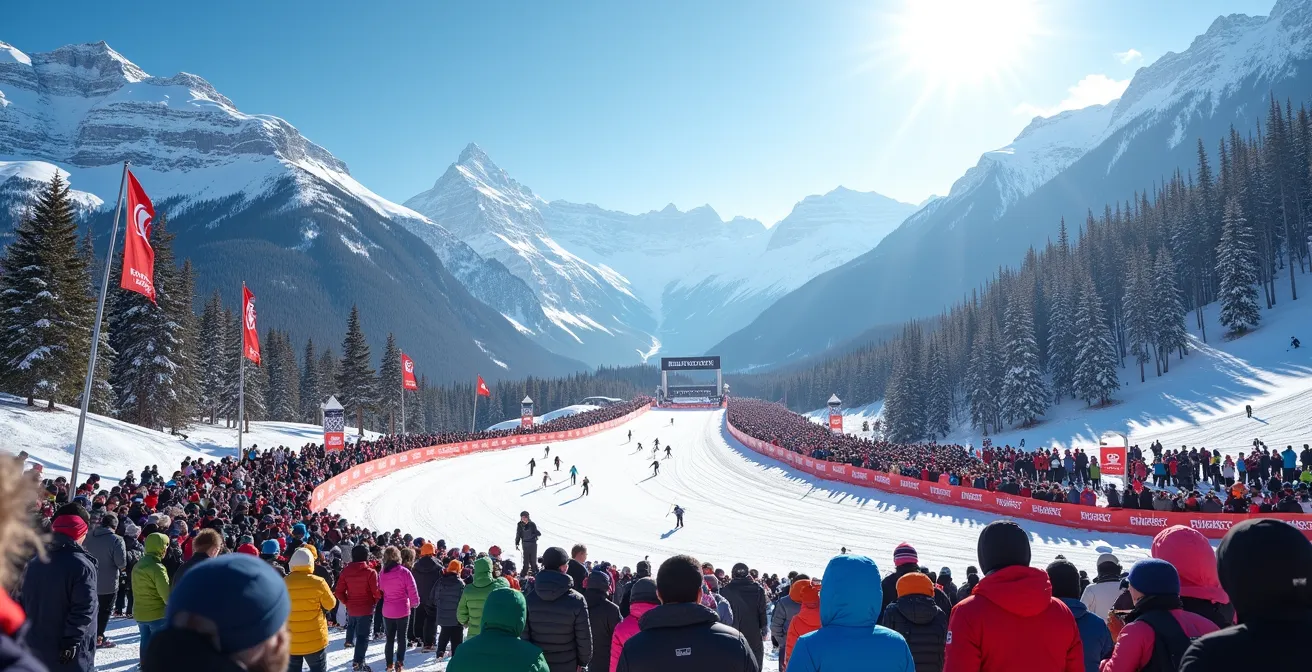
The roar of the crowd cuts through the crisp mountain air, a sound that builds from a murmur to a crescendo as a brightly coloured racer explodes into view, a blur of motion against the pristine white snow. This is the heart-pounding reality of the Lake Louise Alpine Ski World Cup. For sports fans, it’s a chance to witness world-class athletes defy gravity. But between you and that unforgettable moment lies a series of logistical hurdles: How do you get there? What do you wear to survive hours in the cold? Do you need a ticket? Can you actually meet the stars?
Many guides will tell you to simply “show up and dress warm.” But anyone who has stood on a snowbank in the Canadian Rockies knows it’s more complex than that. A successful spectator experience isn’t just about watching a race; it’s about mastering the environment. It requires a game plan, an insider’s knowledge that transforms a potentially cold and confusing day into a seamless and thrilling festival experience.
Forget guesswork. This is your logistical playbook. We’re moving beyond the basics to give you the specific strategies you need. We’ll cover the crucial difference between race disciplines, the exact gear that will keep you warm, where to be and when to get that coveted autograph, and how to navigate the full festival atmosphere. This guide ensures you’ll arrive prepared, stay comfortable, and leave with memories that go far beyond the finish line.
This comprehensive guide breaks down every aspect of your race-day experience. From the fundamental question of access to planning your travel and extending your trip, here’s everything you need to know to enjoy the Lake Louise World Cup like a seasoned professional.
Summary: Your Expert Guide to the Lake Louise World Cup
- Do You Need Skis to Watch the World Cup Downhill?
- Downhill vs. Super-G: What’s the Difference for the Spectator?
- The “Spectator Freeze”: How to Dress for Standing on a Snow Bank for 4 Hours
- Autograph Zones: Where to Meet the Ski Stars After the Race
- Beyond the Finish Line: The Lake Louise Festival Experience
- Tickets, Passes, and Park Entry: Decoding Your Access Options
- Race Day Logistics: Getting to the Venue on Time
- Extending Your Trip: A Canadian Rockies Winter Itinerary
Do You Need Skis to Watch the World Cup Downhill?
Let’s clear this up right away: you absolutely do not need skis to have a fantastic spectator experience at the Lake Louise World Cup. While the event takes place at a world-renowned ski resort, it is expertly designed to be fan-friendly for non-skiers. The main spectator area, often called the Fan Zone, is located at the base of the mountain, directly in front of the finish line. This area is easily accessible on foot from the main lodge and parking areas. You can walk right in, find a spot along the fencing, and watch the racers storm across the finish line just metres away.
The entire festival atmosphere—including sponsor tents, food and beverage stalls, and live music—is concentrated in this pedestrian-friendly zone. Bringing skis can actually be a hindrance if your sole purpose is to watch the race, as you’ll have to manage your gear in a crowded area. The key is understanding the different tiers of access available, from being a dedicated non-skiing fan to someone who wants to combine racing with a day on the slopes.
The following table breaks down your primary options. It clarifies what’s included with each choice, from free spectating to multi-day ski passes. Note the critical and often overlooked requirement of a Parks Canada Pass for every vehicle entering the national park.
| Access Type | Cost | What’s Included | Best For |
|---|---|---|---|
| World Cup Spectator | FREE | Fan Zone access, finish line viewing | Non-skiers watching races only |
| SkiBig3 Ticket | $150-200/day | Skiing at Lake Louise + Sunshine + Norquay | 1-3 days skiing in Banff |
| Ikon Pass | $1,249+ | 7 days Lake Louise + global resorts | 4+ days regional skiing |
| Parks Canada Pass | $72.25/vehicle | Required for all park visitors | Everyone driving to venue |
Downhill vs. Super-G: What’s the Difference for the Spectator?
To the casual observer, ski racing can look like a singular blur of speed. However, the Lake Louise World Cup typically features two distinct “speed” disciplines: the Downhill and the Super-G. Understanding the difference is key to appreciating what you’re seeing. Think of it as the 100-metre dash versus the 400-metre hurdles. Both are fast, but the strategy is fundamentally different.
The Downhill is pure, unadulterated speed. It’s the marquee event, featuring the longest course, the highest speeds (often exceeding 130 km/h), and massive, soaring jumps. For the spectator, this translates into breathtaking moments of raw power and courage. The racers are in a deep aerodynamic tuck for much of the course, and the sound of their skis carving on the ice is something you can feel in your chest. The Downhill is about commitment and gliding efficiency.

The Super-G (Super Giant Slalom) is the more technical sibling. It’s shorter than the Downhill but features more turns, forcing racers to constantly adapt and make high-speed decisions. The gates are set further apart than in a traditional slalom, so speeds are still incredibly high, but racers must blend the raw speed of a Downhill with the agility of a Giant Slalom skier. For a spectator, this means you’ll see more visible edge-to-edge transitions and tactical line choices as they navigate the course. It’s a showcase of precision at speed, and it has been a successful discipline for Canadian athletes, who have achieved 12 podium finishes at Lake Louise over the years, adding a patriotic thrill for the home crowd.
The “Spectator Freeze”: How to Dress for Standing on a Snow Bank for 4 Hours
The single greatest threat to your enjoyment of the World Cup is not a bad view or long lines; it’s the cold. Underestimating the biting chill of the Canadian Rockies in late November is a rookie mistake. In fact, at the very first World Cup in Lake Louise in 1980, the event drew a massive crowd of 10,000 people. As the day wore on, organizers noticed the crowd thinning significantly. The primary culprit? Cold feet. Many spectators, unaccustomed to standing on snow for hours, learned the hard way that inadequate boots were the fastest ticket back to the car. This historical lesson shaped the modern spectator experience, with better warming huts and facilities, but the core principle remains: your gear is your lifeline.
Beating the “Spectator Freeze” requires a strategic layering system, not just one big, bulky jacket. Your goal is to trap air, manage moisture, and block the wind. Think like an athlete preparing for the elements. Proper attire is non-negotiable for a multi-hour outdoor event where you’ll be largely stationary.
Your Canadian Rockies World Cup Spectator Survival Kit
- Moisture-Wicking Base Layer: Start with a thermal base layer made of merino wool or a quality synthetic. This pulls sweat away from your skin, which is the first step in staying warm.
- Insulating Mid-Layer: Add a down or fleece jacket over your base layer. This is your primary heat-trapper. A puffy down jacket is excellent for its warmth-to-weight ratio.
- Waterproof/Windproof Shell: Your outermost layer must be a shell jacket and pants that block wind and snow. This protects your insulating layers from the elements.
- Critical Footwear: Invest in insulated, waterproof winter boots (Canadian brands like Sorel or Baffin are gold standards for a reason). Wear one pair of thick wool socks—multiple pairs can restrict circulation and make your feet colder.
- Extremity Protection & Comfort: Use chemical hand and foot warmers (available at stores like Canadian Tire in nearby Canmore). Also bring high-quality sunglasses for the intense snow glare, a portable insulated seat pad to avoid sitting directly on cold surfaces, and a thermos of your favourite hot beverage.
Autograph Zones: Where to Meet the Ski Stars After the Race
One of the most exciting aspects of the Lake Louise World Cup is the incredible access it offers to the athletes. Unlike stadium sports, the atmosphere here is intimate, and with the right strategy, you have a very real chance of getting an autograph or a photo with your favourite ski racing hero. However, you need to be strategic. Don’t just wander around hoping for a chance encounter; have a plan.
The organizers make it easy by setting up an official autograph area. This is your most reliable opportunity. But there are also other “unofficial” spots where you can catch athletes in a more relaxed setting. As your event coordinator, here is your insider’s guide to maximizing your chances of meeting the pros. Remember to be respectful of their time, especially right after a tough race.
- The Official Zone: Your top priority should be the designated autograph area, typically located near the finish corral. Head there immediately after the race concludes, as athletes will be cycled through for a set period.
- Support the Home Team: To get the attention of the Canadian Alpine Ski Team, a small Canadian flag or wearing team colours can go a long way. They are always appreciative of the home crowd support.
- Timing is Everything: While everyone mobs the top finishers, consider targeting athletes who finished in the 10th to 30th range. They are often more relaxed and have more time for fan interactions than the podium winners who are rushed off to media duties.
- Alternative Spots: Keep an eye on the area near the finish line where athletes perform their “cool-down” exercises. Another great spot is the deck of the Kokanee Kabin after the official award ceremonies have wrapped up, as athletes and team staff often gather there to unwind.
- Be Prepared: Don’t be caught fumbling for a pen. Bring a permanent marker with you. For a truly memorable souvenir, have something unique for them to sign, like a ski helmet, a cowbell, or a national flag, rather than just a scrap of paper.
Beyond the Finish Line: The Lake Louise Festival Experience
The Lake Louise World Cup is so much more than just a ski race; it’s a full-blown winter festival set against the stunning backdrop of Banff National Park. The energy in the finish area is electric, and your experience should absolutely include soaking in this vibrant atmosphere. The event organizers have cultivated an environment where the line between fan and participant feels beautifully blurred, thanks to the intimate setting and the variety of activities on offer.
The Fan Zone is the heart of the action. Here you’ll find live music pumping between racers, creating a party-like vibe that keeps the energy high. Sponsor tents are a must-visit, offering everything from free swag and product demos to fun interactive games. After the racing concludes, the celebration continues at the après-ski beer gardens. There’s nothing quite like raising a glass with fellow ski racing enthusiasts while surrounded by some of the most majestic peaks on the planet. This is where stories are shared and the day’s incredible athletic feats are re-lived.

What makes the Lake Louise stop unique is that the entire race community—athletes, coaches, and support staff—typically stays at the iconic Fairmont Chateau Lake Louise. While access to the hotel itself is public, it creates a unique environment where chance encounters in the lobby or at one of the restaurants are not uncommon. It reinforces the close-knit, festival feel of the event. Your trip should budget time to simply explore this area, grab a hot chocolate, and be a part of the buzz that extends well beyond the boundaries of the race course.
Tickets, Passes, and Park Entry: Decoding Your Access Options
While spectating the race itself is free, getting to the venue involves a few key costs and passes that you must plan for. Understanding these is a critical piece of your logistical puzzle, and getting it wrong can cause unnecessary stress or even prevent you from getting to the event. Let’s break down exactly what you need.
First and foremost, the Parks Canada Discovery Pass is mandatory. The Lake Louise Ski Resort is located inside Banff National Park. To drive into and through the park, every vehicle is required to have a valid pass displayed. You can buy a day pass at the park gates on the Trans-Canada Highway, but if you plan on spending more than a few days in the region, an annual pass often provides better value. This is a non-negotiable requirement and park wardens do patrol parking lots.
Next, consider your on-site plans. If you are there solely to watch the race, you need nothing more than your Parks Pass. Access to the finish area and Fan Zone is completely free. However, if you want to ski, you’ll need a lift ticket. A standard day ticket for the Lake Louise Ski Resort gives you full mountain access. For those planning a longer ski trip in the area, a SkiBig3 ticket provides access to Lake Louise, Sunshine Village, and Mt. Norquay. For the ultimate ski traveler, a season pass like the Ikon Pass includes a set number of days at Lake Louise as part of a larger, global collection of resorts.
Race Day Logistics: Getting to the Venue on Time
On race day, the clock is your biggest competitor. The combination of mountain weather, highway traffic, and limited parking means you need a solid travel plan. A casual, “we’ll leave when we’re ready” approach is a recipe for missing the action. Here is your logistical timeline and key alerts for getting from the main hubs of Calgary and Banff to the finish line on time.
Your departure time is the most critical factor. The main parking lots at the resort can fill up as early as 10:00 AM, especially on a bluebird Saturday. Once these are full, you will be directed to overflow lots, which require taking a shuttle bus to the main lodge. Factoring in this potential extra step is crucial.
- From Calgary (for a 12:00 PM race start): Plan to depart no later than 8:00 AM. This accounts for the standard 2-hour drive and gives you a 2-hour buffer for parking, potential traffic delays near the park gates, and walking to the fan zone.
- From Banff (for a 12:00 PM race start): A 9:30 AM departure is recommended. This allows ample time for the 45-minute drive and navigating the final stretch to the resort parking.
- Winter Driving Alert: Before you even get in the car, check road conditions. The go-to resource is 511 Alberta. It provides real-time updates on highway closures, accidents, and weather warnings for the Trans-Canada Highway.
- Wildlife Warning: Be extremely vigilant, especially in the early morning. There is a high probability of encountering elk, deer, or bighorn sheep directly on the highway. Slow down and be prepared to stop.
- Parking & Shuttles: Aim for the main lots. If you are directed to overflow, don’t panic. Free shuttles run continuously (approximately every 20 minutes) and will get you to the base area efficiently.
Key takeaways
- The single most important piece of logistical planning is acquiring a Parks Canada Discovery Pass for your vehicle before arriving at the park gates.
- Your choice of footwear is paramount. Insulated, waterproof winter boots are non-negotiable for staying warm and comfortable while standing on snow for hours.
- While watching the race is free, a strategic travel plan is essential. Leave early to secure parking and account for unpredictable mountain road conditions.
Extending Your Trip: A Canadian Rockies Winter Itinerary
The World Cup is an incredible anchor event, but your adventure doesn’t have to end when the last racer crosses the finish line. Leveraging your trip to Lake Louise as a starting point for a larger Canadian Rockies road trip is an excellent way to maximize your visit. The region offers some of the most iconic winter experiences in the world, all within a short drive of the race venue.
The most legendary option is a journey along the Icefields Parkway (Highway 93). This 232-kilometre scenic drive connects Lake Louise to Jasper and is widely regarded as one of the most beautiful drives on Earth. In winter, it’s a serene landscape of frozen waterfalls, massive glaciers, and snow-dusted peaks. A crucial safety note: by law, vehicles must be equipped with mandatory winter tires (tires marked with a mountain/snowflake symbol), not just all-seasons. The parkway can also close with no notice due to avalanche risk, so always check 511 Alberta before departing.
If you’re looking for activities closer to the race venue, you have a wealth of world-class options. An ice walk through Johnston Canyon, just 30 minutes from Lake Louise, is a magical experience where you walk on steel catwalks through a deep limestone canyon to see spectacular frozen waterfalls. For a classic Canadian activity, rent skates and glide across the frozen surface of the Vermilion Lakes with a stunning view of Mount Rundle. And after a long, cold day of spectating, there is no better way to warm up and relax than by soaking in the mineral-rich waters of the Banff Upper Hot Springs.
With this insider’s playbook in hand, you’re ready to experience the Lake Louise World Cup like a seasoned pro. Plan your logistics, pack your strategic gear, and get ready to witness ski racing history in the heart of the Canadian Rockies!