In summary:
- To find authentic jazz, skip the main stage crowds and focus on smaller, sponsored stages like Scène Loto-Québec or free indoor shows at Le Studio TD.
- Beat the main stage crush by finding “acoustic sweet spots” on the steps of Complexe Desjardins or using the Saint-Urbain street entrance to bypass bottlenecks.
- Embrace the “second-shift” festival by exploring Montreal’s 24-hour diners in The Plateau or the unique BYOW (Bring Your Own Wine) restaurant culture.
- Survive the July humidity by mapping out public water fountains and using air-conditioned public spaces like the Grande Bibliothèque (BAnQ) for cool-down breaks.
The first time you step into the Montreal International Jazz Festival, it hits you. It’s not just music; it’s a living, breathing creature. The air thrums with a dozen different rhythms, the streets of the Quartier des Spectacles pulse with a human tide, and the sheer scale of it all can be both exhilarating and utterly paralyzing. You’re one of over two million people, and the official program feels less like a guide and more like a phone book of impossible choices. The generic advice is everywhere: wear comfortable shoes, stay hydrated, book your hotel early. But that’s travel 101, not a strategy for conquering the world’s largest jazz festival.
Those guides won’t tell you how to navigate the festival’s true geography, which isn’t mapped by stages but by sound, vibe, and energy. They won’t explain the unwritten rules of the ‘5 à 7’ happy hour or where to find a soul-reviving bowl of noodles at 3 AM. They treat the festival as a list of shows to see, a checklist to complete. But what if the secret to surviving—and truly loving—the fest isn’t about seeing everything? What if it’s about mastering the ‘in-between’? The real magic lies in the side stages, the late-night jam sessions, and the urban survival hacks that separate rookies from veterans.
This is not a guide to the official program. This is a guide to the festival flow. We’re going to bypass the tourist-clogged arteries and find the hidden pathways. We’ll cover where the real jazz hides in plain sight, how to claim your space without getting crushed, how to refuel when the official food trucks have long gone dark, and how to soak up that infectious ‘joie de vivre’ that makes this festival a global legend. It’s time to experience the festival like a local.
This guide provides a veteran’s strategy for navigating the festival’s key challenges and opportunities. Explore the sections below to master everything from finding authentic music to late-night survival and embracing the local culture.
Summary: A Veteran’s Playbook for the Montreal Jazz Festival
- Free Outdoor Shows vs. Place des Arts: Where is the Real Jazz?
- How to See the Main Stage Without Being Crushed in the Crowd
- Where to Eat at 2 AM During the Jazz Fest?
- Surviving the Humidity: Hydration Hacks for a July Festival in Montreal
- The Upstairs and Dièse Onze: Finding Intimate Jazz Clubs
- Where to Hear Local Chansoniers Instead of Top 40 Hits?
- The Hygge Guide: Best Cafés with Fireplaces in Old Quebec
- Living the “Joie de Vivre”: How to Soak Up the Francophone Vibe
Free Outdoor Shows vs. Place des Arts: Where is the Real Jazz?
The festival’s biggest draw is its democratic spirit: of the 350+ shows, an incredible two-thirds are completely free, drawing a huge portion of the annual visitors. But with so much on offer, “free” can easily mean generic pop, cover bands, or DJ sets. The hunt for authentic, cutting-edge jazz amidst the sea of free programming is the first skill a festival veteran masters. The main stage at Place des Arts often hosts big, crossover names, but the real heart of the festival’s jazz scene often beats on the smaller, sponsored stages.
Your strategy should be to actively filter the noise. Look for the Scène Loto-Québec or the Rio Tinto Stage in your program; these are notorious for featuring more experimental local artists and true jazz innovators. Don’t neglect the indoor free shows either. Le Studio TD is a goldmine, often hosting free sets at 6 PM and 10 PM that showcase emerging talent in a more intimate setting. Arriving early for an “Apéro-Jazz” set at Cinquième Salle or L’Astral is another pro move to catch quality music before the massive outdoor crowds reach their peak.
This tension between the commercial juggernaut and the city’s vibrant local scene is nothing new. In fact, it led to the creation of L’OFF Festival de Jazz de Montréal in 1999. Born from a desire by local musicians to have a platform dedicated to their work, it runs concurrently as an alternative, musician-programmed festival. While you’re here for the main event, embracing the spirit of L’OFF—by seeking out Quebec artists and following locals to late-night jams in the Quartier Latin—is the surest way to find the “real” jazz.
Ultimately, the program is a treasure map, but the most valuable jewels are often hidden. A discerning eye and a willingness to wander off the main path will reward you with the most memorable musical discoveries.
How to See the Main Stage Without Being Crushed in the Crowd
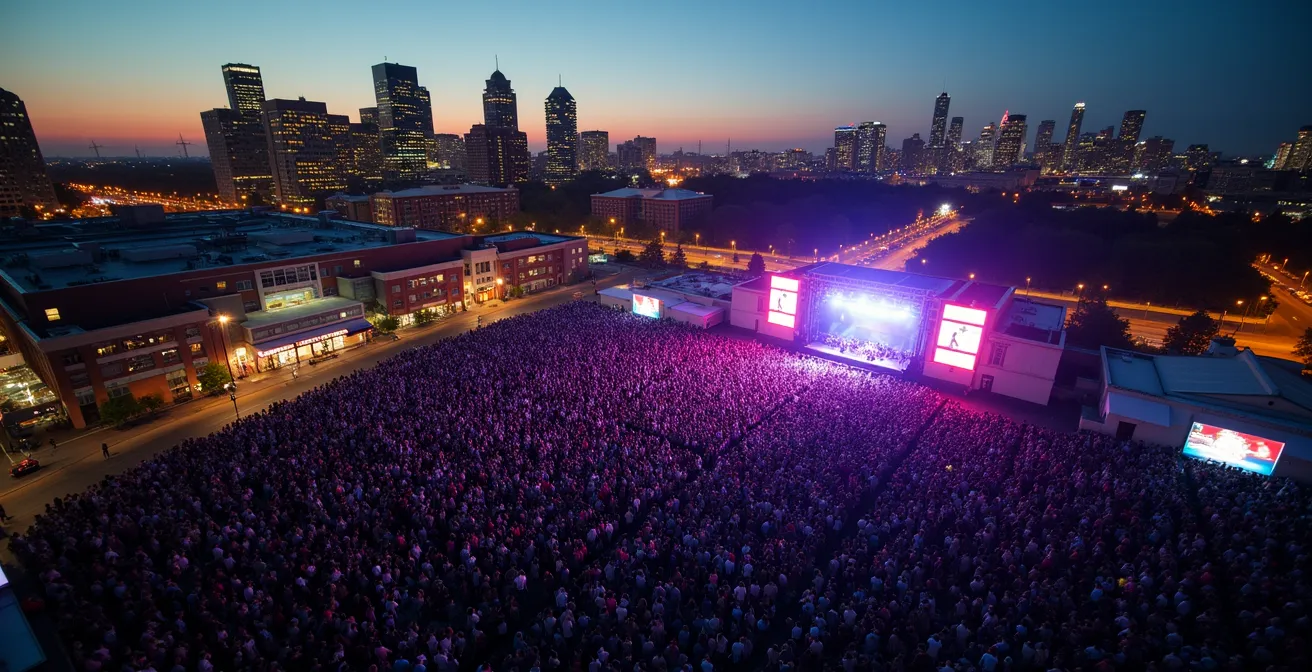
The main stage “Big Event” concerts are a spectacle to behold, a massive communion of music lovers. They are also, by definition, incredibly crowded. These events can easily draw between 100,000 to 150,000 people, turning the Place des Festivals into a dense, pulsating mass of humanity. If your idea of a good time doesn’t involve becoming intimately acquainted with the elbows of several strangers, you need a plan that prioritizes acoustics and breathing room over being ten feet from the stage.
The key is to understand the geography of the Quartier des Spectacles and identify the “acoustic sweet spots” that locals use. These are areas with excellent sound projection but lower crowd density. Instead of diving into the heart of the crowd, think laterally.
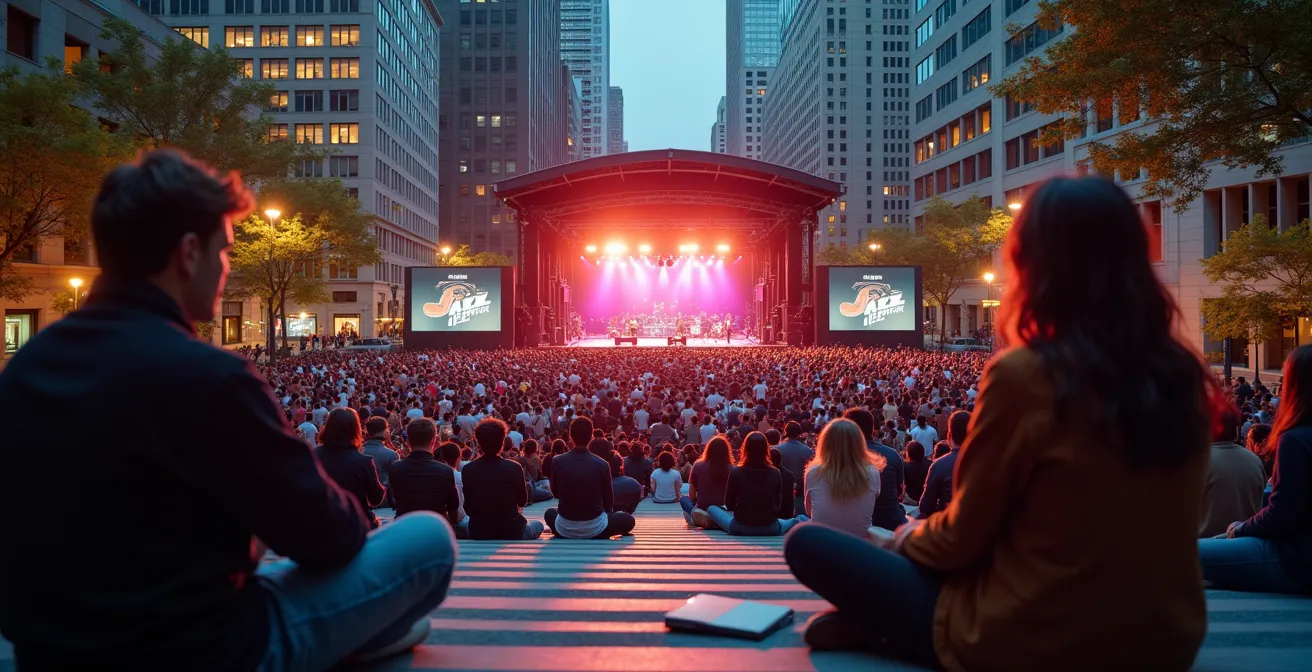
As the map suggests, strategic positioning is everything. The elevated walkways around Place des Arts or the steps of the Musée d’art contemporain offer fantastic vantage points. You get a clear view of the stage, a sense of the epic scale, and, most importantly, space. The area near the fountains or on the steps of Complexe Desjardins are also legendary spots for their surprisingly clear sound and more relaxed atmosphere. You trade a bit of proximity for a lot of comfort, a bargain any veteran is happy to make.
Your Action Plan: Strategic Main Stage Navigation
- Entrances: Use the Saint-Urbain street entrance to bypass the major bottlenecks that form on Sainte-Catherine street.
- Timing: Arrive about 45 minutes before the opening act finishes on a nearby smaller stage. You can catch a full set there and then move into a prime position as that crowd disperses.
- Positioning: Stake out a spot near the fountains or on the steps of Complexe Desjardins. The sound is excellent and the crowd density is significantly lower.
- Accessibility: For those with strollers or wheelchairs, the Place des Arts metro elevator provides a less-congested route to elevated viewing areas.
- Exit Strategy: Beat the mass exodus and the subsequent metro rush by starting to move out 15 minutes before the final song. You’ll still hear it, but you’ll be ahead of the wave.
Remember, the goal isn’t just to see the show, it’s to enjoy it. A little bit of planning transforms a potentially stressful experience into a spectacular one.
Where to Eat at 2 AM During the Jazz Fest?
When the last encore fades and the stage lights dim around midnight, the festival enters its second act. The official food trucks are packing up, but the energy on the street is still electric, and you’re suddenly starving. This is where Montreal’s legendary late-night food scene becomes your best friend. Forgetting to plan for your 2 AM refuel is a rookie mistake. A veteran knows that some of the city’s best and most affordable eats are just a short walk or metro ride away, ready to satisfy post-show cravings.
Your options extend far beyond the festival grounds. A five-minute walk east plunges you into Chinatown, where noodle houses and dim sum spots serve life-giving soup and dumplings until the wee hours. Head north into The Plateau, and you’ll find classic 24-hour diners and one of Montreal’s most celebrated culinary institutions: the BYOW (‘Apportez Votre Vin’) restaurant. Grabbing a bottle of wine from a ‘dépanneur’ (corner store) and heading to a great, affordable bistro is a quintessential Montreal experience that perfectly complements a night of music.
The following table breaks down your best bets for late-night sustenance, a crucial part of your festival survival kit. These options are not just about food; they’re about continuing the vibe in a new setting, from bustling diners to quiet pub corners.
| Distance/Time | Location | Food Type | Hours |
|---|---|---|---|
| 5-min walk | Chinatown | Noodle houses, dim sum | Until 3 AM |
| 10-min metro | The Plateau | 24-hour diners, BYOW restaurants | 24/7 or until 2 AM |
| 15-min walk | Crescent Street | Pub grub, late-night pizza | Until 3 AM |
| On-site | Festival grounds | Food trucks (local poutine specialists) | Until midnight |
| Everywhere | Dépanneurs (deps) | Local beers (Unibroue, Boréale), snacks | Until 11 PM or 24/7 |
Don’t let hunger cut your night short. A little exploration will reward you with delicious food and a deeper taste of Montreal’s vibrant, round-the-clock culture.
Surviving the Humidity: Hydration Hacks for a July Festival in Montreal
Montreal in July is a beautiful thing, but it comes with a challenge that can sideline even the most enthusiastic festival-goer: the humidity. With July temperatures averaging 26°C (79°F) and humidity levels often hitting 60-70%, the heat is no joke. Standing in a dense crowd under the summer sun can drain your energy fast. A true festival veteran doesn’t just endure the heat; they have a strategic plan for staying cool and hydrated, ensuring they have the stamina to last from the afternoon sessions to the late-night jams.
Your first line of defense is simple: a refillable water bottle. But the real hack is knowing where to fill it up for free. Before you even leave for the day, do a quick search for the locations of ‘fontaines publiques‘ (public water fountains) around the Quartier des Spectacles. They are your best friend. Supplementing water with electrolyte tablets is another pro move to combat what you lose through sweat in the thick, humid air.
Equally important is your cool-down strategy. You need to identify your “cool-down sanctuaries”—publicly accessible, air-conditioned spaces where you can take a 30-minute break to reset your body temperature. The massive lobby of Complexe Desjardins is a popular and free choice. For a quieter escape, the upper floors of the BAnQ (Grande Bibliothèque) offer serene, cool reading spaces. Even during a sudden summer thunderstorm, having a plan to shelter in the underground RÉSO network or nearby UQAM university pavilions keeps you dry and ready for the next set. This isn’t about hiding from the festival; it’s about punctuating the intense outdoor energy with moments of cool, calm restoration.
By treating hydration and cooling as a tactical part of your day, you’re not just surviving the humidity—you’re outsmarting it, ensuring you have the energy to fully immerse yourself in the music.
The Hygge Guide: Best Cafés with Fireplaces in Old Quebec
Wait a minute—fireplaces in July? Old Quebec? This isn’t Quebec City in December. But the spirit of this title hints at a crucial festival survival concept: finding your ‘hygge’ sanctuary. In the context of a sweltering Montreal summer, ‘hygge’ isn’t about cozy fires; it’s about the profound comfort of a cool, quiet, air-conditioned escape. It’s the blissful sigh of relief when you step out of the humid, noisy street into a calm, refreshing space. A true veteran knows the location of these urban oases and uses them strategically to recharge.
The area around the Quartier des Spectacles is dotted with incredible cafés that offer a perfect midday respite. These aren’t just places to get a coffee; they are tactical retreats. You can still hear the distant thrum of the festival, but you’re in your own peaceful bubble. Consider the stunning Crew Collective & Café, located in a former bank with soaring ceilings and powerful AC. It’s a spectacular place to cool down and feel the city’s history. Or find the minimalist calm of Pastel Rita for an excellent cold brew in a serene setting.
Many of these spots offer more than just air conditioning. Tommy Café boasts a hidden courtyard terrasse that feels miles away from the festival crowds, while September Surf Café provides a laid-back, beach-themed vibe that’s an instant mental vacation. These “summer hygge” spots are essential tools for managing your energy. A one-hour break in a cool café with a good book or a quiet conversation can give you the boost you need to dive back into the festival for another six hours. It’s the ultimate expression of pacing yourself like a pro.
Don’t underestimate the restorative power of a well-timed escape. Mastering the art of the ‘hygge’ break is just as important as knowing the festival schedule.
The Upstairs and Dièse Onze: Finding Intimate Jazz Clubs
As amazing as the massive outdoor shows are, many jazz purists crave the connection and immediacy that only a small club can provide. This is where the music breathes, where you can see the subtle interplay between musicians and feel the vibration of the upright bass in your chest. After the main stages have quieted down, the festival’s soul migrates to the city’s legendary jazz clubs. Forgoing this part of the experience is missing a huge piece of the puzzle. A veteran knows that a ticket to a late show at a place like Upstairs Jazz Bar & Grill or Dièse Onze is often the most rewarding investment of the entire festival.
These clubs are the heart of Montreal’s year-round jazz scene, and during the festival, they are electric. Upstairs has a classic, speakeasy vibe, hosting top-tier international and local acts. Dièse Onze, an intimate basement club in the Plateau, is renowned for its focus on incredible Montreal bandleaders and a truly immersive atmosphere. As confirmed by music journalists, venues like Dièse Onze run a traditionally strong series of local bandleaders that are well worth exploring.
The key is to plan ahead. These are small venues, and shows sell out fast. However, some, like Modavie in Old Montreal, become hotspots for late-night jam sessions after their scheduled programming, where you can often walk in for the price of a drink and see festival artists letting loose in an informal setting. This table offers a quick guide to navigating the club scene.
| Club | Vibe | Booking Policy | Cover/Minimum |
|---|---|---|---|
| Upstairs Jazz | Classic jazz, international acts | Reserve weeks ahead | Cover charge + minimum |
| Dièse Onze | Local bandleaders, intimate | Some walk-in possible | Cover charge |
| Bootlegger | Prohibition-era cocktails | Mixed reservation/walk-in | Drink minimum |
| L’Authentique | Blues-inflected jazz | Walk-in friendly | Cover charge |
| Modavie (Old Montreal) | Late-night jam sessions | First come, first served after midnight | No cover for jams |
Balancing the epic scale of the outdoor stages with the raw intimacy of a jazz club is the mark of a truly well-rounded festival experience.
Where to Hear Local Chansoniers Instead of Top 40 Hits?
While jazz is the festival’s name, Montreal’s soul is sung in French. Woven into the fabric of the event is the rich tradition of the ‘chansonniers’—the Quebec singer-songwriters whose poetic, story-driven music is a cornerstone of the culture. Finding these performances amidst a sea of international headliners is a deeply rewarding experience that connects you to the true spirit of the city. While the main stages might feature global pop stars, the local ‘chanson’ scene offers a more intimate and authentic taste of Quebec’s ‘joie de vivre’.
The festival itself makes a genuine effort to showcase this heritage. As FIJM Director of Programming Maurin Auxéméry notes:
The festival’s commitment to local artists remains strong, with Montreal musicians featured prominently on both free outdoor stages and intimate indoor venues
– Maurin Auxéméry, FIJM Director of Programming
The trick is knowing where to look. Scour the program for Francophone artist names on the smaller stages. But to truly immerse yourself, you may need to step just outside the official festival grounds. The ‘boîtes à chansons‘ are small, intimate venues dedicated to this art form. A classic spot like ‘Aux 2 Pierrots‘ in Old Montreal provides an authentic atmosphere that feels a world away from the massive festival stages. Exploring the bars along Saint-Denis street can also lead to impromptu performances.
This isn’t just about the music; it’s a cultural education. Asking a local about their favorite ‘boîte à chansons’ is a great conversation starter and the best way to get a real insider tip. Taking a self-guided walk from Place des Arts up to the Plateau Mont-Royal, you’ll feel the linguistic and cultural shift, putting you in the right frame of mind to appreciate the poetic, heartfelt storytelling of Quebec’s legendary songwriters.
Making time for a ‘chansonnier’ performance is a way to honor the festival’s host city and to experience a musical tradition that is every bit as powerful as the jazz it celebrates.
Key takeaways
- The most authentic jazz is often found on smaller, sponsored stages or in free indoor shows, not just at the main events.
- Mastering the festival means using strategic positioning and timing to avoid crowds, prioritizing good acoustics and comfort over front-row proximity.
- The festival experience doesn’t end with the music; it extends into Montreal’s vibrant late-night food culture, especially its 24-hour diners and BYOW restaurants.
Living the “Joie de Vivre”: How to Soak Up the Francophone Vibe
You can attend all the right shows and eat at all the right places, but to truly ‘get’ the Montreal Jazz Festival, you need to tap into its cultural heartbeat: the ‘joie de vivre’. This isn’t just a cliché; it’s a tangible energy, a way of being that infuses the entire city. It’s in the rhythm of the language, the social rituals, and the shared celebration in the streets. While the festival brings in an incredible 3,000 performers from over 30 countries, its soul remains deeply and proudly Francophone.
Soaking up this vibe means participating, even in small ways. The first step is mastering the ‘5 à 7‘ ritual. This isn’t just a happy hour; it’s Montreal’s extended social kickoff, a two-hour window to grab a drink on a ‘terrasse’ (which is a social institution, not just a patio) and watch the city shift into evening mode. It’s the perfect pre-show warm-up.
A little ‘Franglais‘ goes a long way. You don’t need to be fluent, but knowing a few key phrases shows respect and opens doors. Ordering your poutine with a confident ‘Je vais prendre une poutine, s’il vous plaît’ or exclaiming ‘C’est capotant!’ (It’s amazing!) after a killer solo will earn you smiles. It’s about making an effort to connect with the local culture. This also extends to the ‘amuseurs publics’ or street performers; if you stop to watch and enjoy, it’s customary to leave a tip.
Ultimately, the music is the reason you come, but it’s the city’s infectious spirit that will make you want to return. Now, take these strategies, open the program, and build the festival experience that’s uniquely yours.