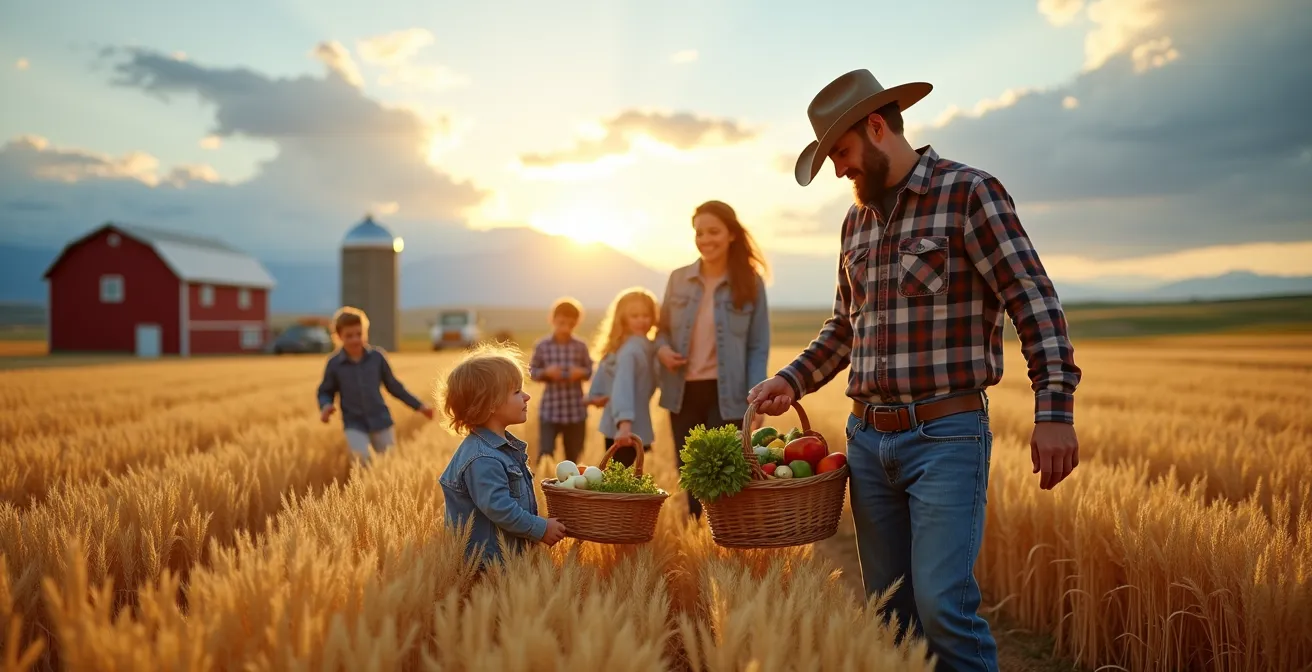
Canadian agritourism is more than just buying fresh food; it’s about understanding the complex systems of trust, regulation, and terroir that bring it to your plate.
- Regional designations like Quebec’s IGP aren’t just labels; they are legal frameworks preserving heritage and guaranteeing quality.
- Scarcity, like the short BC spot prawn season, often signals a triumph of sustainable management, not an inconvenience.
Recommendation: Approach your next farm visit as a cultural and economic exploration. Ask about the ‘why’ behind the harvest to truly connect with the land and its stewards.
There’s an undeniable magic in tasting food at its source. The sweetness of a sun-warmed peach picked straight from the tree, the complex tang of cheese crafted just steps from where the sheep grazed—these experiences connect us to our food in a primal, satisfying way. For many, Canadian agritourism means a trip to the pumpkin patch in the fall or a weekend visit to a local farmers’ market. These are wonderful starting points, but they only scratch the surface of a much deeper story.
The true journey into Canada’s agricultural heartland goes beyond simple transactions. It involves understanding the invisible forces that shape what we eat. It’s a world defined by intricate regulations that protect both heritage and ecosystems, by unique geographical properties that impart one-of-a-kind flavours, and by a deeply ingrained system of community trust that can feel like a relic from a bygone era. The real flavour of Canadian food isn’t just in the soil; it’s in the policies, the science, and the people behind it.
But if the real key to agritourism isn’t just *what* you buy, but *why* it exists in that specific way, how do you find that story? This guide is your map. We’ll travel from the cheese dairies of Quebec to the cranberry bogs of Muskoka and the prawn boats of British Columbia. We will explore the systems, traditions, and logistics that make Canadian agritourism a rich, complex, and deeply rewarding adventure, turning you from a simple consumer into a knowledgeable connoisseur of place.
To help you navigate this journey, this article explores the diverse facets of Canadian agritourism, from regional delicacies and harvest seasons to the etiquette of farm-gate sales. The following summary outlines the key destinations and concepts we’ll uncover.
Summary: The Agritourism Trail: Meeting the Farmers Who Feed Canada
- Cheese and Chocolate: Driving the Route des Saveurs in Quebec
- Cherries or Peaches: When to Visit the Okanagan for U-Pick?
- Why You Should Wade in a Cranberry Bog in Muskoka This October
- The Roadside Stand Etiquette: Carrying Cash for Corn and Berries
- What Does “IGP” Mean on Quebec Lamb or Corn?
- Crush Season: What to Expect When Visiting Wineries in September
- Why You Only Have 6 Weeks to Eat Fresh BC Spot Prawns
- Sipping the Valley: A Logistics Guide to Okanagan Wine Touring
Cheese and Chocolate: Driving the Route des Saveurs in Quebec
Quebec’s Route des Saveurs (Flavour Trail) in the Charlevoix region is more than a scenic drive; it’s an immersion into the concept of provenance. Here, the unique landscape of rolling hills meeting the salty air of the St. Lawrence River creates a microclimate that you can literally taste. This is the heartland of Quebec’s artisanal food movement, a place where tradition and innovation are churned together. While the province is famous for its poutine, the deeper story lies in its cheese, with an astonishing range of over 500 varieties of cheese produced in Quebec, each telling a tale of its origin.
A prime example of this is La Famille Migneron de Charlevoix. Founded in 1996, they were pioneers of the modern locavore movement in the province. This multi-generational farm crafts award-winning, European-inspired cheeses from local sheep and cow’s milk, but their commitment to the land doesn’t stop there. In a brilliant display of sustainable innovation, they transform whey, a cheese-making byproduct, into artisanal spirits. This approach showcases how traditional farming can adapt to modern economic pressures while preserving a rich cultural heritage.
Driving this route, you’re not just moving from one producer to another. You’re participating in a living ecosystem. You’ll find chocolatiers using local berries, bakeries using stone-ground flour from a nearby mill, and cideries pressing apples from heritage orchards. Each stop is a lesson in terroir—the idea that the food is an expression of its specific place. It’s a delicious education in how geography, climate, and culture conspire to create unique flavours found nowhere else in the world.
Cherries or Peaches: When to Visit the Okanagan for U-Pick?
The Okanagan Valley in British Columbia is a sun-drenched paradise, famous for its sprawling orchards and vineyards nestled between arid hills and a chain of pristine lakes. The U-Pick experience here is iconic—a chance to fill baskets with perfectly ripe cherries, peaches, and apples under a brilliant blue sky. The ideal time for most fruit is between September and early October, though timing is everything and is increasingly unpredictable. Visiting an orchard is not just a picturesque activity; it’s a direct encounter with the beauty and the fragility of agriculture.
This fragility was starkly highlighted in early 2024. While tourists plan for sun, farmers brace for the unexpected. A severe cold snap demonstrated how drastically climate change can impact the region, with a study noting that close to 100% of the vineyard crop was lost in some areas due to the extreme temperatures. This sobering reality adds a layer of appreciation to every piece of fruit you pick. It’s a reminder that every successful harvest is a victory against the odds, a testament to the farmer’s resilience and expertise.
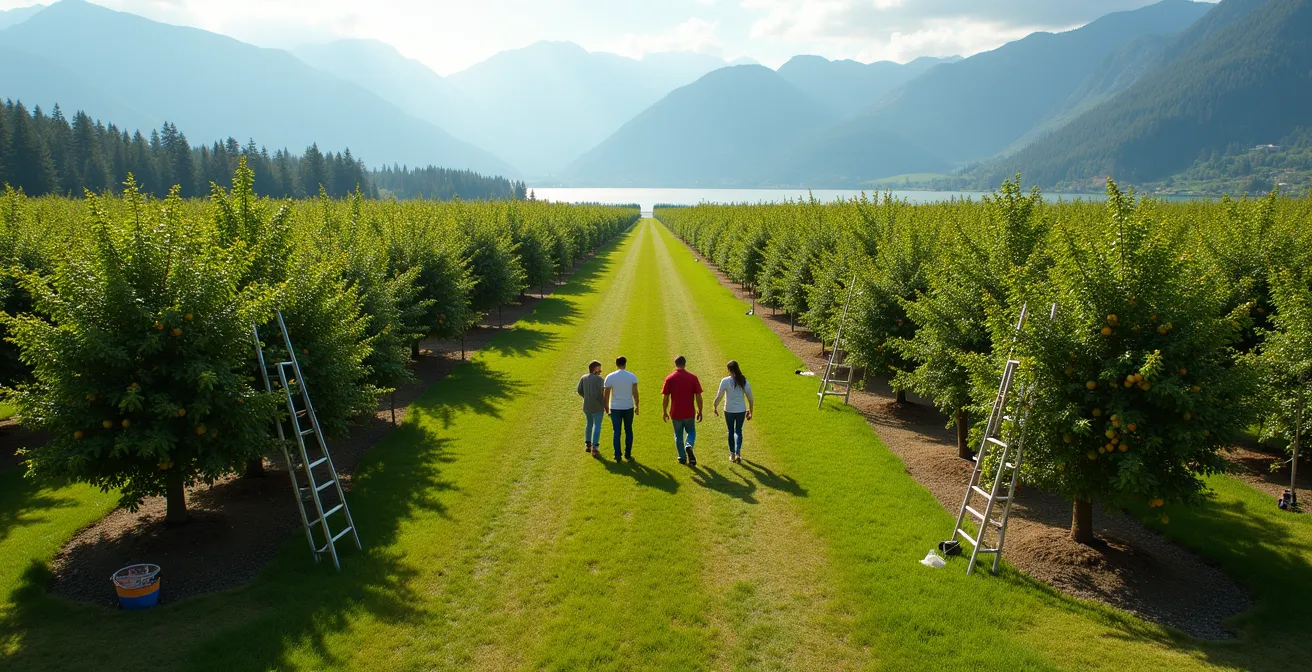
As you wander the neat rows of fruit trees, you’re walking through a high-stakes business where a single weather event can define a year. This context makes the experience more meaningful. When you hand your cash to the farmer, you’re not just paying for fruit; you’re supporting a family that navigates immense risk. For the best experience, go prepared: wear a wide-brimmed hat and closed-toe shoes, twist the fruit gently to avoid damaging the branches, and consider visiting Indigenous-led farms to try traditional Saskatoon berries alongside the more common orchard fruits.
Why You Should Wade in a Cranberry Bog in Muskoka This October
Each October, a spectacular transformation takes place in Ontario’s Muskoka region: entire fields are flooded, creating a floating sea of crimson. This is the cranberry harvest, and the opportunity to don a pair of hip waders and step into a bog is a quintessential Canadian agritourism experience. But the breathtaking sight of millions of floating berries is not just for show; it’s the result of a brilliant process that could be called an engineered harvest, perfectly adapted to the berry’s unique biology and the region’s geology.
Canadian cranberry farms, particularly those on the Canadian Shield, utilize this unique landscape to create their bogs. The process, known as wet harvesting, is a marvel of agricultural science. Berries are grown on vines in dry beds for most of the year. During harvest, the fields are flooded with up to 18 inches of water. Because cranberries contain small pockets of air, they are naturally buoyant. Farmers then use water reels, nicknamed “egg beaters,” to churn the water and gently knock the berries from their vines. The berries float to the surface, where they are corralled into booms and pumped out for cleaning and sorting. This method is incredibly efficient, allowing for a massive harvest in a short time.
The following table illustrates the key differences between this industrial-scale method and the more niche dry harvesting technique.
| Method | Efficiency | Product Use | Visitor Experience |
|---|---|---|---|
| Wet Harvest | 95% of crop collected | Juice, sauce, dried | Wade in flooded bogs |
| Dry Harvest | 5% of crop collected | Fresh fruit market | Walk through dry vines |
By wading into that bog, you become part of this ingenious system. You’re standing in the middle of a carefully controlled environment where nature’s properties are harnessed by technology for maximum efficiency. It’s an unforgettable way to connect with the food system, feeling the gentle push of millions of berries around you while appreciating the science that brought them to the surface.
The Roadside Stand Etiquette: Carrying Cash for Corn and Berries
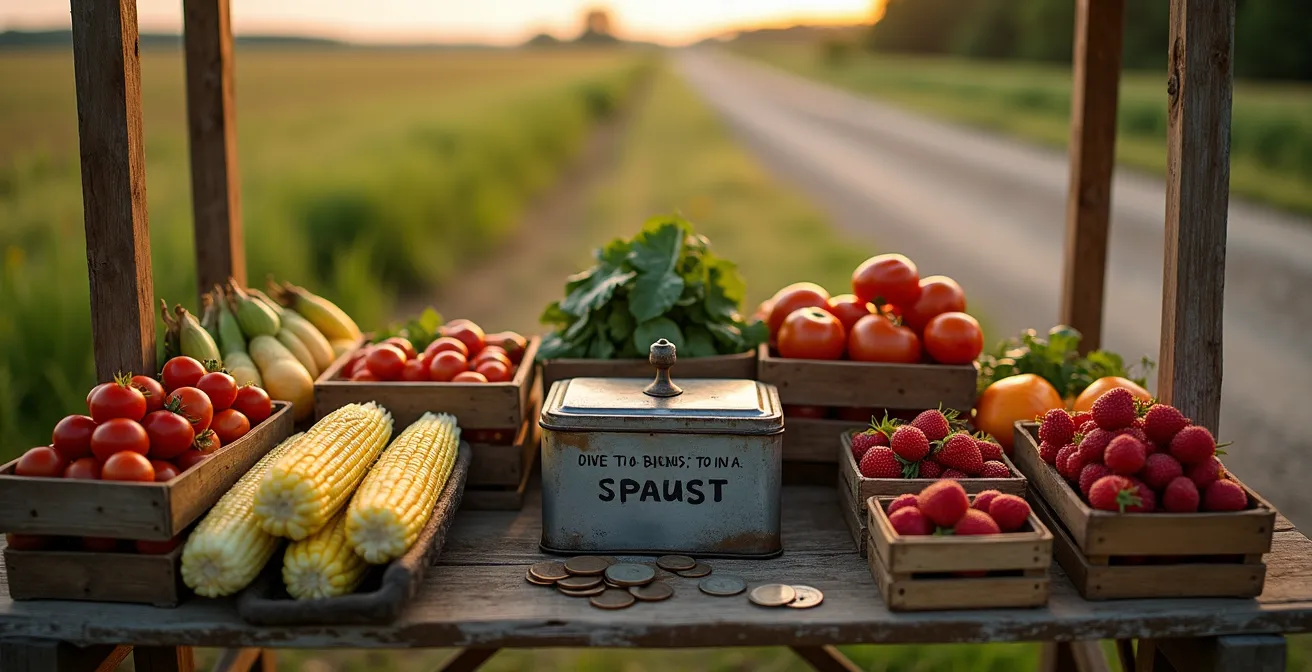
As you drive through rural Canada, you’ll inevitably encounter one of its most charming and defining features: the unmanned roadside farm stand. A simple table laden with fresh corn, baskets of berries, or jars of honey, attended only by a small, often weathered, cash box. This isn’t just a quaint sales method; it’s a powerful symbol of a system of trust that underpins the social fabric and economy of many rural communities. It’s a handshake deal made with an entire community, not just a single farmer.
This honour system is a practical choice for small producers who can’t afford to staff a stand all day. By avoiding credit card transaction fees (which can be 2-3% of a sale) and the need for unreliable rural internet, they keep costs down and prices fair. But its significance runs much deeper. As Mercedes Unwin of Agriculture in the Classroom Canada notes, it represents a core value. In a statement for *Real Agriculture*, she said:
The honour system at roadside stands represents more than just commerce – it’s a symbol of community trust that defines rural Canada.
– Mercedes Unwin, Agriculture in the Classroom Canada
Participating in this system requires understanding its unspoken rules. Always carry small bills and change. For delicate produce like tomatoes or berries, follow the “you touch it, you buy it” principle; excessive handling can bruise the fruit, making it unsellable. To ensure you’re getting truly local goods, look for signs of authenticity: a little dirt on the carrots, variation in the size of the potatoes, and seasonal availability. When you drop your coins into that metal box, you are doing more than buying food—you are actively participating in and reinforcing a culture of mutual respect and trust.
What Does “IGP” Mean on Quebec Lamb or Corn?
When exploring Quebec’s culinary landscape, you may come across a special designation on products like lamb from Charlevoix or corn from Neuville: the IGP label. This acronym, which stands for *Indication Géographique Protégée* (Protected Geographical Indication), is far more than a simple marketing sticker. It is a legally protected certification that serves as a guarantee of authenticity and quality, directly linking a product’s unique characteristics to its specific geographical origin and traditional production methods. It’s a system, modeled after famous European appellations like Champagne or Parmesan, designed to protect cultural heritage from generic imitation.
The case of *Agneau de Charlevoix* is a perfect illustration. For lamb to earn this IGP designation, shepherds must adhere to a strict set of rules. The lambs must be raised within the Charlevoix region and, crucially, graze on the local salt-marsh grasses. This diet, unique to the region’s coastal microclimate, imparts a distinctive, subtle flavour to the meat that cannot be replicated elsewhere. This system not only preserves traditional farming practices but also creates tangible economic value. Products with an IGP designation often command a premium, selling for 30-40% more than their non-designated counterparts, rewarding producers for their commitment to quality and place.
Understanding these labels is key to navigating Quebec’s food scene like an expert. It allows you to make informed choices and directly support systems that value quality over quantity. The following checklist helps decipher the most common food designations you’ll encounter in the province.
Your Quick Guide to Quebec’s Food Designation Labels
- IGP (Protected Geographical Indication): Guarantees a link between the product’s quality, its specific geographic region, and the traditional methods used to produce it.
- AOP (Protected Designation of Origin): Even stricter than IGP, this label requires the entire production process—from raw material to final product—to occur within the designated geographical area.
- Organic Certification: Focuses on ensuring the product was grown without synthetic pesticides or fertilizers; it does not necessarily mean the product is local.
- Grass-fed/Pasture-raised: Refers to animal welfare standards and diet, but the product could originate from anywhere, not just a specific protected region.
- Regenerative Agriculture: Indicates farming practices that focus on improving soil health and sequestering carbon, an environmental rather than a geographical standard.
Crush Season: What to Expect When Visiting Wineries in September
September in Canada’s wine regions, especially the Okanagan Valley, is a time of electric energy. This is “crush,” the frantic, exhilarating period when grapes are harvested and begin their transformation into wine. For a visitor, it’s a sensory overload in the best possible way. The air is thick with the sweet, fermenting scent of grapes, tractors rumble through the vineyards laden with fruit, and the entire winery buzzes with a sense of urgent purpose. This is not the tranquil, slow-paced winery visit of mid-summer; this is the heart of the action, the most critical time of the entire year for a winemaker.
This intense period is the engine of a massive economic driver for the province. The wine industry is a cornerstone of the regional identity and a significant tourist draw. In fact, British Columbia wineries generate over $476 million in tourism-related economic impact annually. Visiting during crush season gives you a front-row seat to the process that fuels this industry. You’ll see grapes being sorted on vibrating tables, de-stemmed, and poured into giant steel tanks or oak barrels. Many wineries offer special harvest tours or events, allowing you to witness—and sometimes even participate in—the organised chaos.
However, it’s also a time of high stress for the producers. Critical decisions about the exact moment to pick each grape variety can make or break an entire vintage. A day too early or a day too late can dramatically alter the sugar, acid, and flavour profiles of the final product. As a visitor, it’s important to be respectful of this intensity. While the atmosphere is exciting, remember that the staff is working under immense pressure. Be mindful of moving equipment, book tastings and tours well in advance as wineries are at their busiest, and take a moment to appreciate the labour and precision that goes into every single bottle.
Why You Only Have 6 Weeks to Eat Fresh BC Spot Prawns
For seafood lovers on Canada’s West Coast, the month of May sparks a culinary frenzy. It marks the start of the BC spot prawn season, a fleeting window of just six to eight weeks to enjoy these large, sweet, and succulent crustaceans fresh from the ocean. This extreme scarcity isn’t a fluke of nature or a marketing gimmick; it is the direct result of a world-class, sustainable fishery management system. The short season is a sign of success—a deliberate choice to ensure the long-term health of the prawn population and the coastal ecosystem, a core tenet of food sovereignty.
The system is a case study in responsible harvesting. Fisheries and Oceans Canada, in collaboration with coastal First Nations who have stewarded these waters for millennia, enforces a strict set of regulations. The nearly 250 commercial vessels are bound by trap limits to prevent overfishing. More importantly, every prawn caught is manually inspected. Any prawn with a carapace length smaller than the minimum 33mm size requirement must be returned to the water. The most crucial rule is the mandatory release of all egg-bearing females, ensuring the next generation can thrive. This intensive management protects the species’ reproductive cycle.
This careful stewardship has created a fishery worth approximately $35 million annually, but its true value is in its sustainability. When you stand on a dock in Steveston or Cowichan Bay to buy a bag of live, wriggling spot prawns directly from a fisher, you are participating in a system that prioritizes ecological balance. The limited season, far from being an inconvenience, is the very reason this delicacy exists for us to enjoy year after year. It transforms the act of eating into an appreciation for a well-managed resource and the foresight of those who protect it.
Key Takeaways
- True agritourism is about understanding systems: It goes beyond tasting to appreciate the regulations, climate challenges, and community values behind the food.
- Place-based designations matter: Labels like IGP in Quebec or the short, regulated spot prawn season in BC are not just rules, but guarantees of quality, heritage, and sustainability.
- Community trust is a real economic pillar: The honour system at rural Canadian farm stands is a functional and symbolic part of the local food economy.
Sipping the Valley: A Logistics Guide to Okanagan Wine Touring
Now that you understand the stories behind the harvests, the final step is planning your own immersive journey. A wine tour in the Okanagan Valley is a highlight of Canadian agritourism, but a little logistical planning can elevate the experience from a simple tasting tour to a seamless exploration of the region’s diverse terroir. The valley is vast, stretching over 250 kilometres, so deciding how you’ll get around is the first and most important decision. Your choice of transportation will shape your day’s flexibility, budget, and, most critically, how many wineries you can responsibly visit.
From the affordability of a self-driven tour with a designated driver to the customized luxury of a private car, each option has its trade-offs. Hop-on-hop-off buses offer a social and structured alternative, while e-bikes provide a scenic, eco-friendly way to explore a smaller cluster of wineries. This table breaks down the primary options to help you choose the best fit for your group and style.
| Transportation | Cost Range | Pros | Cons |
|---|---|---|---|
| Self-Drive with DD | $50-100 gas | Maximum flexibility, lowest cost | One person can’t drink |
| Private Tour | $150-300/person | Customized experience, all can drink | Most expensive option |
| Hop-on Bus | $80-120/person | Meet other tourists, preset route | Less flexibility |
| E-bike Rental | $60-90/day | Exercise, eco-friendly, scenic | Limited distance, weather dependent |
Once your transport is sorted, the fun begins: choosing your route. The Okanagan is not one single wine region, but a collection of distinct sub-regions, each with its own microclimate and specialties.
- Golden Mile Bench: Known for its desert-like heat, this area excels at producing bold red wines like Cabernet Sauvignon and Syrah.
- Naramata Bench: Its protected, east-facing slopes are ideal for delicate Pinot Noir and aromatic white wines.
- Okanagan Falls: A diverse area home to over 60 different grape varieties, offering a wide range of tasting experiences.
- Black Sage/Osoyoos: As Canada’s only official desert, it’s renowned for powerful Merlot and exquisite late-harvest dessert wines.
- Kelowna/Lake Country: This cooler-climate area specializes in crisp Riesling and elegant Pinot Gris.
A great strategy is to focus on one or two sub-regions per day to truly appreciate their unique character rather than rushing across the entire valley. By planning ahead, you can sip your way through the Okanagan with purpose, tasting the distinct story of each unique locale.
With this guide in hand, you are now equipped to go beyond the surface. Plan your trip, pack your curiosity, and get ready to meet the people who dedicate their lives to feeding Canada. Every farm, winery, and dockside stall has a story waiting to be heard.
Frequently Asked Questions About Canadian Farm Visits
Why is cash still preferred at most farm stands?
Small producers often operate on thin margins and prefer cash to avoid credit card transaction fees, which typically run 2-3% per sale. Furthermore, many rural areas have unreliable internet service, making digital payment systems difficult to maintain consistently.
How can I tell if produce is truly local?
Look for the signs of authenticity that large-scale distribution smooths away. A bit of dirt on root vegetables, irregular sizes and shapes, and strict seasonal availability are all good indicators. If a vendor is present, don’t be shy—ask them directly about the farm’s location.
What’s the unspoken ‘you touch it, you buy it’ rule?
This etiquette applies especially to delicate items like berries, peaches, and tomatoes. Excessive handling, squeezing, or poking can cause bruising and damage that makes the produce unsellable for the farmer. To be respectful, only handle what you are confident you will purchase.