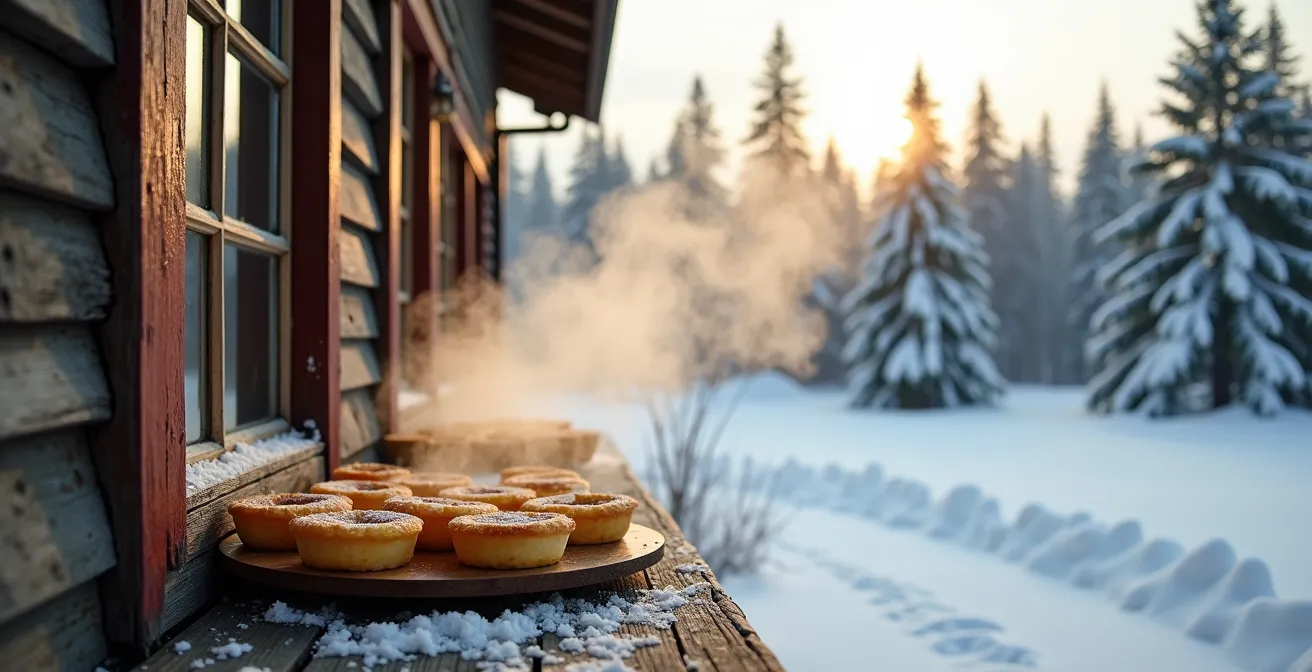
Canada’s best desserts are more than just recipes; they are delicious destinations defined by local rivalries, unique histories, and the land itself.
- Iconic treats like the Ontario Butter Tart and the Nanaimo Bar have official “trails” that food lovers can travel.
- The taste of regional specialties like Quebec’s Pouding Chômeur or Prairie Saskatoon Berry Pie is inseparable from the history and landscape where they were born.
Recommendation: To truly taste Canada, seek out the stories behind the sweets—from the original BeaverTail in Ontario and the empanada debates of Toronto to the exciting rise of modern Indigenous pastries.
To trace the culinary map of Canada is to follow a trail of sugar-dusted crumbs. While many guides offer a simple checklist of “must-try” sweets, they often miss the real flavour of the nation’s dessert scene. They’ll tell you to eat a butter tart, but not about the fierce, province-wide debate over what goes inside. They’ll mention the Nanaimo bar, but not why tasting one in its namesake city is a pilgrimage for any serious food traveler. The true essence of Canadian sweets isn’t just in the ingredients; it’s in the stories, the rivalries, and the specific sense of place baked into each one.
This journey goes beyond the surface-level sweetness. We’re not just listing treats; we’re uncovering the edible history of a nation. We’ll explore how economic hardship in Quebec created one of its most decadent comfort foods and how the unique prairie terroir gives the Saskatoon berry a taste that blueberries can’t replicate. This is a hunt for Canada’s most authentic sugar fixes, where the destination is as important as the dessert itself. Forget the generic list—it’s time to embark on a true culinary pilgrimage, exploring the delicious controversies and hyper-local traditions that define the Canadian sweet tooth.
This guide delves into the regional character and history behind Canada’s most beloved treats, revealing the stories that make them so much more than just dessert. Follow along as we explore the country, one sweet debate at a time.
Summary: The Sweet Tooth Trail: Hunting for Canada’s Best Sugar Fixes
- Raisins vs. Pecans: The Great Ontario Butter Tart Controversy
- Why You Must Eat a Nanaimo Bar in Nanaimo (BC)
- Killaloe Sunrise or Classic Cinnamon: Which BeaverTail is the Original?
- Saskatoons vs. Blueberries: Why the Prairie Berry Tastes Different
- Poor Man’s Pudding: How the Depression Created Quebec’s Richest Dessert
- The Great Empanada Debate: Seven Lives vs. Jumbo Empanadas
- Cheese and Chocolate: Driving the Route des Saveurs in Quebec
- Beyond Bannock: The Rise of Modern Indigenous Cuisine
Raisins vs. Pecans: The Great Ontario Butter Tart Controversy
Nothing ignites a friendly Canadian food fight quite like the butter tart. At its heart, it’s a simple, perfect creation: a flaky pastry shell holding a semi-solid filling of butter, sugar, and egg. But the real debate, the one that divides families and fuels festivals, is over the inclusion of raisins. Traditionalists stand by the original formula, which often included currants, while modernists champion the crunchy texture of pecans or the pure, unadulterated gooeyness of a “plain” tart. This isn’t just a matter of preference; it’s a question of identity, with the earliest known published recipe dating back to 1900.
One cup sugar, 1/2 butter, 2 eggs, 1 cup currants; Mix. Fill the tarts and bake.
– Mrs. Malcolm MacLeod, The Women’s Auxiliary of the Royal Victoria Hospital Cookbook, Barrie, 1900
This obsession is a serious affair in Ontario, the dessert’s spiritual home. Entire regions, like the Kawarthas Northumberland, have established official Butter Tart Tours with over 50 participating bakeries. The annual festival in Midland has become a true culinary pilgrimage, where the scale of this passion is on full display; Ontario’s Best Butter Tart Festival in Midland now sells over 300,000 butter tarts to 60,000 visitors in a single day. Whether you’re Team Raisin, Team Pecan, or a purist, the only way to truly understand the controversy is to taste your way across the province and declare your own allegiance.
Why You Must Eat a Nanaimo Bar in Nanaimo (BC)
The Nanaimo bar is a masterclass in texture: a crunchy coconut-graham cracker base, a velvety layer of sweet custard, and a crisp, glistening cap of chocolate ganache. This no-bake treasure is a Canadian icon, but to taste it in its birthplace of Nanaimo, British Columbia, is to elevate it from a simple treat to a cultural experience. The city has fully embraced its legacy, transforming a dessert into a key driver of tourism. This is the ultimate destination for a food traveler on a mission.
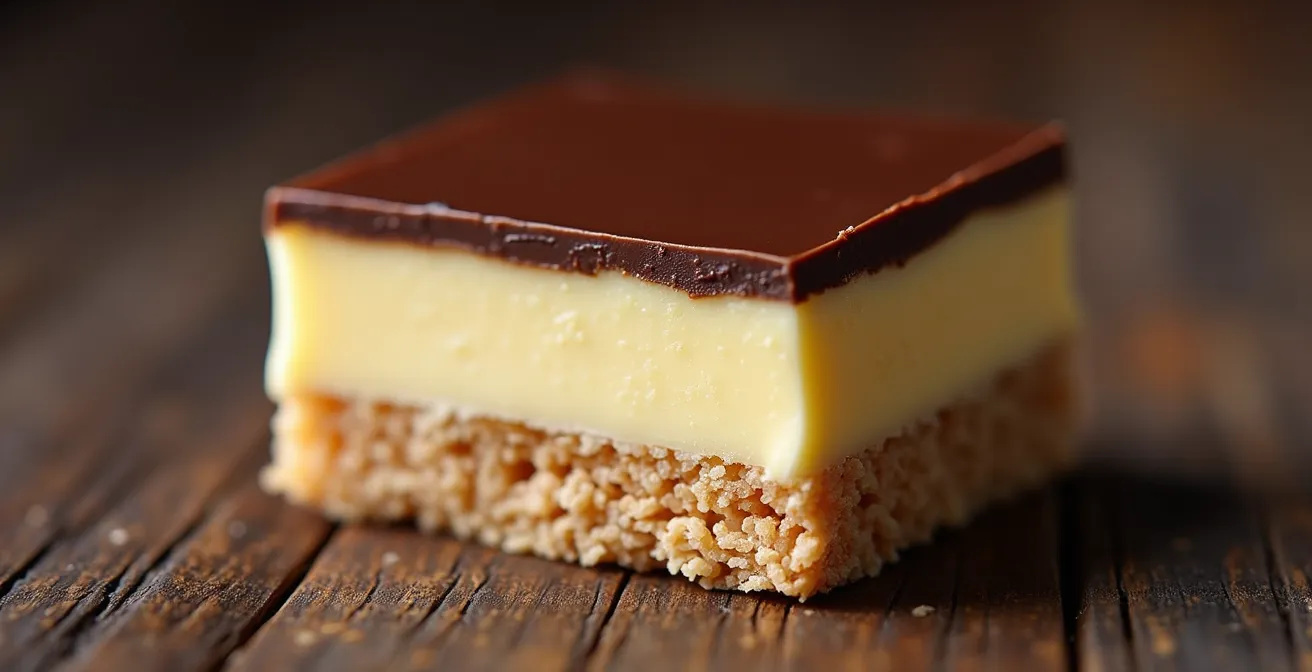
As you can see, the beauty lies in those three perfect layers. While the Nanaimo Museum confirms the bar’s first appearance was in a 1952 hospital auxiliary cookbook, the city has evolved the concept far beyond the original recipe. The official Nanaimo Bar Trail is a culinary pilgrimage featuring 39 stops that showcase the bar’s incredible versatility. You can sip on a Nanaimo Bar martini, indulge in a deep-fried version, or even get a Nanaimo Bar-themed spa treatment. This self-guided tasting tour through the region proves that some desserts have a “terroir of sweets,” a unique sense of place that makes the experience of eating them there absolutely essential.
Killaloe Sunrise or Classic Cinnamon: Which BeaverTail is the Original?
Strolling through Ottawa’s ByWard Market in winter, the scent of fried dough and cinnamon sugar is inescapable. The BeaverTail, a flattened whole-wheat pastry stretched to resemble its namesake’s tail, is a national institution. Often topped with everything from chocolate hazelnut spread to whipped cream and fruit, many assume the classic cinnamon and sugar is the original. But the true origin story, another great Canadian dessert debate, begins in a small town with a slightly different flavour profile.
The journey starts not in the nation’s capital, but in a small rural community. As The Canadian Encyclopedia notes, it all began in 1978 at a community fair in Killaloe, Ontario, where Pam and Grant Hooker first sold their family’s creation. The original flavour served that day was the Killaloe Sunrise: a simple but perfect combination of cinnamon, sugar, and a bright squeeze of lemon juice. This version offers a zesty counterpoint to the sweetness that many modern fans have never tried.
From that local fair, the brand expanded into an international phenomenon, famously cemented in the public consciousness when President Obama made an impromptu stop at the Ottawa location in 2009. While the classic cinnamon and sugar has become the standard, seeking out the Killaloe Sunrise is a nod to the dessert’s humble, small-town roots—a taste of edible history before it became a global brand.
Saskatoons vs. Blueberries: Why the Prairie Berry Tastes Different
On the vast Canadian Prairies, long before the first wheat fields were planted, the Saskatoon berry thrived. Often mistaken for a blueberry, this small, purple fruit offers a completely different taste experience. Its flavour is richer and more complex, with a distinctive nutty, almost almond-like note that speaks to the unique terroir of the prairie soil. This is not just a regional preference; it’s a nutritionally distinct fruit. In fact, nutritional analysis shows that Saskatoon berries contain 3x more antioxidants and twice the protein of their more famous blue cousins.
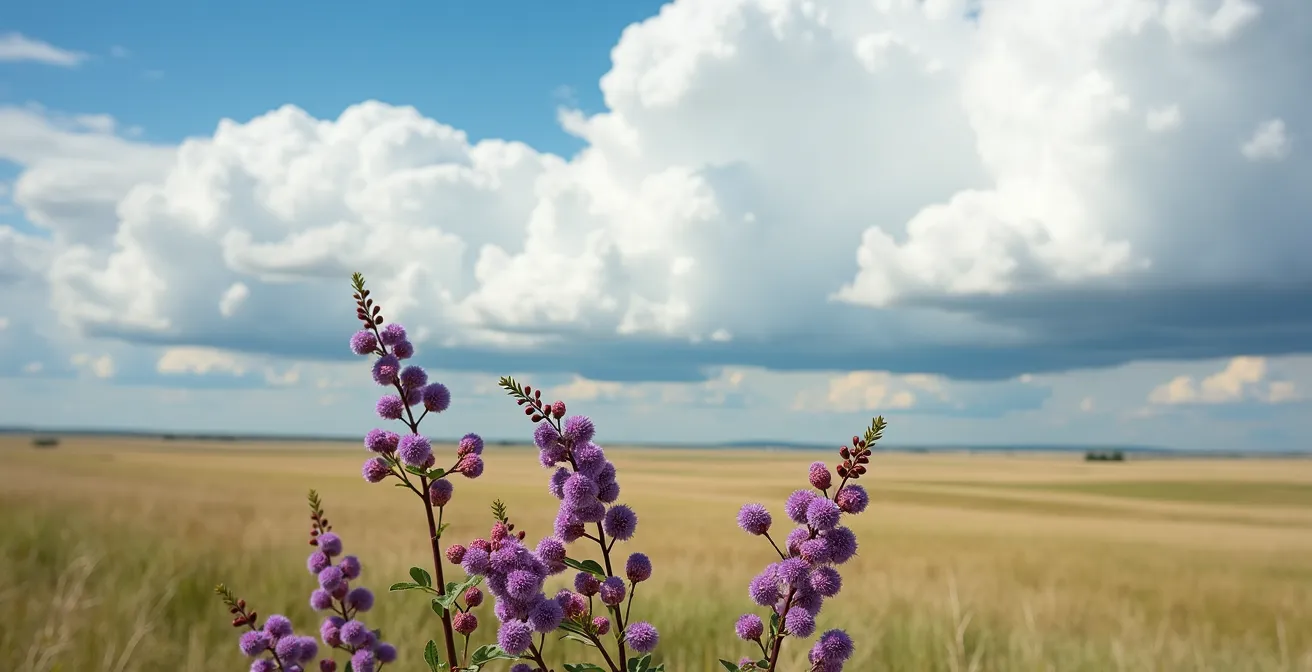
The best way to appreciate this prairie jewel is in a classic Saskatoon berry pie, where its deep, jammy flavour is the star. For a true pilgrimage, a visit to The Berry Barn near Saskatoon during the July U-Pick season is essential. Here, you can not only taste the pie at its freshest but also learn about the berry’s deep Indigenous roots, including its original Cree name, ‘misâskwatômina’. This connection to the land and its history is what gives the Saskatoon berry its unique identity, making it a powerful symbol of prairie resilience and flavour.
Poor Man’s Pudding: How the Depression Created Quebec’s Richest Dessert
Born from hardship, pouding chômeur is the ultimate story of culinary alchemy. This dessert is a testament to the ingenuity of Quebec women during the Great Depression, who had to create comforting food with the most basic ingredients: flour, butter, milk, and brown sugar or maple syrup. The result is a simple, fluffy white cake that, while baking, is drenched in a hot syrup. The syrup pools at the bottom, creating a molten, incredibly rich sauce that soaks up into the cake, transforming it into something far greater than the sum of its parts.
The name itself tells the story: “pouding chômeur” translates to “unemployed person’s pudding.” It is an act of defiance, a way to create richness out of scarcity. As one food writer eloquently puts it:
Pouding chômeur (the literal translation of which is ‘unemployed pudding,’ or poor man’s pudding) is French Canada’s answer to sticky toffee pudding, except it’s soaked in hot maple syrup.
– Lowbrow Fancy, 24 Delicious Canadian Desserts Guide
This piece of edible history is still served today in traditional Quebecois diners like La Binerie in Montreal, which has been maintaining the authentic recipe since 1938. What began as a symbol of economic necessity has become a beloved comfort food, a staple of the “temps des sucres” (maple season) at sugar shacks across the province. It’s a delicious reminder that sometimes, the most luxurious-tasting things come from the simplest of origins.
The Great Empanada Debate: Seven Lives vs. Jumbo Empanadas
Toronto’s multicultural fabric is most deliciously expressed through its food. In the vibrant, bustling Kensington Market, a microcosm of the city’s diversity, you can find a delicious rivalry simmering between two types of empanadas. This isn’t just about a folded pastry; it’s a debate between the culinary traditions of two South American nations that have become part of Canada’s urban identity. On one side, you have the baked, Argentinian-style empanadas from places like Seven Lives Tacos. On the other, the crispy, fried Chilean-style pockets from the iconic Jumbo Empanadas.
This friendly competition highlights how immigrant food cultures enrich the Canadian palate. Kensington Market acts as a culinary incubator, where traditions from around the world are preserved and celebrated. This diversity is a major draw, with foot traffic in the neighborhood increasing significantly in recent years, driven largely by food lovers on a quest for authentic tastes. The empanada is just one example among many in a city where every neighbourhood offers a different sweet journey.
| Community | Signature Dessert | Key Toronto Location |
|---|---|---|
| Portuguese | Pastéis de nata | Little Portugal |
| Ukrainian | Medivnyk honey cake | Roncesvalles |
| Argentinian | Baked empanadas | Kensington Market |
| Chilean | Fried empanadas | Kensington Market |
Choosing between a baked or fried empanada is a delicious dilemma. It’s a chance to taste the subtle but important differences that define regional cooking, all within a few city blocks. This is Toronto’s sweet tooth trail—a global tour, no passport required.
Cheese and Chocolate: Driving the Route des Saveurs in Quebec
In Quebec’s breathtaking Charlevoix region, the concept of a “culinary pilgrimage” takes the form of the Route des Saveurs (The Flavour Trail). This scenic drive is a curated journey through a landscape dotted with artisan producers, connecting food lovers directly with the source of their food. While the route features a wide array of products, it offers a particularly decadent path for those with a sweet tooth, beautifully pairing local cheese with artisanal chocolate, cider, and traditional confections. This is agritourism at its most delicious, a major draw for visitors and a significant economic engine for the region.
A day spent on this trail is a sensory exploration of Quebec’s rich terroir. You can taste how the local milk influences the famous Migneron de Charlevoix cheese, then see how that flavour profile is complemented by locally made dark chocolate. The journey continues through cidreries offering sweet ice cider and farms specializing in tangy sea buckthorn products. It’s an edible itinerary that proves the deep connection between the land and the plate.
Your Action Plan: A Charlevoix Flavour Trail Day Trip
- Start your morning at Laiterie Charlevoix to taste their iconic Migneron cheese and other artisan products.
- Indulge your sweet tooth mid-morning with a visit to Chocolaterie Cynthia for a chocolate pairing experience.
- Enjoy lunch at a local auberge that proudly features ingredients sourced directly from the Route des Saveurs.
- In the afternoon, sample the sweet complexity of ice cider at a regional cidrerie.
- Conclude your journey by discovering traditional barley sugars or unique sea buckthorn jellies at a specialty farm or confiserie.
The success of culinary tourism initiatives like this is undeniable. It’s estimated that Quebec’s culinary tourism routes generated over $100 million in incremental spending from Ontario alone, demonstrating a powerful appetite for these authentic food experiences.
Key Takeaways
- Canada’s most iconic desserts are tied to specific places and histories, making them ideal destinations for food travelers.
- Regional rivalries, like the Ontario butter tart debate, are a key part of the fun and a window into local culture.
- The future of Canadian desserts is being shaped by an exciting revival of Indigenous ingredients and culinary techniques.
Beyond Bannock: The Rise of Modern Indigenous Cuisine
For centuries, bannock—a simple, versatile fried bread—has been a staple of Indigenous cuisine and a symbol of resilience. While it remains a beloved comfort food, a new generation of Indigenous chefs is looking beyond this classic to create a modern dessert landscape. This is a powerful movement of culinary reconciliation, where traditional ingredients once used for sustenance and medicine are being reimagined with contemporary pastry techniques. The result is an exciting and uniquely Canadian flavour profile that is finally getting the recognition it deserves.
Establishments like Toronto’s Tea-N-Bannock and British Columbia’s Kekuli Cafe are at the forefront of this Indigenous revival. They are decolonizing the Canadian dessert menu by creating innovative treats like Saskatoon berry mousse and sweetgrass-infused crème brûlée. These chefs are not just cooking; they are reintroducing a forgotten pantry of flavours to a wider audience, from the ceremonial notes of wild sage to the citrus-like tang of sea buckthorn. This movement connects the past to the future, honouring tradition while pushing culinary boundaries.
This table highlights how ancient ingredients are finding new life in modern kitchens.
| Ingredient | Traditional Use | Modern Dessert Application |
|---|---|---|
| Saskatoon berries | Pemmican | Mousses, tarts, ice cream |
| Wild sage | Ceremonial tea | Infused syrups, custards |
| Sweetgrass | Sacred medicine | Aromatic creams, ganaches |
| Cedar | Purification | Smoked desserts, sorbets |
| Sea buckthorn | Vitamin source | Citrus-like coulis, jellies |
This rise of modern Indigenous pastry is perhaps the most exciting chapter in Canada’s sweet story. It challenges us to expand our definition of “Canadian food” and celebrates the nation’s oldest culinary traditions in a delicious new light.
Your journey along Canada’s sweet tooth trail is more than a hunt for sugar; it’s an exploration of the country’s heart. Start planning your own culinary pilgrimage and discover the delicious stories waiting to be tasted.