Travel tips & logistics
Canada’s sheer size—spanning 9.98 million square kilometres across six time zones—presents unique logistical challenges that can make or break your travel experience. The distance from St. John’s, Newfoundland, to Victoria, British Columbia, is greater than the span from London to Baghdad, yet the country’s infrastructure, regulations, and natural environments vary dramatically from coast to coast. Whether you’re planning a cross-country road trip, a focused exploration of a single region, or a winter adventure in the north, understanding the practical realities of Canadian travel transforms potential frustrations into manageable steps.
Successful travel across Canada requires more than choosing destinations—it demands strategic thinking about transportation modes, booking systems, seasonal weather patterns, budget allocation, and sustainability practices. This comprehensive resource addresses the core logistical considerations that Canadian travelers face, from navigating Parks Canada’s permit systems to managing the physical toll of rapid cross-country movement, from booking Atlantic ferries months in advance to ensuring trails accommodate every mobility level. These aren’t abstract travel philosophies—they’re the practical decisions that determine whether your trip unfolds smoothly or spirals into avoidable stress.
Planning Cross-Country Itineraries Across Canada’s Vast Distances
The romance of a Canadian road trip often collides with a stark geographical reality: major landmarks can be separated by full days of driving through sparsely populated terrain. Understanding how to structure your itinerary around these distances prevents the exhaustion that comes from treating Canada like a country you can casually traverse in a week.
Choosing Your Mode of Transportation
The air travel versus driving debate hinges on more than cost—it’s about what you value in the journey itself. Domestic flights between major cities like Toronto, Calgary, and Vancouver save considerable time but eliminate the incremental landscape changes that define Canada’s regional character. You’ll miss the transition from Ontario’s boreal forests to the prairies’ endless horizons, or the dramatic moment when the Rocky Mountains first appear on the western horizon.
Driving offers flexibility and scenic rewards, but requires honest calculations. The Trans-Canada Highway from Calgary to Vancouver covers roughly 1,000 kilometres—a solid 10-11 hours of driving time without accounting for stops, mountain pass conditions, or construction delays. Consider hybrid approaches: fly into one region and rent a vehicle for focused exploration, rather than attempting to drive the entire country. Inter-provincial car rentals typically don’t incur drop-off fees within the same rental company network, offering more flexibility than many travelers realize.
Managing Time and Avoiding Burnout
The “checklist mentality”—racing from landmark to landmark with little absorption—is one of the most common regrets among Canadian travelers. Think of your itinerary like a meal: better to savor three well-chosen dishes than rush through a ten-course tasting menu without tasting anything.
Build rest days into your schedule, particularly after long travel segments. If you drive eight hours from Banff to Jasper (via the Icefields Parkway), plan a full recovery day before attempting strenuous hikes. Jet lag compounds when crossing multiple time zones—arriving in St. John’s from Vancouver means a 4.5-hour time difference, requiring at least two days for your circadian rhythm to adjust before early-morning activities like whale watching tours.
Prioritizing Destinations Effectively
When time is limited, categorize potential stops into three tiers: non-negotiable anchors (the primary reason for your trip), valuable additions (worthwhile if logistics allow), and opportunistic stops (pleasant if they fall naturally along your route). This framework prevents the paralysis of trying to “see everything.”
For a two-week trip, focus on one or two regions rather than attempting a coast-to-coast survey. A deep dive into Atlantic Canada—covering New Brunswick’s Bay of Fundy, Nova Scotia’s Cabot Trail, Prince Edward Island’s beaches, and Newfoundland’s Gros Morne—offers more meaningful experiences than a superficial sprint that adds the Rockies and Toronto to the same itinerary.
Navigating Canada’s National Parks Systems
Parks Canada manages 47 national parks and reserves, each with distinct access requirements, booking systems, and regulations that can confuse even experienced travelers. Understanding these systems well in advance separates those who secure permits from those who arrive only to face “sold out” notifications.
Understanding Parks Canada Passes and Permits
The Discovery Pass provides unlimited access to all Parks Canada locations for a full year and costs less than purchasing daily entry for seven separate days—a threshold most multi-park visitors easily exceed. The pass covers the primary vehicle occupants at park gates, typically interpreted as everyone in a personal vehicle.
However, the Discovery Pass doesn’t cover everything. Backcountry camping permits, shuttle reservations at locations like Lake O’Hara, and interpretive program fees are separate charges. At Banff and Jasper, the pass grants park entry but not parking at specific trailheads during peak summer months, when separate parking reservations become mandatory at popular sites like Moraine Lake and Lake Louise.
Booking Strategies for Popular Destinations
Canada’s most iconic parks face overwhelming demand during summer months. Campsite reservations at popular Banff campgrounds open exactly three months in advance at 8:00 AM Mountain Time—and sites at Two Jack Lakeside or Tunnel Mountain Village can sell out within minutes. Set calendar reminders and have your Parks Canada reservation account pre-configured with payment information before the booking window opens.
Shuttle systems at overcrowded locations like Lake Louise and Moraine Lake operate on separate reservation platforms, often managed through third-party providers. These aren’t included with your Discovery Pass or campsite reservation. The Moraine Lake shuttle typically requires booking within 48 hours of your visit date, creating a strategic challenge: you must coordinate campsite availability, shuttle reservations, and weather forecasts simultaneously.
Accessing Parks Without a Vehicle
While many assume national park access requires a personal vehicle, several parks offer robust public transit connections. Banff townsite is accessible via direct bus service from Calgary International Airport through companies like Brewster Express and On-It Regional Transit. Once in Banff, the Roam public transit system connects to multiple trailheads, hot springs, and the Lake Minnewanka area.
Jasper can be reached via VIA Rail’s Canadian train service, offering a scenic alternative to driving that includes passage through the Rockies. Within the park, limited public transit operates during summer months, though coverage is less comprehensive than Banff’s system. Bike rentals in park townsites extend your range considerably—many Banff trails within 10 kilometres of town are accessible via paved bike paths.
Atlantic Canada’s Unique Travel Logistics
Traveling through New Brunswick, Nova Scotia, Prince Edward Island, and Newfoundland involves navigating water crossings, seasonal weather volatility, and distances that appear deceptively short on maps but consume more time than expected due to winding coastal roads and rural highways.
The Confederation Bridge connecting New Brunswick to Prince Edward Island charges a toll only when leaving PEI—currently around $50 per vehicle, paid electronically or at toll booths. This one-way toll structure surprises many first-time visitors. Budget accordingly, as this single crossing represents a significant daily expense.
Booking the ferry to Newfoundland requires advance planning, particularly if you’re bringing a vehicle. Marine Atlantic operates the primary service from North Sydney, Nova Scotia, to Port aux Basques, Newfoundland. During peak summer months (July-August), vehicle reservations should be made 8-12 weeks in advance. The crossing takes 6-8 hours depending on your route and vessel, and weather delays are common—build flexibility into your itinerary rather than booking a campsite in Newfoundland for the same day as your ferry arrival.
Atlantic weather patterns shift with notorious speed. Coastal fog can roll in within hours, dropping temperatures by 10-15 degrees Celsius and reducing visibility to near zero. Pack layered clothing even for summer travel: a morning that begins at 22°C in Charlottetown can become a 12°C afternoon in Cape Breton when fog arrives. Waterproof outer layers aren’t optional—they’re essential equipment.
Sustainable and Responsible Travel Practices
Canada’s wilderness environments—from fragile tundra ecosystems to old-growth forests—face increasing pressure from tourism. Sustainable travel isn’t simply about feeling virtuous; it’s about ensuring these landscapes remain intact for future visitors and the wildlife that depends on them.
Reducing Environmental Impact
Single-use plastic waste accumulates rapidly during multi-day trips. Bring a reusable water bottle and coffee cup—most Canadian towns have public water fountains or businesses willing to provide refills. Grocery stores in tourist areas like Banff and Jasper sell reusable containers and utensils if you arrive unprepared.
Transportation represents your largest carbon footprint. While eliminating air travel isn’t realistic for many Canadians traveling across the country, consider carbon offset programs offered by airlines like Air Canada and WestJet. For regional travel, VIA Rail produces significantly lower emissions per passenger-kilometre than driving or flying—the train from Toronto to Montreal uses roughly one-third the carbon of the equivalent drive.
Supporting Authentic Conservation
The growth of “greenwashed” tourism—businesses marketing themselves as eco-friendly while practicing conventional operations—makes critical evaluation essential. Genuine conservation-focused operators demonstrate specific commitments: limiting group sizes to reduce trail impact, contributing percentage of revenues to habitat restoration, employing certified naturalist guides, and holding third-party environmental certifications rather than self-declared eco-status.
When visiting national and provincial parks, participation fees for interpretive programs directly fund conservation education and research. These programs—guided hikes, evening presentations, wildlife tracking workshops—cost between $5-15 per person and provide deeper understanding than self-guided exploration alone.
Ethical Wildlife Encounters
Wildlife photography opportunities attract many Canadian travelers, but proper distance protocols exist for safety and animal welfare. Parks Canada mandates 100 metres minimum distance from bears and wolves, 30 metres from elk, deer, and moose. These aren’t suggestions—they’re enforced regulations with significant fines for violations.
Telephoto lenses (200mm or longer) allow compelling wildlife images while maintaining legal and ethical distances. If an animal changes its behavior in response to your presence—stopping feeding, moving away, displaying agitation—you’re too close regardless of the specified distance. The goal is observation without influence.
Making Canadian Travel Accessible for Everyone
Accessibility in outdoor recreation has improved significantly across Canada, though significant gaps remain. Understanding which trails, facilities, and programs accommodate various mobility levels prevents disappointing surprises and enables confident planning.
Trail Accessibility and Adaptive Equipment
Parks Canada uses a standardized trail classification system, but “easy” doesn’t automatically mean wheelchair-accessible. Look specifically for trails designated as “paved” or “hard-packed gravel with minimal grade change.” The Johnston Canyon lower falls trail in Banff, for example, features paved pathways and gradual inclines suitable for wheelchairs and strollers, while many “easy” trails involve root-covered dirt paths or short steep sections that create barriers.
Accessible washroom locations aren’t always obvious from trail maps. Parks Canada’s website provides accessibility details for each location, including washroom facilities, parking proximity, and surface conditions. Call visitor centers directly for current conditions—recent weather can temporarily impact accessibility even on normally suitable trails.
Several parks offer adaptive equipment rentals, including all-terrain wheelchairs with wide, balloon-style tires designed for trails. Banff, Jasper, and Gros Morne have established programs, though equipment quantities are limited and advance reservation is essential during peak season. Some provincial parks have followed suit, though coverage remains inconsistent across the country.
Planning Inclusive Outdoor Experiences
Sensory-friendly visits—accommodating visitors with autism, ADHD, or sensory processing differences—benefit from strategic timing and location selection. Visiting popular attractions during shoulder season months (May, September-October) or weekday mornings dramatically reduces crowd density, noise levels, and unpredictable stimuli that can create overwhelming experiences.
Some Parks Canada locations now offer “quiet hours” programs at visitor centers, with reduced lighting and sound levels during specific morning times. These aren’t widely advertised—contact accessibility coordinators at specific parks to inquire about available accommodations.
Seasonal Travel Considerations
Canada’s dramatic seasonal shifts create entirely different travel experiences—and logistical requirements—depending on when you visit. Winter and shoulder season travel require specific preparation that summer visitors can ignore.
Winter Travel and Ski Trip Planning
Eastern Canada ski destinations—Quebec’s Laurentians and Tremblant, New Brunswick’s Crabbe Mountain—offer family-friendly alternatives to Western resorts at significantly lower costs. However, budget planning requires looking beyond lift ticket prices.
Accommodation off-mountain in nearby towns rather than ski-in/ski-out resort villages can reduce costs by 40-60%, though you’ll need rental vehicle access. For families with growing children, renting ski equipment rather than purchasing makes economic sense—kids outgrow gear within a season or two, making rental packages more cost-effective than ownership until growth stabilizes.
Quebec’s spring break period—typically the first week of March—sees domestic demand spike across all Quebec ski resorts. Avoiding this single week can mean the difference between manageable crowds and hour-long lift lines. Resort village food costs accumulate quickly; bringing grocery items for breakfasts and lunches, then dining out only for dinners, significantly reduces overall trip costs.
Cold-Weather Photography and Northern Lights
Photographing the aurora borealis requires technical preparation beyond simply pointing a camera at the sky. Camera batteries drain rapidly in extreme cold—temperatures below -20°C can reduce battery life by 50% or more. Carry multiple spare batteries in interior jacket pockets where body heat maintains their charge, rotating them as active batteries deplete.
Manual focus is essential since autofocus systems struggle in darkness. Set your lens to infinity focus during daylight or use live view to manually focus on a distant light source before aurora activity begins. Exposure settings typically start around 15-25 second shutter speeds at f/2.8 and ISO 1600-3200, though active aurora may require faster shutter speeds to capture detail in rapidly moving lights.
Foreground composition separates compelling aurora images from simple documentation. Include landscape elements—trees, buildings, lakes—to provide scale and context. Apps like Aurora Forecast and SpaceWeatherLive predict activity levels 1-3 hours in advance, allowing you to time your photography sessions for peak visibility rather than standing outside during inactive periods.
Budgeting and Cost Management
Canadian travel costs extend beyond obvious expenses like accommodation and meals. Transparent budget planning accounts for the accumulated small charges that surprise unprepared travelers.
National and provincial park entrance fees add up across multi-park trips. A family of four visiting six different Parks Canada locations over two weeks pays $140+ in daily entrance fees if purchasing at each gate, while a family Discovery Pass costs around $140 for the year—reaching break-even point almost immediately. Apply the same calculation logic to provincial park systems if your itinerary includes multiple properties within a single province.
Ferry costs in Atlantic Canada and British Columbia represent substantial line items. Beyond the Newfoundland crossing mentioned earlier, BC Ferries between Vancouver and Victoria costs $75-90 per vehicle plus $18-20 per passenger during peak season—a family of four with a vehicle pays $140+ for a single crossing. These aren’t negotiable expenses you can value-shop; they’re fixed costs requiring budget allocation.
Fuel costs across long distances deserve realistic calculation. A Vancouver to Calgary drive covers approximately 970 kilometres. At current fuel efficiency for a typical SUV (10L/100km) and fluctuating fuel prices, budget $150-200 for one-way fuel alone. Remote areas like northern Ontario or Labrador have significantly higher fuel prices due to transportation costs—sometimes 20-30% above urban rates.
Strategic camping versus hotel nights creates budget flexibility. Alternating between camping (Parks Canada sites average $25-35 per night) and hotels every 2-3 days allows for shower access and laundry while keeping accommodation costs

Capturing the Aurora: A Beginner’s Guide to Night Photography
The secret to stunning aurora photos isn’t expensive gear; it’s mastering a precise manual workflow that overrides your camera’s flawed instincts in the dark. Your camera’s “Auto” mode is fundamentally blind to the low-light conditions of the aurora and will…
Read more
Skiing on a Budget: How to Afford a Family Trip to Mont-Tremblant
An affordable Mont-Tremblant family ski vacation is possible by mastering strategic “value trade-offs” rather than simply cutting every cost. Staying just outside the village can cut lodging costs in half, but requires factoring in shuttle or driving time. Packing lunches…
Read more
Nature for Everyone: Finding Accessible Trails in Canada
The “easy” rating on trail maps is often a misleading trap for Canadians with mobility needs. True accessibility requires a personal “accessibility audit” focusing on specific barriers like surface type, path width, and grade, not just trail length. Essential infrastructure,…
Read more
Mastering the Parks Canada System: Fees, Rules, and Access
In summary: Your Parks Canada Discovery Pass is not valid in Provincial Parks; this is a common and costly error. Strict rules on dogs, drones, and seasonal closures exist to protect wildlife and ensure visitor safety, not just to create…
Read more
Sustainable Playgrounds: How to Be a Responsible Eco-Tourist in Canada
True sustainable tourism in Canada isn’t about following a simple checklist; it’s about critically auditing the ‘green’ choices you make. Vague terms like “eco-friendly” are often marketing, so you must learn to verify claims through recognized certifications. Genuine support for…
Read more
A Planner’s Guide to Atlantic Canada: Mastering Ferries, Bridges, and Timing
In summary: Ferry reservations to Newfoundland for summer must be booked by early spring to secure a spot, as they are essential supply lines that fill up fast. The Confederation Bridge toll is only paid upon leaving PEI, a system…
Read more
How to Visit Banff and Jasper Without Getting Stuck in Crowds?
In summary: Beating peak-season crowds isn’t about finding secret spots, but mastering the logistical systems (booking, transit, passes). Use the Parks Canada shuttle system in Banff (“Park and Ride”) as a strategic tool to guarantee access to Lake Louise and…
Read more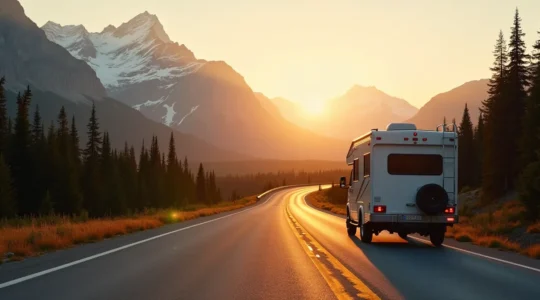
The Trans-Canada Logistics Problem: A Guide to Crossing 6 Time Zones Without Wasting a Day
A successful cross-Canada trip is not a travel project; it’s a logistics operation where distance is the primary challenge. The choice between flying and driving isn’t about preference, but a calculated trade-off between time, money, and regional access. Ignoring “logistical…
Read more