Urban experiences
Canadian cities offer a distinctive blend of experiences that challenge the conventional separation between nature and urban life. From centuries-old fortifications that tell stories of colonial rivalry to cutting-edge sustainable architecture, these urban landscapes reveal how geography, history, and multicultural influences shape the way people live, move, and connect with their surroundings. Understanding these experiences means looking beyond tourist attractions to grasp the planning decisions, cultural traditions, and practical logistics that make each city function.
What sets urban exploration in Canada apart is the intentional preservation of heritage alongside bold experimentation in modern design. Cities here don’t simply grow—they evolve through deliberate policies that protect viewsheds, mandate public space in private developments, and celebrate seasonal extremes rather than resist them. Whether you’re navigating the etiquette of shared waterfront paths, decoding the layers of European influence in Québec’s streetscapes, or preparing mentally for a sky-high adventure, each experience requires specific knowledge to fully appreciate and safely enjoy.
Historic Fortifications and Architectural Heritage
Canada’s urban heritage reflects a complex narrative of French and British colonial competition, military strategy, and the adaptation of European building traditions to North American realities. Québec City stands as the most complete example, where fortified walls encircle a living city rather than serving as static museum pieces.
The strategic design of fortifications like the Citadelle wasn’t arbitrary—these structures were positioned to control river access, maximize defensive lines of sight, and protect against both land and naval attacks. Walking these ramparts today reveals how military engineers adapted European star fort designs to local topography, creating defensive networks that remain remarkably intact. The best photo opportunities occur where bastions jut outward, providing sweeping views that once served tactical purposes.
Religious heritage architecture adds another layer to this urban fabric. Massive stone churches and cathedrals weren’t simply places of worship—they served as community anchors, navigation landmarks, and demonstrations of institutional power. The scale of these buildings relative to surrounding structures tells you which institutions held influence during different periods.
One distinctive architectural feature puzzles many first-time visitors: the ubiquitous external staircases winding up building facades. This wasn’t an aesthetic choice but a practical solution—by placing stairs outside, builders maximized interior living space in narrow urban lots and reduced fire risk in an era of wood-burning stoves. Understanding these practical reasons transforms a curious architectural detail into insight about historical urban density challenges.
Modern Urban Planning and Sustainable Design
Contemporary Canadian cities have become laboratories for innovative planning approaches that balance growth pressures with livability. Vancouver’s view cones policy exemplifies this—strict regulations protect 27 specific sight lines to mountains and water, preventing tall buildings from obstructing these visual connections to nature. This policy shapes the city’s entire skyline, creating the distinctive clustering of towers you see today.
Finding public spaces within private developments represents another planning innovation. Many cities now require developers to provide publicly accessible plazas, walkways, or green spaces in exchange for building height bonuses. These aren’t always obvious—some of the most tranquil urban refuges exist tucked between glass towers, unmarked except by subtle signage. Learning to identify these spaces transforms how you navigate downtown cores.
Sustainable architecture has moved beyond token gestures to genuine innovation. The Vancouver Convention Centre’s six-acre living roof isn’t just green decoration—it manages stormwater runoff, provides habitat for local bee populations, and insulates the building naturally. Exploring these features reveals how modern structures can contribute to urban ecosystems rather than simply displacing them.
Comparing historic and modern districts side-by-side demonstrates how different eras prioritized different values: narrow streets optimized for pedestrians versus wide arterials designed for cars, mixed-use buildings versus separated zoning, public squares versus private malls. Neither approach is inherently superior, but understanding the trade-offs helps you appreciate what each district offers.
Waterfront Infrastructure and Shared Spaces
Canadian cities have increasingly reclaimed industrial waterfronts, transforming them into continuous public promenades. The Coal Harbour seawall in Vancouver and similar waterfront paths in other cities represent decades of incremental development, connecting formerly isolated parks and neighborhoods into seamless networks.
Successfully navigating these shared spaces requires understanding the etiquette and infrastructure that keeps diverse users safe. Most seawalls feature clearly marked separation between:
- Pedestrian lanes (typically closest to the water) for walkers, joggers, and those stopping to take photos
- Cycling lanes (usually inland) for faster-moving wheeled traffic, with designated passing zones
- Transition areas where the two merge, requiring heightened awareness from all users
Hidden trails within urban parks like Stanley Park offer escapes from the main seawall crowds. These forested paths wind through interior sections, revealing the original landscape that existed before urban development. Respecting cultural sites like totem poles within these spaces means understanding they’re not generic decorations but specific artistic works representing distinct First Nations traditions and stories.
Timing walks for sunset requires checking seasonal sunset times and arriving 30-45 minutes early to secure prime viewing spots, as popular locations fill quickly during golden hour. Parking and access logistics vary dramatically by season—summer weekends may require transit or early arrival, while winter weekday visits offer easier vehicle access.
Vertical Urban Experiences and Height Management
Canada’s major cities feature observation decks and sky-high experiences that attract millions annually, but maximizing these visits requires more than buying tickets. The CN Tower in Toronto offers multiple levels and experiences, each with different perspectives and purposes.
Preparing mentally for extreme height experiences like the EdgeWalk—where participants walk around the outside of the tower 356 meters up—involves acknowledging fear as normal rather than a weakness to overcome. The safety systems are robust, with multiple redundant harness points, but the psychological challenge comes from trusting those systems when every instinct screams danger.
Practical preparation matters equally. Securing loose items isn’t optional—glasses need retention straps, jewelry should be left behind, and pockets must be emptied. Even small objects become dangerous projectiles at those heights. Comparing the different observation decks (glass floor, indoor level, outdoor SkyPod) helps you choose the right experience for your comfort level and weather conditions.
Timing visits for visibility means monitoring weather patterns. Early morning typically offers the clearest air before urban haze builds, while evening provides city lights but potentially less distance visibility. The 360 Restaurant offers a dining alternative where the experience extends over 72 minutes—one full rotation—allowing you to absorb the view gradually rather than rushing through.
Winter Urban Life and Cold-Weather Culture
Canadian cities don’t shut down in winter—they transform, embracing seasonal conditions through festivals, infrastructure, and cultural practices that turn potential hardship into celebration. Understanding this shift is essential for winter visitors expecting cities to function like their summer versions.
The Rideau Canal in Ottawa becomes the world’s largest naturally frozen skating rink, stretching 7.8 kilometers through the urban core. This isn’t a tourist gimmick but a functional winter transportation route used daily by commuters. Skating technique differs from rink skating—the uneven natural ice, wind exposure, and distance require different preparation and pacing.
Montreal’s Underground City represents another adaptation strategy—over 32 kilometers of interconnected tunnels linking metro stations, shopping centers, offices, and residential buildings. Navigating this network requires understanding it’s not a single planned system but an organic connection of separate developments, each with its own logic and design.
Dressing for city cold versus mountain cold involves different strategies. Urban environments create temperature variations through:
- Building heat radiating onto sidewalks and transit platforms
- Wind tunnels formed between tall structures, intensifying wind chill
- Frequent indoor-outdoor transitions requiring layering flexibility
- Reduced physical exertion compared to mountain activities, requiring warmer clothing
Winterlude and similar festivals don’t just occur despite winter—they celebrate it through ice sculptures, snow playgrounds, and outdoor activities that would be impossible in other seasons. Finding cozy café refuges becomes part of the rhythm of winter urban exploration, with strategic warm-up stops planned into longer walking routes.
Multi-Activity Urban Adventures and Logistics
Some urban experiences extend beyond city limits to combine multiple activities in a single day. The Sea to Sky corridor connecting Vancouver to Whistler enables water sports and mountain activities within hours of each other, but requires careful logistical planning.
Managing a multi-activity day involves several coordinated elements. Renting gear for two different sports means researching which outfitters offer both or planning efficient pickup routes. Timing traffic flow on popular routes like the Sea to Sky Highway is critical—weekend morning northbound traffic can add an hour to the journey, while Sunday afternoon southbound returns face similar delays.
Choosing the right season for dual sports requires understanding that prime conditions for each activity rarely overlap perfectly. Summer offers the longest daylight for packing in multiple experiences, but also brings the largest crowds. Shoulder seasons may provide ideal conditions for one activity while limiting options for the other.
Fueling for high-energy days demands more planning than typical urban tourism. Services aren’t evenly distributed along highway corridors—identifying food stops in advance prevents emergency gas station meals. Proper hydration and energy management becomes critical when transitioning between activities that stress the body differently.
Urban experiences in Canadian cities offer far more than conventional sightseeing. They require understanding the historical forces that shaped urban form, the planning policies that continue to guide development, the seasonal adaptations that define daily life, and the practical logistics that enable safe, enjoyable exploration. Each city presents its own combination of heritage preservation and modern innovation, creating landscapes where past and future coexist in productive tension.

Beyond Survival: How to Thrive in an Urban Canadian Winter
In summary: Embrace winter by participating in iconic Canadian activities like skating the Rideau Canal and exploring Ottawa’s Winterlude festival. Utilize unique urban infrastructure, such as Montreal’s RESO “Underground City,” as a tool for both survival and discovery. Choose the…
Read more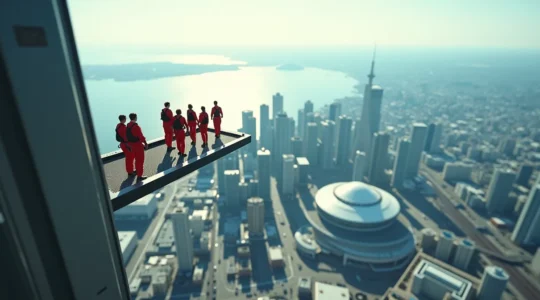
Conquering the EdgeWalk: Is Toronto’s Scariest Attraction Worth It?
The CN Tower EdgeWalk is more than a thrill ride; it’s a calculated psychological victory that is absolutely worth the price if you approach it strategically. Success isn’t about ignoring your fear, but actively “hacking” it with specific mental techniques…
Read more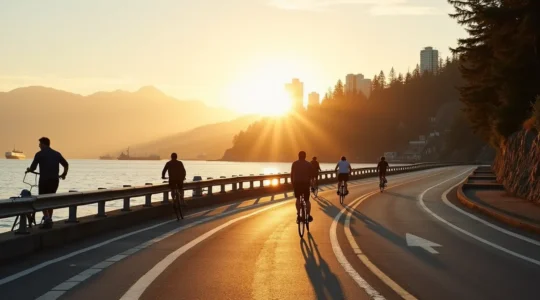
Walking Stanley Park: Etiquette and Routes for the Seawall
The Stanley Park Seawall’s magnificent views are often disrupted by friction between users. The key isn’t just knowing the rules, but understanding the unspoken social contract of this shared space. Path etiquette is about predictable movement: walkers stay seaside, wheels…
Read more
The Sea-to-Sky Challenge: Skiing and Golfing in the Same Day
Successfully skiing Whistler and golfing in Squamish in a single day is a triumph of logistics, not just athleticism. Timing is everything: Leaving Vancouver before 5:45 AM on a weekday is non-negotiable to beat the Lions Gate Bridge gridlock. April…
Read more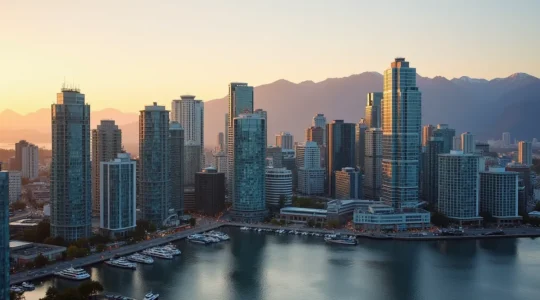
Vancouverism: How Urban Design Created the City of Glass
Vancouver’s iconic skyline is not merely an aesthetic choice; it’s the physical manifestation of a deliberate social contract balancing private development against a fiercely protected public realm. High-density “tower and podium” designs are permitted in exchange for significant public benefits,…
Read more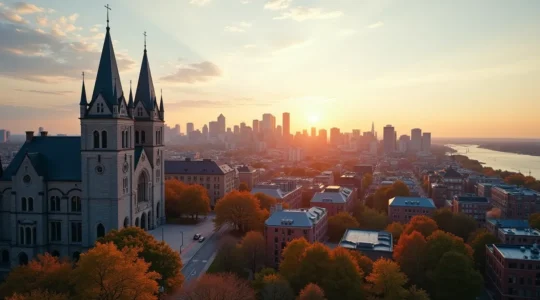
Finding Europe in Canada: Architectural Gems of Montreal and Quebec
Canada’s “European” architecture is not a simple copy of the Old World, but a tale of selective adaptation in the East and deliberate counterpoint in the West. Montreal and Quebec City’s charm stems from specific French and British styles, reinterpreted…
Read more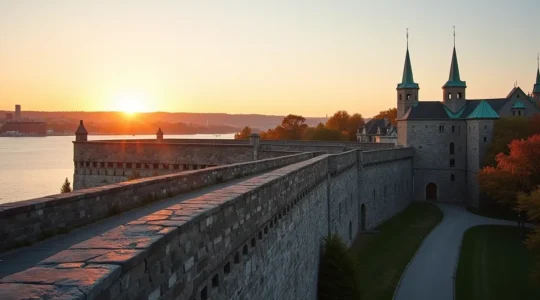
Walking the Walls: A Strategic Guide to Old Quebec’s Fortifications
In summary: Quebec’s fortifications are not just scenic walls but a masterclass in military architecture, designed to leverage the city’s unique clifftop topography. The star-shape of the Citadelle and the layout of the ramparts were engineered to create deadly, overlapping…
Read more