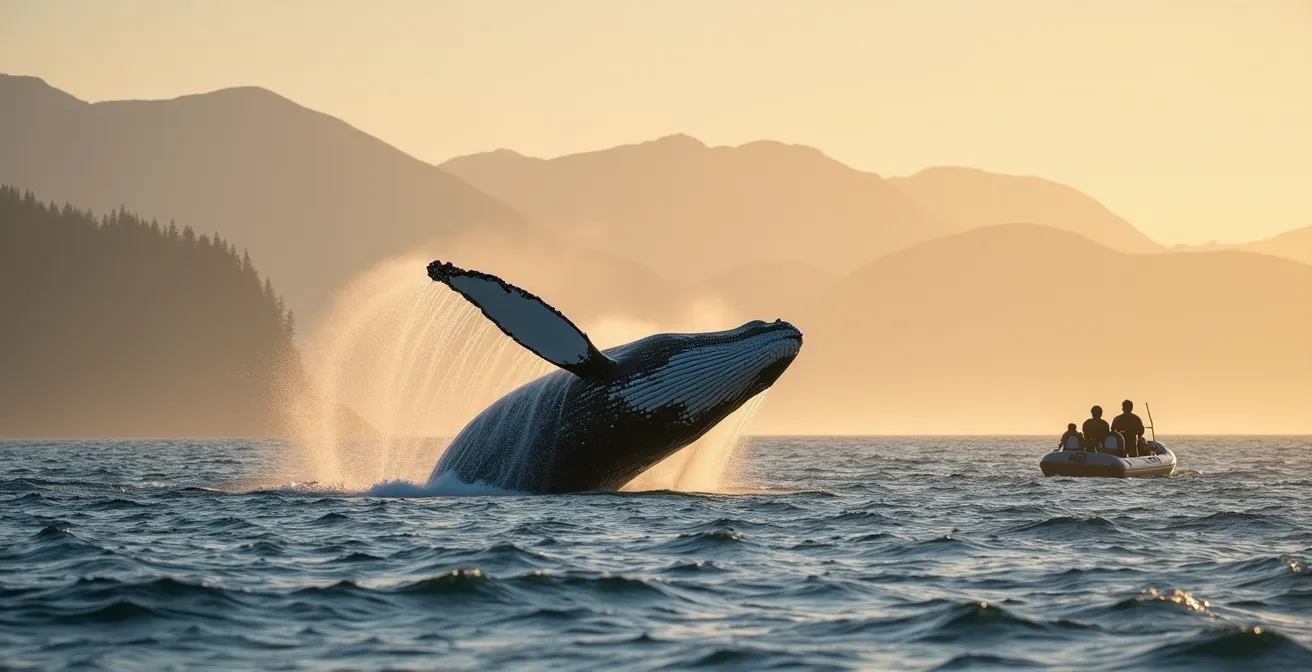
True success in Canadian whale watching isn’t about luck; it’s about strategically aligning your visit with specific ecological events that dictate whale presence.
- Orca sightings in British Columbia are driven by predictable salmon runs, while humpback gatherings in the Atlantic are tied to krill blooms caused by massive tidal upwellings.
- Your choice of tour operator, vessel type, and even your restaurant meal on land directly impacts the health of these fragile marine ecosystems.
Recommendation: Plan your trip not by the calendar month, but by the ecological calendar of your target species and its primary food source.
The promise of seeing a forty-ton humpback breach, or a pod of orcas slicing through the water, is what draws thousands of wildlife enthusiasts to the Canadian coast each year. The most common question I hear is, “If I pay for a tour, am I guaranteed to see whales?” As a marine biologist who has spent countless hours on these waters, my answer must be honest: there are no guarantees in nature. The ocean doesn’t operate on a booking schedule. Many guides will point to the “best months” or sell you on the power of their vessel, but these are only small pieces of a much larger, more dynamic puzzle.
The conventional wisdom of simply booking a trip between June and September misses the point. From my years on the water, I’ve learned that the secret to a truly spectacular encounter isn’t about hope or luck. It’s about knowledge. It’s about understanding the powerful, underlying forces—the ecological triggers—that govern where and when these magnificent creatures appear. The key isn’t to chase a guarantee, but to stack the odds so heavily in your favour that a sighting becomes a near certainty. It’s about shifting from hoping for a sighting to engaging in predictive sighting.
This guide will move beyond the superficial advice. We will explore the prey-driven movements of different whale species, decode the profound effects of Canada’s unique coastal geography, and equip you with the tools to not only choose a tour but to plan an expedition. We will transform you from a passive tourist into a strategic observer who understands that the real magic lies in aligning your presence with the timeless rhythms of the ocean’s food web.
This article provides a detailed roadmap for planning your Canadian whale watching adventure. By understanding the distinct opportunities each coast offers, the nuances of tour types, and the ethical considerations that ensure these animals thrive, you can craft an experience that is both breathtaking and responsible.
Contents: A Strategic Guide to Canadian Whale Watching
- Orcas vs. Humpbacks: Why Your Choice of Province Decides What You See
- Zodiac vs. Large Vessel: Which Whale Tour Suits Your Stomach?
- Why August is the Sweet Spot for Whale Watching in the Bay of Fundy
- How to Spot an Unethical Whale Tour Operator Before You Book
- Is a $150 CAD Whale Tour Worth It for a 5-Year-Old?
- When to Book Your Trip to Maximize Spirit Bear Sightings
- What Does the Ocean Wise Symbol Actually Mean on a Menu?
- Cold Water Diving in Canada: Exploring Tobermory’s Shipwrecks
Orcas vs. Humpbacks: Why Your Choice of Province Decides What You See
The first and most critical decision in planning your trip is not when, but *what* you want to see. The iconic black-and-white orca (killer whale) and the colossal, acrobatic humpback occupy different niches in Canada’s vast marine environment. Your choice of province is, in reality, a choice of ecosystem and prey. Whales are not scattered randomly; their movements are almost entirely prey-driven. Understanding this is the first step toward predictive sighting.
On the Pacific Northwest coast, British Columbia is the undisputed domain of the orca. The Salish Sea is home to resident killer whale populations whose lives are intrinsically linked to the salmon run. These highly intelligent predators follow the Chinook salmon, their primary food source, making their presence more predictable if you align your trip with peak salmon migration. Furthermore, as confirmed by Transport Canada, the Southern Resident killer whales have important cultural significance for Indigenous Peoples, adding a deep layer of cultural context to any sighting in these waters.
Conversely, Canada’s Atlantic provinces offer a completely different spectacle. The waters off Newfoundland and Labrador and into the Gulf of St. Lawrence host the world’s largest feeding population of humpback whales. From April to October, these giants migrate from their Caribbean breeding grounds to feast on krill and small fish like capelin. Here, the ecological trigger is not a fish run, but the explosive bloom of plankton in the cold, nutrient-rich waters. For a different experience altogether, the St. Lawrence Estuary is one of the rare places in the world where you can observe the ethereal white beluga whale, a species that resides in Canadian waters year-round.
Zodiac vs. Large Vessel: Which Whale Tour Suits Your Stomach?
Once you’ve chosen your coast and target species, the next question is how you’ll get out on the water. The choice between a nimble Zodiac and a stable, large-capacity vessel is more than a matter of comfort; it’s a strategic decision that shapes your entire experience, from the photos you can take to your physical proximity to the action. Both have their merits, but they are suited for very different conditions and expectations.
A Zodiac is a rigid-hulled inflatable boat that puts you at eye-level with the water. This creates a thrilling, immersive experience, especially in the narrow, protected channels of British Columbia’s Johnstone Strait where the water is calmer. You feel the spray, hear every breath, and can capture dramatic, low-angle photographs. However, they are less stable in open ocean swells and offer little protection from the elements. This is a crucial consideration for those prone to seasickness or when touring the more exposed waters off Tofino or Newfoundland.
Larger vessels, by contrast, are floating observation platforms. They offer stability, shelter from wind and rain, washroom facilities, and often an elevated deck for panoramic views. This stability is a significant advantage for photographers using heavy telephoto lenses and is generally more comfortable for families and those concerned about motion sickness. It’s important to understand that regardless of boat size, Canadian law dictates strict approach distances to protect the animals. According to Fisheries and Oceans Canada regulations, operators must maintain specific minimum distances, which are even greater for at-risk populations. For example, there’s a mandatory approach distance of 200 metres away from all killer whales in British Columbia and 400 metres away from all killer whales in southern B.C. residential waters. An ethical operator knows these rules are non-negotiable.
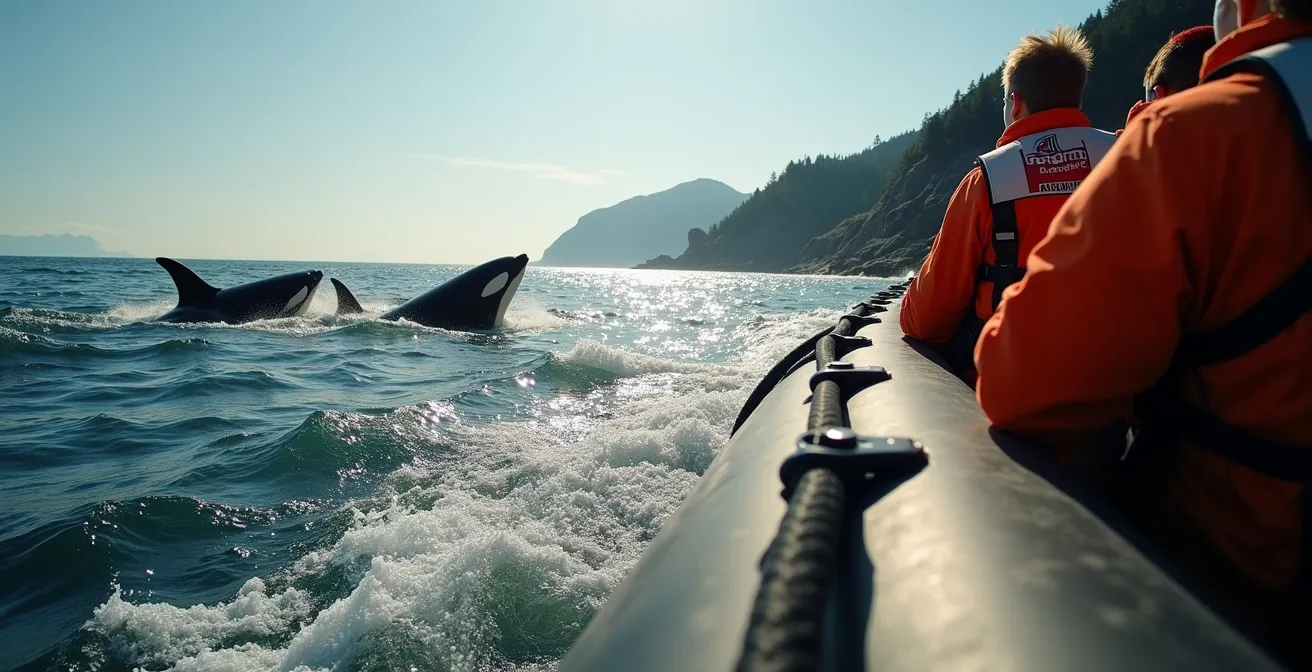
The following table breaks down the key differences to help you decide which vessel aligns with your personal trip goals. This decision impacts not just your comfort but the type of encounter you’re likely to have.
| Feature | Zodiac | Large Vessel |
|---|---|---|
| Legal Approach Distance | Must maintain 100 metres away from whales, dolphins and porpoises (feels closer) | Same 100 metres distance but better panoramic view |
| Stability | High spray risk, less stable | Stable platform, dry experience |
| Photography | Eye-level dramatic shots | High-angle platform, stable for telephoto |
| Best For | Johnstone Strait narrow channels | Open ocean swells off Tofino/Newfoundland |
Why August is the Sweet Spot for Whale Watching in the Bay of Fundy
While “summer” is the generic advice for Atlantic Canada, a biologist’s perspective points to a more precise and powerful window: August in the Bay of Fundy. This is a perfect case study of my core thesis in action. The reason isn’t just warm weather; it’s the peak operation of a massive ecological phenomenon I call the “Tidal Engine.” The Bay of Fundy has the highest tides on Earth, and this immense movement of water acts like a giant plunger, driving a process called tidal upwelling. This brings cold, nutrient-rich water from the deep to the surface, causing an explosion of phytoplankton and zooplankton, including krill.
This explosion of food creates a smorgasbord that attracts an incredible diversity and density of whales. In late summer, this tidal engine is running at full throttle. The result? The Bay of Fundy becomes one of the most reliable and spectacular whale watching destinations on the planet. This area is a critical feeding ground for multiple species, including the elusive North Atlantic Right Whale, one of the most endangered large whales in the world. You can also see colossal Fin whales, nicknamed “the greyhounds of the sea” for their speed, and the ever-popular, acrobatic Humpbacks.
An analysis of the local ecosystem shows that this place in Canada houses the largest number of whale species in the country. During this peak period, it’s not uncommon to see several species on a single tour. Key locations like Brier Island and Grand Manan in New Brunswick become hotspots. To maximize your chances, smart planning is key:
- Check Tide Charts: Book your tour to coincide with a flood tide (when the tide is coming in), as this is when the nutrient surge is strongest and feeding activity peaks.
- Focus on Key Areas: Operators based out of Brier Island and Grand Manan are perfectly positioned to access the most active feeding grounds.
- Expect Diversity: Be prepared to see more than just Humpbacks. Have your camera ready for Fin whales, Minke whales, and with incredible luck, a North Atlantic Right Whale.
How to Spot an Unethical Whale Tour Operator Before You Book
Choosing your tour operator is arguably the most important decision you’ll make. A great operator is more than a boat driver; they are a steward of the marine environment and your guide to its wonders. A bad one can harass wildlife, provide misinformation, and ruin your experience. The challenge is that unethical operators often look legitimate online. They have slick websites and good reviews from visitors who don’t know what they’re seeing. The key is to ask the right questions *before* you book, probing for their knowledge of and commitment to ethical proximity.
Responsible whale watching is governed by Canada’s Fisheries Act, which mandates minimum approach distances and prohibits behaviours that disturb marine mammals, such as “leapfrogging” (repeatedly racing ahead of a whale’s path) or “boxing in” (cornering an animal with multiple boats). Fines for violations can be severe, but enforcement on the vast ocean is difficult. Therefore, the responsibility often falls on operators to self-regulate and on consumers to choose wisely. A great signal of commitment is participation in voluntary programs like Whale SENSE. Though primarily a US-based program, its recognition of operators committed to responsible practices is a standard to look for, as Canadian operators near the border often participate to signal their commitment beyond legal minimums.
Don’t be afraid to act as an informed consumer and interviewer. A reputable operator will welcome your questions and be proud to share their conservation-first policies. An operator who is vague, dismissive, or makes unrealistic promises (like “we’ll get you close enough to touch them!”) is a major red flag.
Your Pre-Booking Ethics Checklist: Questions to Ask Operators
- Procedure & Penalties: Ask, “Can you describe your procedures for respecting the minimum distance requirements under the Fisheries Act? Are you aware fines can be up to $100,000?”
- Local Regulations: Verify they know the specific local rules, such as “the mandatory 400 m vessel approach distance for ALL killer whales in southern BC coastal waters.”
- Special Permits: Check if they are aware that “authorization from the Minister of Transport is required for viewing killer whales other than Southern Residents from 200 metres.”
- Behavioural Knowledge: Confirm they understand and prohibit disruptive behaviours like “leapfrogging” (repeatedly cutting in front of whales) and “boxing in” (surrounding them).
- Contribution to Science: Ask if they contribute to conservation efforts, such as by submitting sighting data and photographs to researchers to help track whale populations.
Is a $150 CAD Whale Tour Worth It for a 5-Year-Old?
Bringing a child to witness the majesty of a whale can be a life-changing experience, but the reality of a multi-hour boat trip with a young child requires careful consideration. A typical whale watching tour can cost upwards of $150 per person, and for a family, this represents a significant investment. The question of “worth” for a 5-year-old is less about the price and more about the experience itself. Young children have short attention spans and limited tolerance for cold, wind, and choppy seas. A three-hour tour with no sightings could easily turn into a miserable, expensive boat ride.
For families with very young children, the best strategy is often to choose alternatives to the classic open-ocean tour. Fortunately, Canada’s whale-rich coastlines offer many fantastic, low-cost, and child-friendly options. As an analysis from Parks Canada highlights, there are many ways to engage with marine life from the shore. Shore-based viewing from coastal parks and headlands is often free and allows children the freedom to run around. Interpretation centers provide engaging, interactive exhibits that bring the science of whales to life in a warm, dry environment.
If you are set on a boat tour, opt for a larger, more stable vessel with heated cabins and washrooms. Choose the shortest tour available (e.g., 90 minutes instead of 3 hours) and pick a day with exceptionally calm weather. The goal is to create a positive first impression, not to test a child’s endurance. The following table, inspired by options available across Canada, compares these choices for families.
| Option | Cost | Child-Friendly Features | Location |
|---|---|---|---|
| Large Vessel Tours | $100-150 CAD | Heated cabins, washrooms, walking space | Victoria BC, Tadoussac QC |
| Shore-Based Viewing | Free-$20 | Three exceptional sites for whale watching from the shore at Pointe-Noire Interpretation Centre | Multiple locations |
| Interpretation Centers | $10-30 | Front row seat to observe whales in amphitheatre setting with discovery activities | Cap-de-Bon-Désir, Tadoussac |
Many of the most spectacular viewing sites, like Signal Hill in Newfoundland or the trails around Ucluelet in BC, are accessible by car and offer the chance to spot whales while enjoying a family hike. This approach trades the intensity of a boat tour for a more relaxed, flexible, and often more enjoyable experience for the whole family.
When to Book Your Trip to Maximize Spirit Bear Sightings
The same ecological principles that guide a successful whale watching trip apply to another of Canada’s most coveted wildlife encounters: seeing the elusive Spirit Bear. This rare, all-white variant of the black bear (it is not an albino) lives deep within the Great Bear Rainforest of British Columbia—the same coastal ecosystem frequented by orcas and humpbacks. For the wildlife enthusiast, combining a whale watching trip with a search for the Spirit Bear is the ultimate Canadian coastal safari, but it requires even more precise, long-term planning.
The ecological trigger for Spirit Bear (or Kermode bear) sightings is identical to that of the coastal orcas: the salmon run. The critical window for viewing is late September and early October. During this time, salmon return to their natal rivers to spawn, and the bears—grizzlies, black bears, and the rare Spirit Bear—congregate along the riverbanks to feast on this seasonal bounty. This prey-driven movement makes them more visible and accessible to the few who venture into this remote wilderness.
Access to this region is tightly controlled and primarily led by the local Kitasoo/Xai’xais and Gitga’at First Nations, who act as guides and stewards of their ancestral lands. Their traditional ecological knowledge is indispensable for a respectful and successful encounter. The demand for this transformative experience is immense, and the supply of permits and lodge space is tiny. Consequently, booking a trip to a place like the Spirit Bear Lodge often requires planning 1-2 years in advance. This isn’t a spontaneous add-on; it’s a dedicated expedition that must be the cornerstone of your travel itinerary. A small-ship adventure through this maze of islands can offer the dual prize of spotting humpbacks in the channels and then venturing ashore to seek out these legendary white bears.
What Does the Ocean Wise Symbol Actually Mean on a Menu?
A truly holistic approach to ethical wildlife viewing extends beyond the boat tour. As a visitor to Canada’s coastal communities, your choices on land can have a direct impact on the health of the marine life you’ve traveled so far to see. This connection is powerfully illustrated by the Ocean Wise seafood program. When you see the Ocean Wise symbol next to a menu item in a restaurant in Tofino or Lunenburg, it’s more than just a label; it’s a direct link in a chain that leads back to the very whales you want to protect.
The program, founded by the Vancouver Aquarium, helps consumers and businesses choose sustainable seafood options. A species’ Ocean Wise recommendation is based on whether it is caught or farmed in a way that ensures the long-term health and stability of that species, as well as the greater marine ecosystem. This is critically important for whales. For instance, an analysis of the local food web shows that Chinook salmon are a critical food source for Southern Resident killer whales, but their populations have been under immense pressure. By choosing an Ocean Wise-recommended alternative like Pacific halibut or spot prawns, you reduce the consumer demand on struggling salmon stocks, leaving more food for the orcas who depend on them for survival.
This is a tangible, powerful way to contribute to conservation during your trip. To put this knowledge into practice:
- Use the App: Download the Ocean Wise Seafood app to find partner restaurants in the towns you’re visiting.
- Look for the Symbol: Actively seek out the Ocean Wise logo on menus. It’s a clear sign that the restaurant is committed to sustainability.
- Ask Questions: Don’t be shy to ask your server about the source of their seafood. Ocean Wise certifies specific fisheries, so a knowledgeable server can tell you more about your meal’s journey.
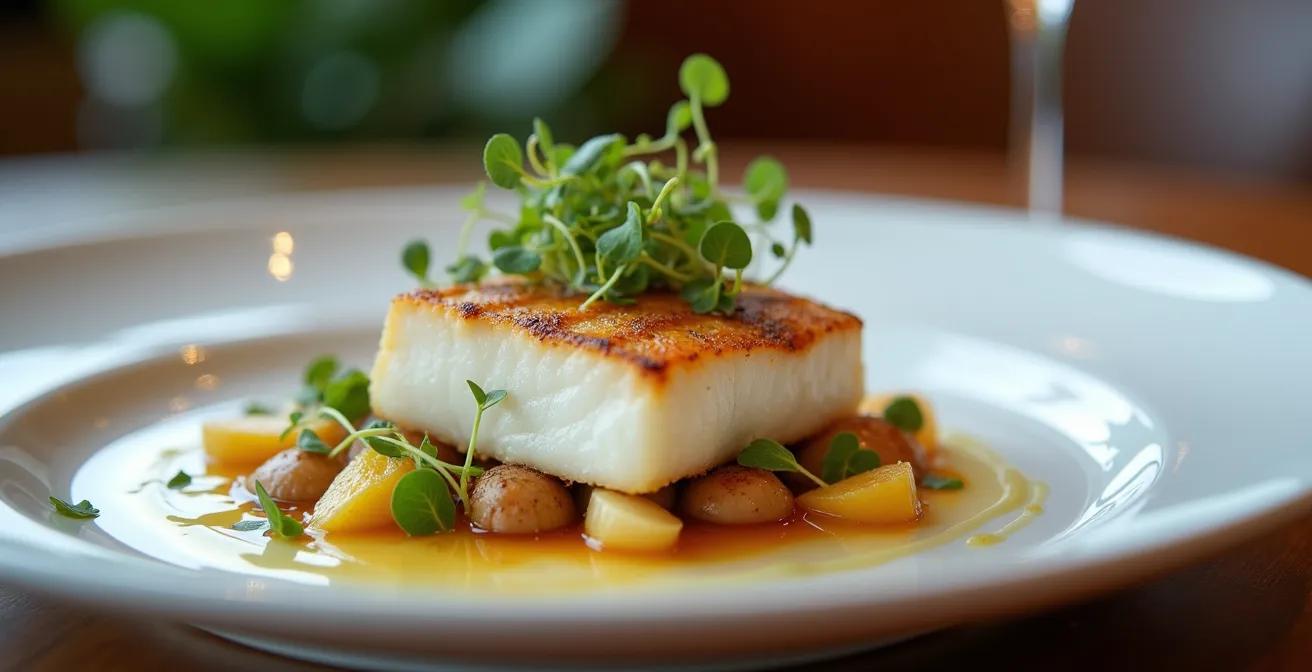
Supporting these restaurants is a vote for healthier oceans. Your dinner choice becomes an act of conservation, directly supporting the magnificent animals you observed just hours before.
Key Takeaways
- The key to successful whale watching is not luck, but aligning your trip with specific “ecological triggers” like salmon runs for orcas or tidal upwellings for humpbacks.
- Choosing an ethical operator is paramount; use pointed questions about their knowledge of and adherence to Canada’s Marine Mammal Regulations before booking.
- Your impact doesn’t end on the water. Supporting sustainable initiatives like the Ocean Wise seafood program is a direct way to protect the whales’ food source.
Cold Water Diving in Canada: Exploring Tobermory’s Shipwrecks
While the epic scale of whale watching dominates Canada’s marine tourism, for the truly dedicated marine enthusiast, the nation’s aquatic wonders extend into a completely different realm: the silent, preserved world beneath the waves. Far from the Pacific and Atlantic coasts, in the fresh, clear waters of Lake Huron, Ontario, lies a unique adventure that speaks to the same spirit of exploration. Tobermory’s Fathom Five National Marine Park is one of the world’s premier cold-water diving destinations, renowned for its stunningly preserved 19th-century shipwrecks.
The park’s incredible water clarity, a result of the region’s limestone geology and the filtering action of invasive zebra mussels, creates a submerged museum. Over 20 historical schooners and steamers lie on the lakebed, many in surprisingly shallow water. This accessibility is what makes the park so special. You don’t have to be a certified diver to experience it. Glass-bottom boat tours glide over shallow wrecks like the “Sweepstakes” and “City of Grand Rapids,” offering crystal-clear views to non-divers and families. It’s a different kind of wildlife, where 19th-century schooners have become artificial reefs, now home to Lake Trout and Sculpin.
For certified divers, the park offers deeper, more challenging dives that are a true test of cold-water skill. Exploring these wrecks requires specialized gear and training, but the reward is an intimate encounter with history, frozen in time by the cold, fresh water. Whether viewed from the surface or explored from below, Tobermory offers a profound connection to the power and history of Canada’s Great Lakes. It serves as a reminder that the country’s marine treasures are not confined to its saltwater coasts, offering a path for further discovery for those captivated by the world beneath the surface.
Ultimately, a successful and meaningful wildlife encounter in Canada is about shifting your perspective. Move beyond the role of a mere spectator and become an informed, strategic participant. By understanding the ecological forces at play and making conscious, ethical choices, you not only dramatically increase your chances of a breathtaking sighting but also become a vital partner in the preservation of these incredible marine ecosystems for generations to come.